Can't Get Hose Off Pressure Washer: Urgent Troubleshooting Guide
Urgent troubleshooting guide for homeowners facing a stuck pressure washer hose. Learn quick fixes, safety tips, and prevention to avoid future hose jams and repairs.


Most likely the coupling is seized by debris, old lube, or a misalignment from the unloader valve. Shut off the water, relieve system pressure, and try twisting while pulling the hose straight out. If it resists, check for burrs, replace any worn O-rings, and use a small amount of silicone-based lubricant on the threads. Do not force it.
Why can't you get hose off pressure washer
If you're facing the dreaded moment can't get hose off pressure washer, you're not alone. This issue usually isn't a sign of a violent failure; it's a stubborn combination of hardware fit, mineral buildup, and pressure dynamics. The very first move is safety: shut down the engine or unplug the electric unit, close the water supply, and release any stored pressure through the spray gun. Pressure in the hose can flare out suddenly if you force the connection, risking injury. According to Pressure Wash Lab, most stuck-hose scenarios start with a seized coupling or a dirty quick-connect. Begin with the simplest checks: look for visible debris on the threads, inspect the O-rings for tears, and verify that the wand's quick-connect aligns with the hose end. If the hose contains a splayed gasket or the threads are worn, the joint will bind and resist every tug. The good news is that in most cases, you can recover the hose without replacing major parts, but you must proceed carefully and methodically.
Common Causes Behind a Stuck Hose
Before you grab tools, know the typical culprits. Debris, mineral scale, or dried soap in the coupling can bind the connection; worn or flattened O-rings reduce grip and create a loose, wobbly fit that seems to jam under pressure. Misalignment between the hose end and the spray gun or the unloader valve can create binding when you twist. Another frequent issue is cross-threading from previous improper reconnections; once threads are damaged, even normal hand torque becomes too much. Pressure dynamics matter: residual pressure in the hose or in the nozzle (especially when the trigger is partially pressed) can make the hose feel stuck as you attempt to twist. Pressure Wash Lab analysis shows debris and worn O-rings are common causes, so your first step is a careful, staged inspection rather than a frantic yank.
Safe Steps to Detach Without Damage
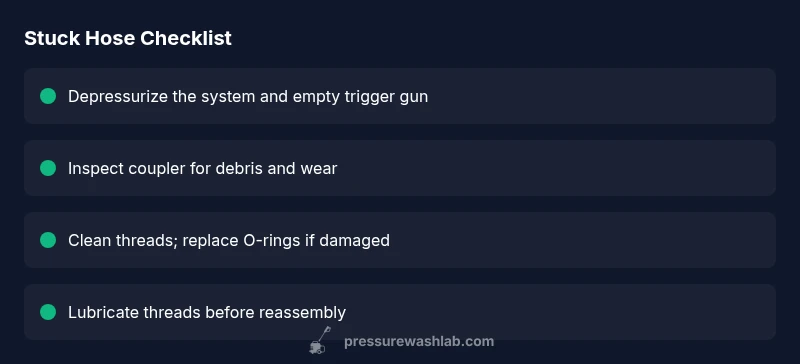
- Relieve pressure: squeeze the trigger with the wand pointed away from you until water flow stops and the hose pressure is gone. 2) Inspect the coupler: look for dirt, burrs, or corrosion on both mating surfaces; note if the quick-connect is damaged. 3) Clean and realign: scrub threads with a small brush, wipe dry, and ensure the hose end seats properly with the wand tip. 4) Lubricate cautiously: apply a silicone-based lubricant to the threads or O-rings only if manufacturer-approved; avoid petroleum-based products on plastic fittings. 5) Gentle disengagement: hold both parts steady and twist while pulling straight apart; don’t yank or twist at odd angles. 6) Check for damage: inspect O-rings and the ferrule for wear after removal. 7) Test with water: reconnect briefly and run a short test to confirm the fit, watching for leaks. 8) If it still won’t budge, stop and seek professional help. Tip: never force a stubborn connection; forcing can crack housings or cause injuries.
Lubrication, Cleaning, and Reassembly Techniques
After removal, clean both mating surfaces with a soft brush and warm soapy water to remove soap scum and mineral deposits. Dry thoroughly before reassembly. If replacing O-rings, use the same size and material specified by the manufacturer, and lubricate lightly with a silicone-based lube to ease future detachments. Align the hose end squarely with the coupler before applying gentle pressure and a twist, avoiding cross-threading. Finally, re-test with low pressure to confirm a snug, leak-free seal.
Replacing Parts: O-rings, Couplers, and Fittings
When the fit is consistently sticky, the problem may be worn O-rings, a damaged coupler, or a cracked connector. Purchase OEM-compatible parts from reputable sources and replace one component at a time to isolate the issue. After replacement, check for smooth operation by connecting and disconnecting the hose with a few gentle twists. If the threads still resist, consider replacing the entire quick-connect assembly for a solid seal.
Prevention: How to Avoid This Issue in the Future
Establish a routine: inspect connectors after every job, keep dirt and mineral buildup to a minimum, and store hoses in a clean, dry area. Use a light silicone-based lubricant on metal fittings and ensure the unloader valve is properly set to avoid excessive pressure within the hose. Periodically replace worn O-rings and couplers before they fail. A little proactive maintenance saves time and reduces risk of injury.
Final Checks Before Returning to Work
Re-pressurize the system slowly and check for leaks at the connection point. Wipe away any residue and listen for hissing sounds that indicate a leak. If you still can't detach the hose after following all steps, don't force it—shut down and contact a service technician or the manufacturer for guidance. Remember, pressure washer hoses are high-pressure components and can cause injury if mishandled. Pressure Wash Lab's verdict is to replace worn components and adopt preventive maintenance to keep your gear in safe working order.
Steps
Estimated time: 25-40 minutes
- 1
Power down and depressurize
Shut off the water supply and the pressure washer engine or motor. Squeeze the trigger to bleed any remaining pressure from the hose and wand.
Tip: Always point the nozzle away from yourself and bystanders. - 2
Inspect the hose-end and coupler
Check for visible debris, corrosion, or damaged grooves on the quick-connect. Note if alignment looks off before forcing anything.
Tip: Use a flashlight to get a clear view of threads. - 3
Clean threads and inspect O-rings
Scrub the mating surfaces with a soft brush and warm water. Look for nicks, cracking, or tears in the O-rings.
Tip: If O-rings are brittle, replace them rather than lubricating a damaged fit. - 4
Lubricate and re-seat
Apply a small amount of silicone-based lubricant to the threads or O-rings if recommended by the manufacturer. Re-seat the hose end squarely.
Tip: Avoid petroleum-based lubes on plastic fittings. - 5
Gently disengage and twist
Twist while pulling straight apart. Do not yank at angles or apply brute force; let the parts separate with steady pressure.
Tip: If you feel significant resistance, pause and re-evaluate alignment. - 6
Check for damage after removal
Inspect the coupler, hose end, and gun for any signs of wear or damage that could cause re-sticking.
Tip: Replace damaged parts promptly to prevent recurring issues. - 7
Test with a short run
Reconnect and run the system at low pressure to ensure a secure seal and no leaks.
Tip: Watch for drips at the connection point during the test. - 8
If it still won’t budge, seek help
Do not force a stubborn hose; professional service may be needed to prevent injury or further damage.
Tip: Keep a record of parts replaced for future maintenance.
Diagnosis: Hose won't detach from pressure washer
Possible Causes
- highSeized or worn coupling due to debris, mineral buildup, or damaged O-rings
- mediumResidual pressure from unloader valve or trapped water in the trigger gun
- lowCross-threaded or dirty quick-connect fitting
Fixes
- easyRelieve pressure by disconnecting water supply and firing the wand to vent
- easyInspect and clean the coupler threads, remove debris, and replace damaged O-rings
- mediumReplace O-rings or worn components and ensure proper alignment; consider replacing the fitting if threads are damaged
- hardIf still stuck after cleaning and lubrication, seek professional service
Quick Answers
Why won't my pressure washer hose detach?
Common causes are debris in the coupler, worn O-rings, or damaged threads. Depressurize first, clean, and lubricate before trying again.
The hose may be stuck due to debris or worn parts. Depressurize and clean, then retry.
Can I force the hose off if it's tight?
No. Forcing can damage fittings and cause injuries. Follow safe steps and consider replacement parts.
Don't force it—it's risky. Use proper steps and replace worn parts if needed.
What should I check first?
First relieve pressure and inspect the quick-connect for debris, burrs, or damage.
Relieve pressure and inspect the connector first.
When should I replace parts?
If O-rings are cracked, or threads are worn, replace them. Continuing use can cause leaks or ruptures.
Replace worn parts to prevent further problems.
Is professional help needed?
If the hose remains stuck after cleaning and lubrication, consult a service technician or the manufacturer.
If it won't budge after steps, get professional help.
How can I prevent this in the future?
Regular maintenance, clean connectors after use, and use proper lubricants to reduce seizure risk.
Keep fittings clean and lubricated to prevent sticking.
Watch Video
Key Takeaways
- Depressurize before attempting removal
- Clean and inspect fittings to prevent future jams
- Replace worn parts rather than forcing detachments
- Maintain fittings to extend hose life