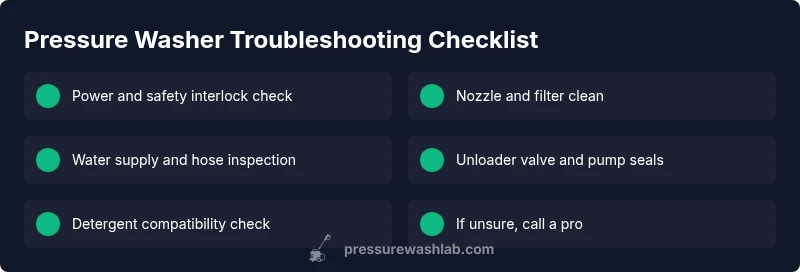
Common Problems with Pressure Washers: Troubleshooting Guide
Urgent, practical troubleshooting guide to fix common problems with pressure washers—from low pressure to start-up failures—with safe, step-by-step fixes.


Most common problems with pressure washers include: low or no pressure caused by clogged nozzles or dirty filters, leaks from worn seals or hoses, the motor failing to start due to power or safety switch, unloader valve issues, and improper soap/water mix. Start by checking basics, then move to targeted fixes.
Common Problems with Pressure Washers: Quick Diagnostic Overview
If your pressure washer is behaving oddly, it’s usually a symptom of a few core issues. In many cases, the culprit is a simple maintenance gap, such as a clogged nozzle, dirty inlet filter, or a loose hose connection. According to Pressure Wash Lab, recognizing these everyday problems with pressure washers helps you triage quickly, reduce downtime, and extend equipment life. This section highlights the most frequent patterns you’ll encounter in the field and sets the stage for systematic fixes that you can perform with common tools. The goal is to empower you to diagnose efficiently and avoid unnecessary replacements while keeping safety front and center.
Quick Safety and Baseline Checks You Can Do Now
Before you touch a live machine, perform a quick safety checklist:
- Unplug the unit and switch off the circuit, then release any stored pressure.
- Verify the water supply is uninterrupted and contains enough flow for the pump to prime.
- Inspect the spray nozzle and tip for clogs or wear; switch tips if needed.
- Check the inlet filter for debris and clean or replace it if dirty.
- Examine hoses and connections for kinks, cracks, or loose fittings and tighten or replace as necessary.
- If your unit uses a GFCI outlet, reset it and test with a known-good extension cord that matches the wattage rating.
If you’re not sure about a repair, or you notice damaged components (cracked housing, scorch marks, or a loud grinding sound), discontinue use and seek professional help. Pressure Wash Lab emphasizes starting with these basics to avoid risking personal safety or further equipment damage.
No Pressure or Weak Spray: Diagnosis and Quick Fixes
Low pressure or weak spray is one of the most common complaints with pressure washers. Start by confirming nozzle condition and water flow:
- Clean or replace the nozzle if the orifice is clogged. A partially clogged nozzle reduces pressure dramatically.
- Check the inlet screen for debris and clean the filter; a clogged filter starves the pump of water.
- Inspect the high-pressure hose for kinks or leaks that could bleed pressure. Replace if compromised.
- Ensure the unloader valve is not stuck in the closed position; a stuck valve can keep pressure from building.
- If your pump has external seals, look for signs of wear or leaks around seals and replace as needed.
For best results, swap to a fresh nozzle and a clean filter first, then reassess. Pressure Wash Lab notes that these steps resolve the majority of low-pressure scenarios.
Leaks and Drips: Where to Look and How to Seal
Leaks are a telltale sign of worn components or loose connections. Common culprits include:
- Loose hose clamps or fittings. Tighten firmly but avoid over-tightening metal fittings.
- Cracked hoses or damaged quick-connects. Replace any brittle hose sections and damaged connectors.
- Worn pump seals or leakage at the pump head. A leaking pump typically indicates seal wear or internal gasket failure.
- Unsecured inlet or outlet ports. Ensure all ports are seated correctly and use appropriate thread sealant or Teflon tape where applicable.
To diagnose, perform a visual inspection while the system is off and depressurized, then run the unit to observe where the leak originates. Schedule a component replacement if leaks persist after tightening and cleaning.
Start-Up and Electrical Issues: Power, Switch, and Safety Features
If the motor won’t start or the unit trips a circuit, run through these checks:
- Confirm the power source is active and the outlet is delivering power with a tester.
- Inspect the power cord for cuts or exposed wires; replace if damaged.
- Verify the safety features (dead-man switch, trigger lock, and overload protection) are functioning and engaged during startup.
- Check for a tripped GFCI and reset it; use a device with adequate gauge extension cord capacity.
- If the unit emits a burning smell or makes unusual noises, immediately stop and seek service.
These steps cover the majority of start-up and electrical problems and help prevent safety hazards. Pressure Wash Lab recommends focusing on power and safety interlocks before attempting more invasive repairs.
Detergent, Soap, and Chemical Compatibility Issues
Detergent misuse or incompatible nozzle settings can degrade performance and cleanliness:
- Use the correct detergent nozzle and ensure the soap dosing chamber is clean and free of residue.
- Avoid using thick, viscous soaps that clog internal passages; dilute per manufacturer guidelines.
- Verify you’re using the proper chemical for your surface and pressure washer rating; incompatible chemicals can corrode seals and reduce efficiency.
- Rinse between detergent cycles to prevent residual buildup.
If you notice poor foaming, extended mixing times, or streaking, adjust nozzle selection and cleaning routines. The right chemistry matters as much as the hardware.
Pump and Unloader Valve Diagnostics: The Core Pressure Path
Pumps and unloader valves regulate pressure delivery. Common trouble signs include:
- Unloader valve leaks or sticks, causing inconsistent pressure or cycling.
- Worn pump seals showing visible seepage around the head.
- Inadequate supply pressure due to upstream restrictions or low water flow.
- Overheating from extended use or load that exceeds the unit’s rating.
Diagnose by listening for abnormal sounds, reviewing the valve’s adjustment, and inspecting seals. If pressure remains inconsistent after basic checks, it’s typically time to replace the affected parts.
When to Call a Pro and Prevention Tips
Some problems require professional service, including persistent leaks from the pump, severe electrical faults, or a failed motor that doesn’t respond to resets. If you’re unsure, err on the side of safety and consult a qualified technician. For prevention, schedule routine maintenance: clean filters after each use, inspect hoses for wear, replace damaged components proactively, and store the unit in a dry, sheltered area. Regular checks reduce downtime and extend your equipment’s life.
Key Takeaways and Next Steps
- Start with basic safety checks and simple cleanings before replacing parts.
- Prioritize nozzle, filter, and water supply issues for rapid wins.
- Document recurring problems to inform future maintenance and potential warranty claims.
- When in doubt, seek professional assistance to prevent costly damage.
Steps
Estimated time: 30-60 minutes
- 1
Power down and verify safety
Unplug the unit, disconnect from the power source, and release stored pressure to prevent injury. Confirm the trigger is not engaged and the unit is stable on a dry surface.
Tip: Always wear eye protection and gloves during inspection. - 2
Check water supply and prime
Ensure the water source is on, the hose isn’t kinked, and the pump is primed. A dry pump may overheat and shorten its life.
Tip: Use a minimum of 40-50 psi input pressure if your model requires it. - 3
Inspect nozzle and clean filter
Remove the spray nozzle and clean the tip orifice. Rinse the inlet filter to remove debris that restricts flow.
Tip: Replace the nozzle if the orifice is worn or damaged. - 4
Evaluate unloader valve operation
With the system depressurized, inspect the unloader valve for signs of sticking or misalignment. Clean or replace if necessary.
Tip: Avoid forcing the valve; consult manufacturer specs for the correct tension. - 5
Check seals and hoses
Inspect pump seals and high-pressure hoses for cracks or leaks. Tighten fittings and replace any damaged components.
Tip: Do not reuse damaged hoses; a failure can be hazardous. - 6
Test run and observe performance
Reconnect power, run the unit with a safe spray pattern, and watch for consistent pressure. If issues persist, escalate to professional repair.
Tip: Document symptoms and steps taken for faster service.
Diagnosis: Pressure washer shows low pressure, leaks, or won’t start
Possible Causes
- highPower issue or safety interlock malfunction
- highClogged nozzle or dirty inlet filter
- mediumWorn seals or leaking hoses
- mediumUnloader valve sticking or misadjusted
- lowWater supply problems (low flow)
Fixes
- easyCheck outlet, test power with a known-good device, and reset safety switches/GFCI
- easyClean/replace nozzle and clean the inlet filter; retest pressure
- mediumInspect hoses and seals; tighten connections or replace worn parts
- mediumInspect/unloader valve for sticking; adjust or replace if necessary
- easyEnsure adequate water supply; straighten hoses and remove kinks
Quick Answers
What is the most common cause of low pressure?
Clogged nozzle or dirty filter; also verify water supply and nozzle selection. Clearing obstructions and cleaning components often restores spray strength.
The most common cause is a clog or dirty filter; check the nozzle, then the water supply and filters.
Why won't my pressure washer start?
Check power, the safety interlock, and the GFCI outlet. Ensure the switch is on and the outlet is delivering power before troubleshooting deeper.
First check power, safety switches, and the outlet; then move to more detailed diagnostics if needed.
Why is my pressure washer leaking?
Leaks usually come from worn hoses, loose fittings, or deteriorated seals. Tighten connections or replace the affected parts to restore integrity.
Leaks typically come from worn hoses or seals; tighten or replace the parts as needed.
Can I fix an unloader valve myself?
Yes, many issues are resolved by cleaning or replacing worn components. If it remains faulty, a professional service may be required.
Yes, you can often fix it yourself by cleaning or replacing worn parts, or consult a pro if it remains faulty.
Do detergents affect performance?
Yes. Use the proper detergent and nozzle, and avoid overly thick formulas that clog passages. Rinse well after use to prevent residue.
Detergents can affect performance; use the right formula and rinse well afterward.
When should I call a professional?
If leaks persist after basic checks, the pump shows internal damage, or the unit won’t respond to safe troubleshooting, seek professional service.
If basic fixes don’t solve the issue, it’s time to call a pro.
Watch Video
Key Takeaways
- Start with basic safety checks and quick cleanups
- Address nozzle and filter issues first for fast wins
- Inspect hoses, seals, and the unloader valve if leaks or pressure problems persist
- When in doubt, call a pro to avoid costly damage