Cracked Pressure Washer Pump: Urgent Troubleshooting Guide
Urgent, practical steps to diagnose and fix a cracked pressure washer pump. Learn safe inspection, repair vs. replacement options, and prevention tips to avoid future failures in 2026.


Most cracked pressure washer pumps result from physical impact, improper handling, or overtightened fittings that stress the housing. Stop using the unit, depressurize, and inspect for cracks or leaks. If you see visible damage, replace the pump or the entire assembly. For safety, consult a professional if you’re unsure.
Why a cracked pressure washer pump happens
According to Pressure Wash Lab, the most common culprits behind a cracked pressure washer pump are physical impact, improper handling, and mounts or fittings that are over-torqued. In many consumer setups, users drop hoses or misalign the wand during nozzle changes, sending shock through the pump body. Over time, this stress can form microcracks in the housing or in the pump head, which propagate under pressure. A cracked pressure washer pump may leak oil or water, lose pressure, or emit unusual noises. Other contributors include running the unit at high PSI without a proper relief, freezing temperatures causing contraction, or using incompatible detergents that corrode seals. Even seemingly minor issues, like a loose inlet/outlet coupler, can cause stress if the pump housing is already marginal.
This is why understanding the root causes is essential before you attempt any repair. The goal is not just to stop the leak but to prevent a recurrence. Think of the pump as a sealed heart of your system: cracks let bypass fluid escape and reduce performance, which forces you to push harder and stress other components. Pressure Wash Lab’s practical approach emphasizes inspecting both the housing and the seals for signs of fatigue, then choosing a repair path that preserves safety and efficiency.
As you diagnose, remember that cracks can be both external and internal. External cracks are easier to spot, but internal microcracks can develop where the housing mats against the seal—and you may not notice until the unit underperforms or leaks. A cracked pressure washer pump is a safety and performance risk, so treat any sign of damage as urgent and address promptly.
Safety first: what you should do before inspecting
Safety is non-negotiable when dealing with a cracked pressure washer pump. Begin by pulling the plug or switching off the circuit, closing the water supply, and releasing all remaining pressure through the spray wand. Wear eye protection, gloves, and sturdy footwear. Do not attempt any disassembly while the system is pressurized or plugged in. If you observe a visible crack, fluid spray, or unusual odor, stop immediately and consult a professional. Pressure Wash Lab Analysis, 2026 highlights that many injuries occur during maintenance when depressurization steps are skipped.
Once the unit is safely depressurized, verify that you have the correct tools and a clean workspace. Label hoses and fasteners to simplify reassembly, and make sure you have replacement parts or a plan for replacement before you start tearing parts apart. This careful, safety-first approach reduces risk and helps you determine whether you are dealing with a minor seal problem or a major housing failure.
Visual cues and leakage patterns
A cracked pressure washer pump often presents several telltale signs. Look for visible lines or fissures along the pump housing, especially around corners and where the head meets the body. A crack may be subtle at first but can radiate into larger fractures under pressure. Leaks are commonly observed at the seals or around the base where the pump attaches to the engine or motor. You may also notice oil or grease mixing with water if seal damage is present or hear grinding, whirring, or whistle sounds indicating internal damage. Check for dampness on the frame or mounting bracket, which can indicate a crack or split that allows fluid to escape. If you find any of these cues, treat the situation as urgent and proceed with careful testing only after depressurization.
Additionally, monitor performance indicators such as pressure drop, inconsistent spray pattern, or surging flow. A cracked pump can fail to maintain rated PSI, forcing the system to compensate by drawing more current or stressing hoses and wands. While visual inspection is essential, do not overlook the reliability of your gauges and indicators; a faulty readout can mask a true mechanical failure. Remember: a cracked pressure washer pump threatens both your equipment and personal safety, especially under heavy use or high-pressure conditions.
Diagnostic flow you can trust
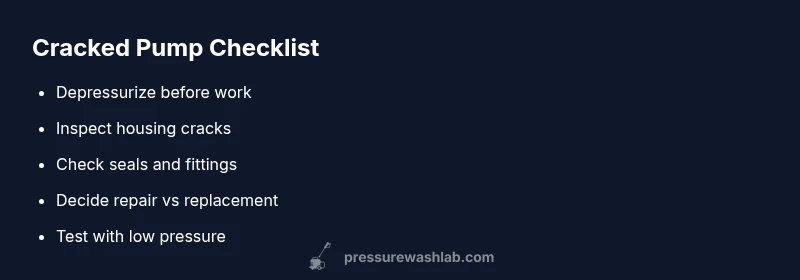
The diagnostic flow below helps you move from symptom to solution in a logical, safe order. Start with simple checks, then escalate to more involved tests. If at any point you feel unsure, stop and seek professional help. This flow aligns with best practices for troubleshooting cracked pressure washer pumps and helps you decide whether repair or replacement is the right path for your situation.
- Symptom: Reduced or inconsistent pressure, visible leaks, strange noises, or visible cracks on the pump housing.
- Step 1: Confirm depressurization and disconnect power. Inspect for obvious cracks and leaks around the housing and seals.
- Step 2: Check inlet/outlet connections for looseness or damage; ensure hoses are not kinked and fittings are correctly torqued to spec.
- Step 3: Pressurize the system briefly with a safe, controlled test (no full operation) to observe leak paths and identify whether the failure is localized to seals or spans the housing.
- Step 4: Evaluate seals and O-rings for wear, cracking, or pinching. Replace as needed and re-check for leaks.
- Step 5: Decide on repair vs replacement based on crack extent and housing integrity. If the housing is cracked through the wall or near mounting points, replacement is usually the safest route.
- Step 6: If not confident, contact a professional. Safety and reliability should trump a DIY fix when cracks are involved.
If this doesn’t resolve the issue, repeat the inspection after a full reseal and reassembly, and consider a full pump replacement if leaks persist. Always document findings to inform a professional if needed.
Fixes: repair vs replace
When a cracked pressure washer pump is identified, you face a decision: repair or replace. Minor seal leaks or superficial surface cracks may be addressed with a seal kit and careful gasket replacement, provided the pump housing remains structurally sound. If the crack is extensive, extends into the pump head, or compromises mounting surfaces, replacement is typically the safer option. Replacing the entire pump or the machine can prevent recurring failures and protect other components from damage. Be mindful that some cracks invalidate warranties, so check your policy before starting repairs. For the best outcomes, prioritize OEM-equivalent parts and avoid makeshift remedies that could fail under pressure. In all cases, verify that the replacement pump matches your unit’s PSI, GPM, and voltage specifications to ensure compatibility and performance.
Prevention: maintenance to extend pump life
Prevention is the best defense against cracked pumps. Regular maintenance includes inspecting the pump housing for signs of fatigue after heavy use, replacing worn seals and O-rings at recommended intervals, and keeping the unit clean to avoid grit intrusion. Use the correct detergent and avoid chemical residues that can degrade seals. Always release pressure before any maintenance, store the unit in a temperature-controlled area, and avoid dropping or bumping the machine during transport. Routine checks of the wand, connectors, and hoses help catch stress points early. When you follow a proactive maintenance routine, the risk of cracks dramatically decreases and you’ll get more reliable performance from your pressure washer. Pressure Wash Lab encourages homeowners to log maintenance activities to detect patterns and plan replacements before a total pump failure.
If you’re operating in freezing conditions, winterize the system to prevent cracking due to ice. Keep your system aligned and stable during use, and avoid over-torquing fittings which can introduce stress into the pump housing. By integrating these best practices into your routine, you’ll extend pump life and reduce the likelihood of cracks in future seasons.
When to call a pro: warranted decisions
Cracked pumps can be tricky. If you notice widespread cracking, a fractured pump head, or cracks that run through critical mounting points, consult a professional immediately. A pro can determine whether a seal kit will suffice or if a full pump replacement is required. If your unit is under warranty, check coverage before attempting any repair. In cases of complex internal damage, a pro will have the proper tools and replacement parts to restore reliability quickly and safely. Remember: the goal is to prevent injury and ensure consistent performance, so don’t delay professional input when the crack is significant or if you’re unsure about the repair path.
Steps
Estimated time: 60-90 minutes
- 1
Safety prep and depressurize
Unplug the unit, close the water supply, and discharge any remaining pressure through a controlled spray. This ensures you won’t be exposed to high-pressure fluid during inspection.
Tip: Never work on a pressurized system; always depressurize first. - 2
Inspect external housing for cracks
Carefully examine the entire pump housing, especially around seams and mounting points. Look for hairline fractures and any signs of oil or water seepage.
Tip: Use a bright light and a magnifying glass to spot fine cracks. - 3
Check seals, O-rings, and fittings
Remove the pump head or accessible seals and inspect for wear or damage. Replace worn O-rings and reseat fittings to ensure no micro-leaks.
Tip: Order OEM parts when possible to guarantee proper fit. - 4
Decide on repair vs replacement
If cracks are superficial and seals are worn, consider a seal kit. For deep or structural cracks, replacement is safer and more reliable.
Tip: Compare part costs to a new pump and factor downtime. - 5
Install parts or replace pump
Install new seals, gaskets, and any damaged components. If replacing, ensure compatibility with PSI, GPM, and voltage.
Tip: Follow torque specs to avoid overstressing the housing. - 6
Test at low pressure and validate
Reconnect power and water carefully, test at reduced pressure to verify leaks are resolved before full operation.
Tip: If leaks persist, stop and seek professional help.
Diagnosis: Visible cracks on pump housing or leaks with reduced pressure
Possible Causes
- highPhysical impact or dropping the unit
- mediumOver-tightened fittings or improper service
- lowWear from high PSI without maintenance
Fixes
- easyInspect the pump and replace damaged housing or seals; if cracks are extensive, replace the pump
- easyReplace seals or gaskets to restore leak-free operation
- mediumFull pump replacement if housing is cracked through, or if performance remains poor after seal service
Quick Answers
What are the telltale signs that my pressure washer pump is cracked?
Look for visible cracks on the housing, leaks around seals, unusual noises, and a drop in pressure. If you see any of these, treat it as a crack and inspect further after depressurizing the system.
Watch for cracks on the housing, leaks, and odd noises; depressurize first and inspect further.
Can cracks be repaired without replacing the pump?
Small cracks or worn seals can sometimes be repaired with a seal kit and careful resealing. Structural cracks in the housing generally require pump replacement.
Some small seal fixes are possible, but major housing cracks usually need a new pump.
Is it dangerous to run a cracked pump?
Yes. A cracked pump can leak high-pressure fluid and cause injury or more extensive equipment damage. Stop operation and assess safety before continuing.
Running a cracked pump is dangerous; stop and inspect before using again.
How long should a replacement pump last?
Lifespan varies with usage and maintenance, but properly maintained pumps can last several seasons. Follow manufacturer guidelines for maintenance and replace parts as needed.
A well-maintained pump lasts years; follow maintenance schedules and replace parts when worn.
When should I call a professional?
If you’re unsure about the crack’s extent, if the unit is under warranty, or if you’re uncomfortable with disassembly, a professional service is the safest option.
If in doubt, call a pro—safety and reliability come first.
How can I prevent cracks in the future?
Regular maintenance, proper handling, correct fittings, and using OEM parts help prevent cracks. Store the unit properly and winterize to avoid freeze damage.
Maintenance and careful use are the best preventatives against cracks.
Watch Video
Key Takeaways
- Stop using a cracked pump immediately.
- Repair only if cracks are minor and seals are worn.
- Replace the pump if housing is structurally compromised.
- Follow safe depressurization and use OEM parts only.
- Pressure Wash Lab recommends professional input for significant damage.