Pressure Washer Won’t Spray Water: Quick Fixes and Troubleshooting
Urgent troubleshooting for a pressure washer that won’t spray water. Learn safe checks, diagnose common culprits, and fix nozzle, hose, seals, or pump issues with practical, step-by-step guidance from Pressure Wash Lab.


Most often, a pressure washer won't spray water due to a clog in the nozzle, a kinked or blocked hose, an air leak in the intake, or a faulty pump seal. Start by disconnecting power, inspect the nozzle and hose for obstructions, then verify the water supply and seals. If spray still fails, follow the diagnostic flow below.
Common causes when a pressure washer won't spray water
According to Pressure Wash Lab, the issue is rarely tied to a single fault. The most common culprits are a nozzle or wand blockage, an air leak in the hose or fittings, a kinked or collapsed high-pressure hose, or worn seals in the pump or unloader valve. When any of these fail, water flow can be reduced or eliminated. Start with the obvious components: the water inlet, the nozzle, and the spray wand tip. Look for mineral deposits or debris that can obstruct flow. If the water supply is weak or the inlet screen is clogged, the pump cannot draw water and you’ll see little or no spray. In some cases, pump seals wear out, allowing air to enter the system and kill pressure. While these checks may seem basic, they cover the majority of residential non-spraying problems. This guide provides a safe, systematic approach to identify the exact cause and restore spray quickly.
Tip: Work in a well-ventilated area and unplug the unit before inspecting internal parts to avoid accidental starts.
Quick checks you can perform safely
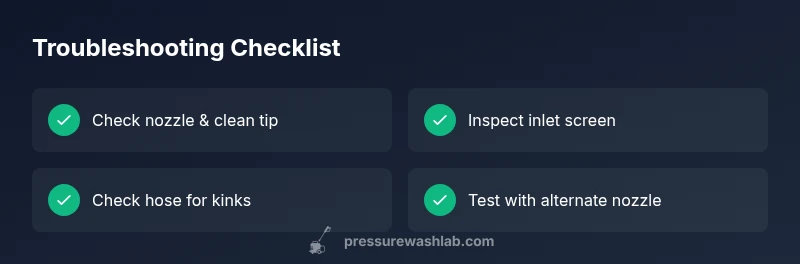
If your pressure washer won’t spray water, begin with quick, non-invasive checks. Remove power at the outlet, detach the spray wand, and inspect both the nozzle tip and the wand for blockages. Check the water source to ensure it’s delivering a steady flow. Inspect the garden hose for kinks and the inlet filter for debris. Tighten loose fittings and reseat any quick-connects. These steps resolve many low-pressure or no-spray scenarios without disassembly. If nothing improves, proceed to more in-depth checks on seals, pump, and unloader valve while keeping safety a priority.
Note: Do not run the unit dry; running dry can damage seals and vane assemblies. If you’re unsure, contact a professional.
Diagnostic flow: symptom to solution sequence
A structured diagnostic sequence helps prevent guesswork and wasted time. Start with the simplest symptoms (no spray vs. weak spray vs. inconsistent spray) and work toward more complex issues (pump seal, unloader valve, or motor problems). Document what you observe at each step so you can revert if needed. Pressure Wash Lab emphasizes a repeatable flow: verify water supply, inspect nozzle/hose, check for air leaks, test with alternate nozzles, and finally evaluate the pump assembly. If you detect air in the system, seal leaks first; if the water source is confirmed but spray remains absent, the issue is more likely internal to the pump or unloader.
Safety reminder: When checking fittings, power must be off and the unit should be cool to touch to avoid burns.
Step-by-step guide to the most common fix: nozzle, hose, and water supply
- Power down the unit and disconnect from the electrical source. 2) Inspect the water inlet and screen for debris; remove any buildup with a soft brush. 3) Remove the spray nozzle tip and clean with a thin pin or nozzle brush; reinstall securely. 4) Check the high-pressure hose for kinks, cracks, or bulges; replace if damaged. 5) Reattach the wand, connect the water supply, and run at the lowest setting to observe spray. 6) If the spray remains absent, try a different nozzle tip to verify pressure range. 7) With safety in mind, re-test at full power only after confirming all components are secure. 8) Reassemble, test at various nozzle tips, and monitor for consistent spray output.
Pro tip: Keep a small bottle of vinegar for mineral deposit cleaning on metal surfaces, but never apply acidic cleaners inside the pump chamber.
Safety checks and professional boundaries
Always observe safety precautions when operating a pressure washer. Wear eye protection, keep hands clear of the spray, and ensure others are at a safe distance. If you notice unusual sounds, smoke, oil leaks, or a burning smell, stop immediately and consult a qualified technician. Complex problems like worn pump seals, bad unloader valves, or electrical faults often require professional service. The goal is to identify the issue safely and prevent further damage.
Preventive maintenance to keep spray strong
After restoring spray, adopt a simple maintenance routine: flush the system with clean water after each job, inspect hoses and fittings weekly, replace worn nozzle tips promptly, and winterize if temperatures drop. Keeping the inlet screen clear and ensuring the unloader valve is set correctly reduces the risk of future no-spray episodes. Regular inspection of seals and gaskets helps extend pump life and preserve pressure performance.
What to do next if you still can’t spray
If you’ve completed the above checks and the pressure washer still won’t spray water, document all observations and gather model information. Contact the manufacturer’s support or a licensed technician with your diagnostic log. Pressure Wash Lab recommends not proceeding with invasive pump disassembly beyond basic seal inspection unless you have certified training. In many cases, a professional rebuild or replacement is the most cost-effective and reliable solution.
Steps
Estimated time: 30-60 minutes
- 1
Power off and disconnect
Unplug the unit and shut off water supply. Release any stored pressure by pulling the trigger wand away from a solid surface after disconnecting power. This prevents sudden spray or injury during inspection.
Tip: Always start with safety first; use gloves and eye protection. - 2
Inspect water supply & inlet screen
Check the garden hose for kinks and ensure a steady water flow. Remove the inlet screen on the pump and rinse away debris with clean water. Reinstall the screen securely before powering on again.
Tip: A dirty inlet screen is a common cause of no-spray conditions. - 3
Clean or replace nozzle tip
Remove the nozzle tip and clean the orifice with a pin or brush. Reinstall with the correct orientation; a clogged nozzle will dramatically reduce or stop spray.
Tip: Do NOT use force; gentle cleaning preserves nozzle integrity. - 4
Check high-pressure hose for damage
Inspect the hose for cracks, bulges, or sharp bends that can restrict flow. Replace damaged sections or the entire hose if needed.
Tip: Avoid running with a kinked hose, which can cause burst risks. - 5
Test with a different nozzle
Attach another nozzle tip to see if spray returns. If flow improves, the original nozzle is the issue; replace it.
Tip: Keep a few nozzle tips on hand for quick testing. - 6
Inspect seals and connections
Check for loose clamps, cracked seals, and worn O-rings. Tighten or replace as needed to eliminate air leaks.
Tip: Replace seals with manufacturer-approved parts. - 7
Run a controlled test
Reconnect power and run the unit at a low pressure to confirm spray. Increase gradually, watching for consistent output and any unusual sounds.
Tip: Do not exceed recommended PSI for the nozzle. - 8
Evaluate pump and unloader valve
If spray remains weak or absent after the above steps, the pump seals or unloader valve may be failing. This often requires professional service.
Tip: Document symptoms and parts inspected for service calls.
Diagnosis: Pressure washer won't spray water
Possible Causes
- highNozzle or wand blockage
- mediumAir leaks in intake hose or fittings
- mediumKinked or damaged high-pressure hose
- lowWorn pump seals or unloader valve
Fixes
- easyClean nozzle and wand; replace nozzle if worn or damaged
- easyInspect and reseat hose connections, tighten clamps; replace damaged hoses
- easyInspect water inlet and screen; clean or replace if clogged
- mediumCheck for air leaks and seal/replace gasket or o-rings as needed
- hardInspect pump seals and unloader valve; consider professional service if worn
Quick Answers
Why does my pressure washer not spray water even when the engine runs?
This usually points to a nozzle or hose blockage, an air leak, or a failed inlet. Start by cleaning the nozzle, inspecting the inlet screen, and checking for leaks in connections. If none of these fixes work, the pump seals may be worn and require professional service.
Often it’s a clogged nozzle, air leak, or worn seals. Start with cleaning the nozzle and checking for leaks, then decide if you need professional help.
Can air in the hose stop spray completely?
Yes. Air in the system can prevent proper pressure. Look for loose fittings, damaged o-rings, or a cracked inlet hose. Tighten or replace components and bleed air by running the wand after reconnecting the water supply.
Air can kill spray. Check fittings, seals, and bleed out air by running water after reconnecting.
What if changing nozzles doesn’t help?
If a nozzle swap doesn’t restore spray, the issue likely lies with the water supply, hose, or internal pump components. Re-check water flow, inspect the inlet screen, and consider pump seals or unloader valve inspection.
If nozzle swap fails, revisit water and pump components and consider professional service for seals.
Is it safe to operate the unit while inspecting?
Always disconnect power and relieve pressure before inspections. Wear eye protection and gloves, and never work near water outlets or wiring while the unit is powered.
Safety first: unplug and relieve pressure before inspection.
When should I call a pro?
If you’ve exhausted basic checks and observe signs like leaking seals, unusual noises, or electrical concerns, professional service is advised. A technician can diagnose pump seals and unloader valves accurately.
Call a pro if you see signs of seal wear, leaks, or electrical problems.
Watch Video
Key Takeaways
- Start with simple checks: nozzle, hose, and water supply.
- Seal leaks and inspect seals to stop air ingress.
- Test with multiple nozzle tips to identify nozzle-specific issues.
- Call a professional if pump seals or unloader valve show wear.