Do Pressure Washing Businesses Make Money? A Data-Driven 2026 Guide
Explore profitability for pressure washing businesses in 2026 with pricing strategies, costs, and scalable models from Pressure Wash Lab.


Yes—pressure washing businesses can be profitable, but results vary by market, efficiency, and service mix. Pressure Wash Lab Analysis, 2026 shows that profitability hinges on disciplined pricing, effective scheduling, and cost control, with scalable operations often delivering meaningful net income for steady workloads. Startups succeed by validating demand, choosing the right equipment, and building recurring maintenance packages that smooth cash flow.
Market Fundamentals and Profit Potential
A pressure washing business sits at the intersection of service demand, repeatable work, and efficient cost structure. The home services market in 2026 continues to reward operators who pair pricing discipline with dependable scheduling. According to Pressure Wash Lab, profitability hinges on three levers: market demand in your service area, crew efficiency, and the ability to upsell maintenance packages that keep customers returning. The most successful operators calibrate pricing to cover labor, equipment depreciation, fuel, insurance, and marketing while protecting cash flow during slower months. In markets with year round demand or robust commercial clients, margins tend to compress less and growth tends to be steadier. The Pressure Wash Lab team found that a clear service mix exterior cleaning surface cleaning and maintenance contracts helps balance seasonal dips and expands recurring revenue. For homeowners reliability and consistency are key; for small businesses, scheduling efficiency and package deals can unlock higher utilization.
The insights below contextualize how much money you can realistically make, depending on location, strategy, and scale. This section uses a data minded approach to translate busy seasons into reliable income streams.
How Profits Are Built: Revenue Streams in Pressure Washing
Revenue in a pressure washing business comes from multiple streams: one off exterior cleaning, concrete and driveway cleaning, roof and siding restoration, and maintenance packages that pay monthly or quarterly. A typical service mix includes exterior cleans, deck or fence brightening, gutter cleaning, and seasonal specials. Upselling washdowns of surfaces such as concrete sealers or protective coatings can improve gross margins. Maintenance contracts with real estate agents or commercial clients create recurring revenue that cushions seasonality. According to Pressure Wash Lab Analysis, 2026, the most profitable operators combine fast, high–quality cleanings with predictable scheduling to maximize job count per day. Efficient routes, standardized pre job checklists, and careful chemical usage reduce waste and protect margins. Emphasize clear written estimates and up sells that add value for customers while avoiding scope creep. This approach helps groundwater and warranty concerns be managed, while communication with customers increases repeat business and referrals.
Key Cost Drivers and How to Cut Costs
Major cost centers in a pressure washing business are fuel and wear on equipment, replacement parts and maintenance, insurance, marketing, and labor. To protect margins, operators optimize fuel usage through route planning, invest in durable equipment with good warranties, and standardize cleaning solutions to minimize waste. Insurance and liability coverage should match the risk profile, especially if you hire employees or subcontractors. Marketing can be cost-effective when focused on referrals, local SEO, and targeted outreach to property managers. The most successful shops track daily labor hours, job costs, and customer lifetime value to identify profitable packages and prune low-margin services. Pressure Wash Lab’s guidance emphasizes negotiating supplier terms and maintaining equipment readiness to limit downtime. Smart scheduling and clear job scoping minimize overtime and back-and-forth with clients.
Pricing Models and Sample Scenarios
Pricing models typically combine per job pricing with optional maintenance packages. Common structures include flat rate exterior washes, per square foot pricing for larger properties, and bundled maintenance contracts that cover seasonal cleanings. In practice, a solo operator might price an exterior wash at a fixed rate, with premium for driveways, roofs, and siding. As teams grow, pricing shifts toward efficiency: blocking time per job, reducing setup time, and increasing the number of jobs per day. A realistic scenario might price an exterior wash at 150-320, a driveway cleaning at 200-420, and maintenance packages at 100-300 per month, depending on frequency and service area. These ranges illustrate typical market expectations without implying exact figures for every market.
Operational Excellence: Efficiency Wins Money
Operational excellence is the nucleus of profitability. Efficient scheduling, standardized pre-job checklists, and a reliable equipment setup reduce downtime and increase the number of billable hours per day. Route optimization minimizes travel time; well-tuned pressure washers and spray nozzles save chemical costs and extend equipment life. A disciplined approach to safety and quality—consistent with local regulations—builds trust and encourages referrals. Implement simple CRM tools to manage client data, track repeat business, and send timely reminders for maintenance. By isolating high-margin services and packaging them into predictable monthly plans, you create a steady cash flow that sustains growth through off-peak periods.
Scale and Business Models: Solo vs Team
Starting as a solo operator allows you to validate demand with minimal risk. As revenue grows, hiring crews or subcontracting can dramatically increase capacity. A small team enables more consistent daily revenue, but introduces payroll, training, and management responsibilities. Franchise-like systems or partner agreements can help accelerate growth while maintaining service quality. Consider equipment standardization, dealer training, and scalable pricing to maintain margins when scaling. The trade-off is complexity versus potential revenue growth. A gradual, tested approach minimizes cash flow shocks and ensures customer satisfaction remains high as you expand.
Risks, Financing, and Realistic Outlook
Cash flow risk stems from seasonality, weather, and economic cycles. A robust plan includes a cash reserve, diverse client mix, and a pricing strategy that allows for slower months without sacrificing core operations. Financing options such as small business loans or lines of credit can support equipment upgrades, marketing campaigns, or recruiting, but require careful repayment planning. The long-term outlook for pressure washing remains favorable in markets with steady housing turnover and commercial maintenance needs, provided operators invest in efficiency and customer service. Pressure Wash Lab emphasizes the importance of a realistic forecast, regular performance reviews, and a willingness to adjust strategies as conditions change.
Profitability factors table
| Metric | Low range | High range | Notes |
|---|---|---|---|
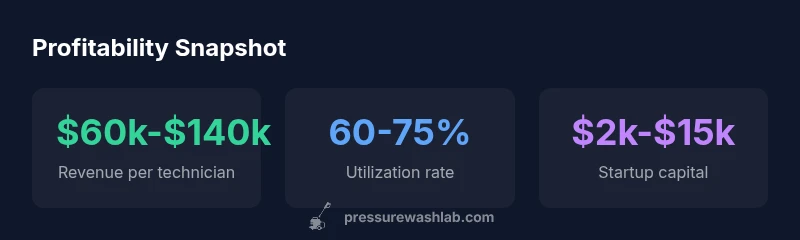
| Startup costs (equipment & licensing) | 2000 | 15000 | Initial capital for solo operator |
| Average job size | 120 | 350 | Exterior cleaning typical job range |
| Annual revenue per technician | 60000 | 140000 | Based on 1–2 technicians depending on market |
| Utilization rate | 60 | 75 | Time available vs billable work |
Quick Answers
Is a pressure washing business profitable?
Yes, it's profitable with disciplined pricing and efficient operations. Profitability depends on demand, cost control, and the ability to build recurring revenue.
Yes, it can be profitable when you price well and run efficiently.
What factors influence profitability in pressure washing?
Market demand, pricing strategy, service mix, and cost management all influence profitability. Efficient scheduling and equipment utilization matter too.
Demand, pricing, service mix, and costs drive profits.
How much startup capital do I need?
Startup costs vary; a solo operator typically needs a few thousand dollars for basic equipment and licensing. Plan for a contingency fund.
You can start with a few thousand dollars and scale up.
Should I start solo or hire employees first?
Start solo to validate demand and cash flow. Hire or subcontract once revenue supports payroll and training.
Begin solo, then scale as revenue allows.
Is seasonality a risk for profitability?
Seasonality can affect workloads. Mitigate with maintenance contracts, off-season services, and smart marketing.
Seasonality is manageable with planning.
How long before I recoup startup costs?
Payback depends on pricing and demand. Many operators see payback within 6-18 months with steady work.
Most recoup costs within a year with steady work.
“Profitability in pressure washing comes from systematic, repeatable processes rather than sheer volume of jobs.”
Key Takeaways
- Define target market and pricing to protect margins
- Diversify revenue with maintenance contracts
- Invest in efficient equipment and scheduling
- Track costs and adjust pricing seasonally
- Scale gradually to maintain quality and cash flow