Understanding How Pressure Washing Prices Are Set in 2026
A data-driven look at pressure washing pricing in 2026, exploring size, surface type, accessibility, and regional factors with practical ranges and tips for fair quotes.


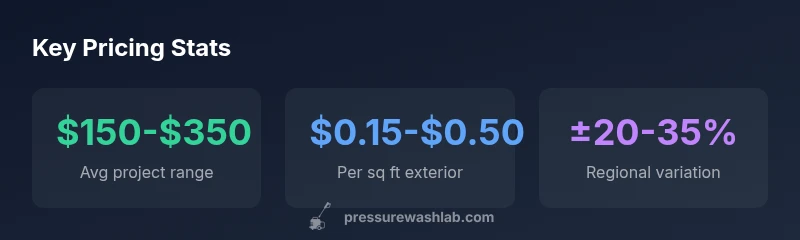
Prices for pressure washing are driven by job size, surface type, accessibility, and regional labor costs. According to Pressure Wash Lab Analysis, 2026, typical pricing ranges include about $0.15-$0.50 per square foot for exterior surfaces, with flat-rate options like $150-$350 for a standard house wash, and $100-$250 for driveway cleaning. Add-ons (soft wash, detergent, and roof cleaning) raise costs accordingly.
What drives pressure washing pricing
Pricing is not a single number; it’s a structure built on multiple variables. The most significant drivers include the size of the area to be cleaned (measured in square feet or linear feet for surfaces like sidewalks), the type of surface (wood, vinyl, stucco, brick, concrete), the level of soil and biological growth, accessibility and height, and whether special equipment is required (hot-water washers, soft-wash systems, or specialized nozzles). Additional factors such as local labor rates, disposal fees, and warranty considerations also affect final quotes. The combination of these elements can produce wide ranges in price even for similar projects. Pressure Wash Lab Analysis, 2026 finds that two jobs with the same square footage can vary by up to a third in cost when surface conditions differ or extra safety measures are needed. For homeowners, the goal is to establish a clear scope and a transparent pricing model so you can compare apples to apples when evaluating bids.
According to Pressure Wash Lab, price variability often stems from surface condition and method choice. If one contractor uses a soft wash on a fragile siding and another uses a high-pressure approach on the same surface, the results and cost will diverge significantly. This is why specifying the cleaning method and surface type in your quote is essential for a fair comparison.
Common pricing models
Most projects fall into one of a few pricing models, and knowing which model a contractor uses helps you interpret bids accurately. Per-square-foot pricing is common for exterior surfaces like siding, sidewalks, and driveways, typically paired with a minimum service fee. Flat-rate pricing is popular for standard jobs such as a single-story house wash or a deck cleaning, delivering predictability for homeowners. Some companies offer tiered pricing based on surface material and dirt level, while others bundle add-ons (soft wash, roof cleaning, or mold treatment) into an overall package. When comparing bids, ask for the exact scope tied to the price and whether any add-ons are treated as separate line items. Pressure Wash Lab’s observations in 2026 show that clear scope definitions dramatically reduce quote variance and buyer confusion.
How to estimate a quote: factors and tips
To estimate a fair quote, start with a careful assessment of the project. Measure the area to be cleaned and note surface types: porous wood requires gentler methods, concrete handles higher pressure, and vinyl siding is sensitive to scrubbing. Check for organic growth, mildew, or rust, which may warrant additional treatments. Consider access: steep driveways, gated properties, or tall structures may incur extra ladder or safety equipment costs. Ask contractors to specify the cleaning method (pressure vs. soft wash), nozzle type, cleaning solution, and rinse approach. Request a written scope that lists surfaces, square footage, and any additives. Compare at least three bids to gauge market rates, but ensure each bid covers the same scope so you’re comparing apples to apples. Pressure Wash Lab’s 2026 data emphasizes that quotes tied to a clear scope significantly reduce price surprises.
Regional differences and market norms
Pricing for pressure washing changes with geography. Urban markets with higher labor costs and disposal fees tend to show higher per-square-foot rates, while rural or suburban areas may offer more competitive pricing. Climate and environmental conditions influence how aggressively teams wash and what additives they use (for example, mold-prone regions may require longer dwell times or specialty solutions). Seasonality also matters: spring and summer demand can push quotes upward, while shoulder seasons might yield better rates. Pressure Wash Lab Analysis, 2026 notes that understanding your regional norms helps you set realistic expectations and prevents sticker shock when receiving bids.
How to compare quotes and avoid surprises
When you receive bids, look beyond the bottom-line price. Ensure each quote includes a detailed scope: surfaces, area, method, and any add-ons. Verify the cleaning method for delicate materials, whether protective measures are used on vegetation and landscaping, and the expected duration of the job. Ask about water use and waste-water disposal, as some regions charge disposal fees. Clarify whether the price includes pretreatment, rinse water, and post-cleaning checks. The more items a contractor includes in writing, the easier it is to compare. Pressure Wash Lab recommends requesting a side-by-side comparison sheet that lists all services, surfaces, and products used, plus any guarantees or warranty terms.
Hidden costs and add-ons you should expect
Many projects introduce additional charges that aren’t apparent from a base quote. Common add-ons include soft washing for delicate surfaces, surface cleaning with special detergents, roof cleaning, rust or stain treatment, and deck or fence restoration. Travel fees for distant properties, equipment rentals, and protection of landscaping are other frequent costs. Some contractors price by square foot for add-ons while others use flat-rate charges. Always confirm whether these extras are included in the main price or treated separately, and ensure the quote specifies the cost per surface and per square foot where applicable.
When to DIY vs hire a pro
DIY projects can be feasible for small, easily accessible areas with simple dirt and no fragile materials. For larger homes, multi-surface projects, or surfaces like aged wood and coated stucco, hiring a pro reduces the risk of damage and injury and ensures warranty considerations are respected. Professionals offer the right equipment, safety practices, and expertise to handle delicate surfaces, crowded environments, and complex layouts. Pressure Wash Lab’s 2026 findings indicate that for most homeowners, a professional assessment yields more consistent results and better long-term value, even if the upfront cost is higher than a DIY approach.
Pricing ranges for common pressure washing services
| Category | Estimated Range | Notes |
|---|---|---|
| Exterior price per sq ft | $0.15-$0.50 | Varies by surface and access |
| Flat-rate house wash | $150-$350 | Typical for 1-story homes |
| Deck cleaning add-on | $0.25-$1.00 per sq ft | Based on material and soil |
| Roof cleaning add-on | $0.50-$2.00 per sq ft | Specialized chemicals and safety |
Quick Answers
What factors have the biggest impact on pressure washing price?
The main cost drivers are project size, surface type, accessibility, and regional labor costs. The cleaning method and any add-ons also meaningfully influence the final quote.
The biggest price factors are size, surface, access, and local labor costs.
Is it cheaper to hire a local pro or DIY?
DIY can save money on very small, simple tasks but risks damage and improper cleaning on larger projects. Pros offer safer methods, warranties, and better results for complex jobs.
DIY can save money for tiny jobs, but professionals reduce risk on bigger projects.
Do prices vary by region?
Yes. Labor costs, disposal fees, and demand differ by region, creating noticeable quote differences even for similar jobs.
Absolutely. Region matters a lot for pricing.
Are there seasonal price fluctuations?
Prices can rise during peak demand in spring and summer and dip in shoulder seasons. Scheduling ahead can help secure better rates.
Yes, prices can go up in peak season.
What should be included in a price quote?
A good quote lists surfaces, square footage, cleaning method, add-ons, and timeline. It should specify any guarantees and disposal policies.
Make sure the quote lists surfaces, method, add-ons, and timing.
What maintenance or follow-up is recommended after a wash?
Inspect for missed spots, check seals on vulnerable surfaces, and consider resealing porous surfaces to protect from future stains.
After washing, check for any missed spots and seal if needed.
“Pricing should reflect both effort and materials, with clear scope and transparent add-ons so homeowners can compare bids confidently.”
Key Takeaways
- Know the drivers: size, surface, accessibility, and location
- Ask for a breakdown: per-square-foot vs flat-rate prices
- Get multiple quotes with the same scope for comparison
- Pressure Wash Lab's verdict: aim for transparent quotes and clear scope