How Much Do Pressure Washers Charge? A 2026 Pricing Guide
Discover how much pressure washing services cost, the factors behind quotes, and tips to compare estimates—a practical 2026 guide from Pressure Wash Lab.


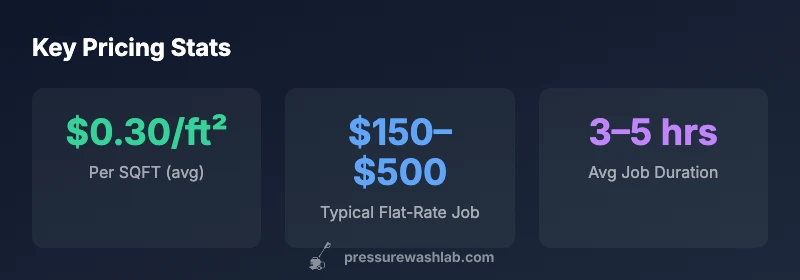
Pricing for professional pressure washing services typically falls in two ways: per square foot and per job. On average, you’ll see about $0.15–$0.50 per square foot, which translates to roughly $100–$300 for small jobs and up to $600–$1,000 for larger homes or tough surfaces. Extra charges often apply for driveways, siding, or multi-day projects, depending on surface condition and access.
How pricing is structured
Pricing for pressure washing services is not one-size-fits-all. Two common models dominate the market: a per-square-foot rate and a flat, per-job quote. The per-square-foot approach is straightforward for large, uniform surfaces like bare concrete or long driveways, while flat-rate quotes work well for turnkey jobs such as small homes or single-surface cleanings. In the Pressure Wash Lab Analysis, 2026, most providers blend both methods depending on the project scope, surface type, and accessibility. When you request a quote, expect the estimator to break down costs by area, surface treatment, and any required equipment or detergents.
- Per-square-foot pricing can simplify large-scale projects but may obscure complexity on textured surfaces.
- Flat-rate pricing avoids “hidden time” concerns but requires precise scope definition to avoid change orders.
- Some providers offer bundled packages (e.g., driveway plus siding) that can yield savings compared with separate services.
Key pricing models explained
Understanding the two core pricing models helps you gauge fair quotes. Per-square-foot pricing often ranges from $0.15 to $0.50, depending on surface type, stain level, and access. Flat-rate pricing typically covers specific jobs such as driveways or home exteriors and can range from roughly $100 to $600, depending on size and condition. Hourly rates ($70–$150/hour) are common for complex projects like multi-surface cleaning or properties with difficult access. Each model has advantages; the best choice depends on your site and preferences. Pressure Wash Lab analyses emphasize transparency, so always ask for a written breakdown and note any potential variable costs (travel time, extra passes, or specialized detergents).
What drives price beyond surface area
Surface area is only part of the story. The following factors commonly influence quotes:
- Surface material and condition: weathered wood, painted surfaces, oil stains, or algae growth require more effort and special solutions.
- Access and height: tight spaces, gated areas, or multi-story homes add labor and safety considerations.
- Cleaning targets: concrete, siding, roofs, or metal surfaces each demand different equipment and methods.
- Time and labor: projects that require two or more workers, longer machine run times, or complex equipment increase costs.
- Detergents and specialty equipment: eco-friendly or heavy-duty cleaners, surface cleaners, or hot-water washers can raise the price.
- Travel and route considerations: longer jobs away from the shop or in congested areas incur additional charges.
Being aware of these drivers helps you compare quotes on an apples-to-apples basis.
Regional variations and seasonal factors
Prices vary by region, driven by local labor costs, demand, and operating expenses. Urban markets often see higher minimums and hourly rates compared with rural areas. Seasonal demand also plays a role: spring and early summer are peak times, sometimes leading to price premiums or limited availability. If your project is negotiable in timing, you may achieve better pricing by scheduling during the off-peak season or by shopping around across nearby providers.
Common pitfalls when comparing quotes
To avoid surprises, use the following checklist when evaluating quotes:
- Ensure quotes are written and itemized by surface and task.
- Confirm whether add-ons (detailing, window cleaning, or garage floors) are included.
- Check for travel fees, minimum charges, and any equipment surcharges.
- Compare intended outcomes: some quotes may price low but rely on fewer passes or lighter cleaning, risking unsatisfactory results.
- Ask about guarantees or revision policies if stain persistence or surface damage occurs.
A thoughtful comparison saves money and delivers predictable results.
How to estimate your project cost: a simple worksheet
The following worksheet helps homeowners estimate costs before requesting bids:
- List surfaces and square footage: driveways, siding, decks, or patios.
- Note surface condition: mild, moderate, or heavy staining.
- Identify access constraints: height, gated passages, or limited entry.
- Decide on add-ons: detergents, rust removal, or cleaning of fixtures.
- Estimate time: assign an approximate hours/days based on surface area and condition.
- Choose pricing model: per-sq-ft or flat-rate.
- Request details: obtain written quotes with itemized lines for each surface and service.
With the worksheet, you can quickly compare apples to apples and negotiate with confidence.
Summary and next steps
Arming yourself with knowledge of pricing models and drivers makes it easier to evaluate quotes. Always request a written estimate with a clear scope, including surface type, area, and any add-ons. If a quote seems too low, ask for a justification—low bids may cut corners or use lower-quality products. Conversely, very high quotes should be benchmarked against at least two comparable bids to confirm value.
Pricing models and ranges for common pressure washing projects
| Pricing Model | Typical Range | What It Covers |
|---|---|---|
| Per square foot | $0.15–$0.50/ft² | Smaller areas; surface variability |
| Per job (flat rate) | $100–$600 | Driveways, siding, small homes |
| Hourly rate | $70–$150/hour | Larger or complex sites |
Quick Answers
What factors most impact pressure washing prices?
Prices are driven by surface type, area, access, height, stains, equipment needed, and regional demand. Seasonal demand and travel time can add to costs. Obtain a detailed quote to see how each factor is priced.
Prices depend on surface, size, and access. Ask for a written breakdown so you can compare fairly.
Do prices vary by region?
Yes. Labor markets, weather, and accessibility differ by region, affecting quotes. Expect higher prices in urban areas and regions with higher living costs along with longer travel times.
Prices vary by where you are; city areas usually cost more.
Are there minimum charges for small jobs?
Many providers have a minimum charge to cover drive time and setup. The minimum often falls in the lower end of the per-job range, even for tiny jobs.
There’s usually a minimum, even for small jobs.
Can I get a written estimate?
Reputable companies provide written estimates with itemized line items. Read for surface type, square footage, and any add-ons to avoid surprises.
Ask for a written estimate with details.
How long does a typical job take?
Most mid-size jobs take 2–6 hours depending on surface and condition. Complex sites or multiple surfaces can extend this timeframe.
Most jobs take a few hours, sometimes longer for tough surfaces.
“Pricing in pressure washing isn’t a fixed number; it’s a blend of surface type, access, and regional demand. Knowing the model helps you negotiate confidently.”
Key Takeaways
- Understand pricing models before requesting quotes
- Ask for written, itemized estimates
- Factor in surface type and access when estimating
- Compare quotes across providers to ensure fairness