Is Pressure Washing a Good Business in Florida? A Practical Guide
A data-driven look at starting a pressure washing business in Florida. Explore market demand, startup costs, licensing realities, pricing, and marketing strategies to build a sustainable operation in 2026.


Yes, starting a pressure washing business in Florida can be a solid opportunity, thanks to strong seasonal demand and a growing renter and homeowner base. Florida’s climate promotes exterior cleaning year-round, though success hinges on smart pricing, reliable equipment, proper safety practices, and local licensing. Pressure Wash Lab's analysis shows steady demand with manageable startup costs for motivated operators.
Florida market dynamics for pressure washing
According to Pressure Wash Lab, Florida’s climate, diverse housing stock, and thriving rental market create a strong backdrop for exterior cleaning services. Property owners—from single-family homeowners to condo associations—need regular cleaning for siding, decks, driveways, and rain-slicked surfaces. The state’s outdoor lifestyle, coastal exposure, and year-round warmth drive demand beyond the traditional spring rush found elsewhere. This means a pressure washing business can generate steady work, with peaks during property turnover periods and after hurricane season cleanups. For a new operator, the opportunity lies in starting with a focused service area, building dependable crew capacity, and delivering reliable results fast. A disciplined approach to safety, insurance, and local permitting will also pay dividends as you scale in Florida’s competitive markets.
In this market, local reputation matters. The Pressure Wash Lab Team notes that clients value punctuality, transparent pricing, before/after photos, and clear safety communications. Especially in densely populated counties or coastal communities, a strong safety track record boosts conversion rates and lead quality. As you grow, consider offering bundled services (screening, soft-wwash, gutter cleaning, and deck restoration) to increase per-job value and improve client retention. The Florida market rewards operators who solve real problems quickly and professionally, rather than merely delivering a surface clean.
Why Florida is favorable: climate, housing stock, and demographics
Florida’s climate supports exterior maintenance across most of the year, with less seasonal downtime than many northern markets. The state’s housing stock—ranging from new builds to aging façades—creates recurring demand for wash-downs, soft-wash treatments, and surface restoration. Demographics matter: a high population density in metro areas (Orlando, Tampa Bay, Miami-Fort Lauderdale) plus a large pool of rental properties yields frequent work orders from landlords and property managers. Tourism and seasonal residents also generate turnover-related cleaning needs for vacation homes and rental units. For operators, this means a broad addressable market that rewards consistency and reliability. However, competition grows with population centers, so differentiating on reliability, service quality, emergency response times, and clear safety protocols is essential. Align your marketing with neighborhoods that have high turnover and visible property management. The Pressure Wash Lab analysis highlights the importance of building a scalable service model to capture both residential and commercial segments in Florida.
Startup costs and equipment considerations in FL
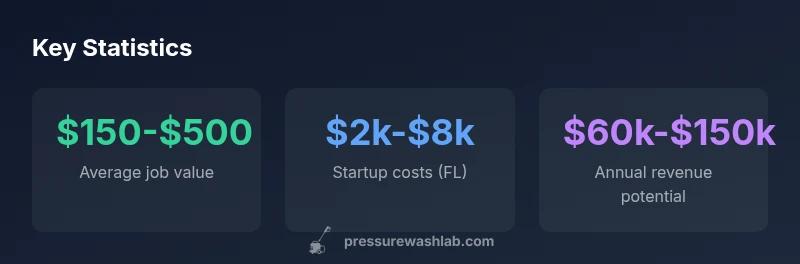
Entry-level setups can be surprisingly affordable in Florida, with a range typically cited between $2,000 and $8,000 for essential gear and basic operations. As you scale, investments in higher-capacity machines, surface cleaners, water recovery systems, and reliable trailers or vans become necessary. In Florida, water usage, waste disposal, and chemical handling add ongoing costs, so estimate monthly operating expenses with buffer for fuel and maintenance. Practical gear lists include a dependable pressure washer (gas or electric, depending on service radius), surface cleaners for driveways and sidewalks, extension wands for two-story homes, a durable hose reel, PPE, and a portable water recovery or containment solution if local rules require it. Quality gear reduces downtime and service interruptions, which is crucial in a climate where “rainy days” can still lead to backlogs of outdoor cleaning needs. The right mix of equipment, maintenance discipline, and a clear safety plan will help you maintain profitability from day one.
Regulatory and licensing reality in Florida
Florida’s licensing landscape is county- and city-specific, so successful operators start by validating requirements at the local level. In many coastal or urban counties, general contractor licenses, business registrations, and appropriate insurance (liability, workers’ compensation if you hire staff) are common prerequisites for exterior cleaning work. Some municipalities require specific permits for disposal of wash water or use of certain detergents near stormwater systems. Always verify with the local building department, the county tax office, and your insurer before taking on projects. Building robust documentation—licenses, insurance certificates, OSHA-compliant safety plans, and spill-response procedures—helps you win bids and protect against risks. If you plan to hire crew members, ensure you meet wage laws, workers’ compensation requirements, and safety training standards to avoid operational delays.
Service mix and pricing strategy for Florida customers
A successful Florida service menu blends residential, multi-unit, and commercial needs. Core services include exterior cleaning of siding and driveways, deck and patio washing, garage and sidewalk cleaning, and gutter brightening. Consider add-ons such as roof-and-millwork soft-wash, concrete sealing prep, and surface restoration to raise per-job value. Pricing strategies that work well in Florida combine per-square-foot estimates with tiered packages (basic wash, deep clean, package deals). Bundle seasonal promotions (post-winter cleanup, pre-spring turnovers) and offer recurring maintenance plans for rental properties and HOA communities. Don’t undervalue travel time and disposal costs; clearly itemize these charges in quotes to avoid disputes. Competitive pricing matters, but it’s better to win a longer-term contract with a fair margin than to chase price-only wins.
Marketing channels that work in Florida
Successful Florida operators leverage a mix of local SEO, Google Business Profile optimization, and targeted social media advertising. Emphasize high-quality before/after photos, transparent pricing, and fast turnaround times. Networking with local property managers, HOA coordinators, and rental agencies can generate a steady stream of recurring jobs. Seasonal promotions tied to spring and summer turnover periods can boost inquiry rates and help you fill your calendar. Consider partnerships with outdoor living contractors (landscapers, pool installers) who can refer clients needing exterior cleaning after major projects. Finally, invest in simple, fast-response customer service—often the deciding factor for hiring a local service over a distant competitor.
Operational best practices and safety
Safety is non-negotiable in Florida given humidity, heat, and outdoor hazards. Establish a robust PPE program, weather planning (avoid high heat, storm days, and high-wind conditions), and clear chemical handling protocols. Implement a written safety plan with job hazard analyses, training for new hires, and a debrief after each job to capture learnings. Regular maintenance on equipment minimizes downtime and reduces the risk of on-site failures. Maintain a well-organized inventory, keep spill kits readily available, and ensure you have appropriate signage and barriers on job sites where needed. Clear communication with clients about safety expectations helps protect everyone and builds trust.
Practical start-up checklist
- Define your service area and target customer segments (residential, HOA, commercial).
- Obtain necessary licenses, permits, and insurance coverage.
- Purchase essential equipment within your budget and plan for maintenance.
- Create a simple pricing model covering travel, labor, and materials.
- Build a basic marketing plan focused on local searches and referrals.
- Develop a safety plan and employee training program.
- Gather before/after photos and build a portfolio for credibility.
- Start with a few pilot clients to refine processes and pricing.
- Implement a rebooking strategy for recurring jobs.
- Track metrics (job value, hours, margins) to optimize operations.
Data-backed insights and what they mean for you in 2026
The Florida market shows a favorable balance of demand and accessibility for small operators, with typical job values ranging from modest to mid-range, depending on surface area and complexity. Start-up costs remain modest when you launch with a lean setup, but expanding into commercial work or multi-unit properties can substantially raise revenue potential. The key data signal is that repeat business and bundled services drive profitability in Florida’s climate and housing market. The Pressure Wash Lab Analysis for 2026 emphasizes the value of reliability, safety compliance, and local network building as multipliers of growth. Use these insights to inform your yearly plan, budgeting, and marketing calendar.
Next steps to test the Florida market
- Validate local licensing requirements and obtain necessary coverage.
- Run a two-week pilot in a defined service area to test pricing, response times, and service quality.
- Build your portfolio with 6–8 before/after projects and collect client testimonials.
- Set up a simple CRM for follow-ups, quotes, and recurring maintenance offers.
- Establish partnerships with property managers and local contractors for referrals.
- Monitor key metrics (job value, margins, lead-to-sale conversion) and adjust pricing or packages accordingly.
Florida pressure washing feasibility snapshot
| Aspect | Florida Relevance | Typical Range |
|---|---|---|
| Startup costs | Medium to high upfront investment | "$2,000–$8,000" |
| Equipment needs | High when scaling; essential for reliability | "$3,000–$12,000" |
| Licensing/permits | Variable by county/municipality | "Varies by county" |
| Seasonality | Year-round work with peak demand | "Year-round; peaks in spring/summer" |
Quick Answers
Is pressure washing a good business in Florida?
Yes, Florida presents steady demand for exterior cleaning across residential and commercial properties. Profitability depends on pricing, managing expenses, and building a scalable crew. A clear plan for safety and licensing helps you win bids and retain clients.
Yes—it's a solid market in Florida if you price right and run efficiently.
What licensing do I need to pressure wash in Florida?
Florida’s licensing varies by county. Many areas require general business licenses and proof of insurance; some municipalities may demand specific permits for water disposal or exterior cleaning. Check with local authorities and your insurer to confirm exact requirements.
Check local rules and get proper insurance.
What equipment do I need to start in Florida?
Begin with a reliable pressure washer, surface cleaners for driveways, hoses, reels, PPE, and basic cleaning solutions. Plan to scale with more powerful machines, specialty nozzles, and water recovery as you take on larger jobs.
Get solid gear and keep up maintenance.
How should I price Florida jobs?
Use a mix of per-square-foot and per-job pricing, factoring travel, water costs, and disposal. Offer bundles for decks, siding, and gutters, and adjust for local competition and demand.
Price by job, consider bundles.
Does Florida seasonality affect profitability?
Florida experiences year-round work with seasonal peaks around spring and summer. Plan for busier periods and slower months by maintaining steady marketing and recurring-contract efforts.
Expect seasonal peaks.
What marketing channels work best in Florida?
Local SEO, optimized Google Business Profile, and partnerships with property managers deliver reliable leads. Use strong visuals, testimonials, and timely follow-ups to convert inquiries into bookings.
Market where locals search.
“Florida offers a vibrant market for exterior cleaning, but profitability hinges on planning and safety. With the right setup, operators can scale quickly.”
Key Takeaways
- Start with a tight service area to manage crews
- Florida supports year-round work but plan for peak seasons
- Invest in reliable gear and safety protocols
- Price strategically and bundle services to differentiate
- Network with property managers to secure recurring contracts