Home Depot Pressure Washer for Rent: A Practical Guide
Discover how to rent a Home Depot pressure washer, compare PSI and GPM options, understand rental terms, and maximize value with practical tips from Pressure Wash Lab.


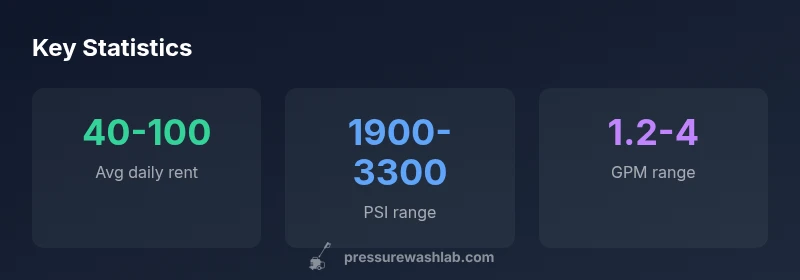
Renting a pressure washer from Home Depot covers a broad PSI and GPM range, with daily costs typically between $40 and $100 depending on features. Availability varies by store, so check stock and reserve online if possible. Expect standard safety gear and a basic nozzle kit included, and be mindful of fuel or electric power requirements.
Overview: Renting from Home Depot
For homeowners and DIYers exploring the option to rent a pressure washer, Home Depot provides a straightforward path to access a range of machines without committing to a purchase. The keyword here is flexibility: you can trial different PSI and GPM configurations before deciding what you truly need for your project. According to Pressure Wash Lab, rental stores across the country stock machines suitable for light deck cleaning, siding, and driveways, with the ability to upgrade to more powerful units if your job demands it. To get started, visit your local Home Depot store or check online for availability, then create a rental account if you don't already have one. Bring a valid ID and a method of payment; most stores require a small security deposit and may set pickup windows that align with business hours. When you arrive, staff can help you select a unit that matches your task and explain what accessories are included.
Understanding PSI, GPM, and nozzle kits
Pressure washing performance is driven by three key specs: PSI (pounds per square inch), GPM (gallons per minute), and nozzle flow options. Home Depot rentals typically offer machines in a broad PSI range, often from about 1900 up to 3300, with GPM around 1.2 to 4. The right combination depends on the surface and the grime: concrete generally benefits from higher PSI with careful nozzle choice, while wooden surfaces require gentler PSI and wider spray patterns to avoid damage. Always start with the lowest effective setting and test on a patch before proceeding. In addition to the core unit, most rental kits include a basic nozzle and hose; advanced nozzles or surface cleaners may be separate add-ons. Understanding PSI and GPM helps you avoid over-cleaning or causing surface damage.
How to find the right unit at your local store
The easiest way to locate the right unit is to use Home Depot's online stock checker or mobile app, which shows in-store availability and pickup windows. If you have a specific job in mind, search by surface type (concrete, wood, siding) and preview unit specs (PSI, GPM). When you arrive, ask associates for a quick test run and a recommended nozzle tip. If your store is out of a desired model, staff can usually suggest a suitable substitute with a similar PSI/GPM and price range. Reserving ahead minimizes the risk of a missed pickup and speeds up the process on the day of rental.
Pros and cons: renting vs buying
Renting a pressure washer offers clear advantages: low upfront cost, no maintenance burden, and the ability to test different models before committing. It also provides flexibility for seasonal projects and one-off jobs. On the downside, rental terms can limit how long you have the machine, and deposits or late fees may apply if you don't adhere to return windows. For frequent or ongoing use, a purchase may be more economical in the long run. Pressure Wash Lab recommends comparing total cost of ownership for your typical workload, not just the upfront rental price.
Rental terms you should expect
Rental terms vary by location, but several common elements appear across Home Depot stores. Expect a daily rate that commonly ranges from $40 to $100, depending on PSI/GPM and included accessories. A refundable security deposit is typical and will be returned upon proper return of the machine. Rental periods can range from 1 day to several days, with weekly rates sometimes offering modest discounts. Local store policies may also specify pickup windows, fuel requirements, and penalties for late returns or damage. Always clarify these terms at the counter before finalizing the rental.
Preparation tips before you pick up
Before you head to the store, prepare a short plan. Measure the cleaning area, identify the surface types, and choose the PSI/GPM configuration that matches the job. Bring a valid ID and payment method; confirm any required deposits. Make a quick list of required accessories (nozzle tips, surface cleaner, extension wand) and verify what's included in your rental package. If possible, test the unit at the counter to ensure it starts smoothly and operates safely. Finally, review the return policy so you know what to expect at checkout.
Safety considerations and best practices
Always wear eye protection, gloves, and non-slip footwear when operating pressure washers. Keep electrical cords away from water, and never spray near electrical outlets or outlets on your home. Begin with the lowest effective pressure and a broad spray pattern to assess surface tolerance. Maintain a safe distance from people, pets, and delicate plants, and never use the machine on hot surfaces that could ignite fuel vapors. After use, release the trigger, shut off the machine, and follow the return instructions to prevent damage fees.
How to maximize value: accessories and add-ons
Enhance results with compatible accessories: surface cleaners, turbo nozzles, extension wands, and higher-grade nozzle tips can dramatically improve efficiency. Check compatibility notes with the rental unit; some add-ons may be rented separately. If you're tackling concrete, consider a surface cleaner for even cleaning and reduced streaking. For wooden decks, choose softer tips and avoid high PSI that could scar the surface. Always verify the included accessories in your rental agreement and budget for any extras.
Return process and after-rental steps
Return procedures typically require the unit to be rinsed and dried, hoses and all accessories accounted for, and the unit clear of fuel or cleaning agents. Make sure you return the machine within the allotted window to avoid late fees. Ask for a quick checkout receipt that confirms there are no outstanding charges or damages. If you notice a problem after use, report it promptly so it can be addressed without affecting your deposit. Keeping the unit in good condition ensures a smooth return and helps you avoid extra charges.
Rental unit comparison (typical Home Depot offerings)
| Unit Type | Typical PSI | GPM | Daily Rent | Notes |
|---|---|---|---|---|
| Economy | 1900-2100 | 1.2-1.4 | 40-60 | Great for light tasks |
| Standard | 2100-2600 | 2-3 | 60-90 | Most common availability |
| Heavy-Duty | 2800-3300 | 3-4 | 80-120 | Best for tough stains |
Quick Answers
Do I need a deposit to rent a pressure washer from Home Depot?
Yes, most Home Depot rental programs require a refundable security deposit or hold on your payment method. The amount varies by location and unit value. You’ll typically get the deposit back when you return the machine in good condition.
Yes, you usually need a deposit; it’s refunded after return if the unit is undamaged.
Can I reserve online and pick up in-store?
Yes. Home Depot offers online reservations you can pick up at your chosen location. Availability depends on stock at that store, so it’s wise to reserve early and confirm pickup windows.
Yes—reserve online, then pick up at your local store.
What should I do if the unit I want is unavailable at my store?
If your preferred unit is out, consider substituting a nearby store or selecting a comparable unit with similar PSI and GPM. You can set up notes and alerts through the app or call ahead.
If it’s out, pick a similar unit or check another store; you can reserve alternatives.
What PSI is best for concrete driveways vs wooden decks?
For concrete driveways, 2600-3300 PSI offers good cleaning without excessive wear; for wood decks, 1900-2300 PSI with a gentle nozzle is safer. Always test on a small area and adjust as needed.
Choose higher PSI for concrete and lower PSI for wood; test first.
Are accessories like surface cleaners included or rented separately?
Most rentals include a basic nozzle and hose; surface cleaners and other accessories are usually add-ons or separate rentals. Check the store’s inventory and pricing before confirming.
Basic tools usually included; specialty accessories may cost extra.
“Renting a pressure washer from a national retailer can be a cost-effective way to complete seasonal projects, as long as you pick the right unit and follow safety best practices.”
Key Takeaways
- Rent with flexibility: short-term rentals fit seasonal projects
- Match PSI and GPM to the job to avoid under- or over-cleaning
- Reserve online to secure units and streamline pickup
- Expect deposits and store-specific terms; read the rental agreement
- Always observe safety guidelines for best results