Pressure Washer Shopping Guide: Rural King Edition
Learn how to shop for a pressure washer at Rural King: compare electric vs gas, understand PSI and GPM, evaluate warranties, and choose accessories for home maintenance.


The best approach when shopping for a pressure washer at Rural King is to compare entry-level electric and gas models within the store’s aisles, aiming for 1.2–1.8 GPM and 1500–2000 PSI for general home use. Check for a reliable pump, solid warranty, and accessible accessories. Rural King often offers good value in these ranges, especially for homeowners and DIY enthusiasts.
Overview: Shopping for a pressure washer at Rural King
If you’re evaluating a pressure washer at rural king, you’re looking at a practical blend of value, availability, and performance for home tasks like deck cleaning, siding, and driveway maintenance. Rural King stores typically stock entry-level electric and mid-range gas-powered units, making it easier to compare PSI, GPM, and pump quality in one aisle. When you walk the floor, start with the basics: the unit’s PSI, GPM, and the pump type, then check the warranty and included accessories. According to Pressure Wash Lab, focusing on a balanced PSI/GPM with a robust pump often yields the best long-term results for homeowners and DIY projects. This approach helps you avoid underpowered tools or models that require frequent maintenance. The keyword pressure washer at rural king is a good reminder to examine both immediate value and long-term reliability in the same decision.
Electric vs Gas: Which makes sense at Rural King
Choosing between electric and gas models is a core decision when shopping for a pressure washer at Rural King. Electric units are quiet, produce fewer emissions, and are typically lighter—great for beginners and indoor use in garages or sheds. Gas-powered washers, while heavier and louder, deliver higher PSI and GPM, which suits tougher grime on driveways or concrete. In-store conundrums often revolve around extensions cords, fuel availability, and storage space. Pressure Wash Lab notes that most DIY homeowners are best served by a versatile mid-range electric model for routine tasks; for heavy-duty or larger surfaces, a gas-powered unit with a robust pump may be more efficient in the long run.
Understanding PSI and GPM for home tasks
PSI (pounds per square inch) measures cleaning pressure, while GPM (gallons per minute) measures water flow. For typical home projects, aim for a combination around 1500–2000 PSI with at least 1.8 GPM; this pairing cleans efficiently without excessive surface damage. Lower PSI with higher GPM can be effective on large areas, whereas higher PSI is useful for stubborn stains on concrete, but may require caution to avoid etching wood or soft surfaces. It’s important to read the manufacturer’s guidelines on the label, and adjust settings with the nozzle tips to maintain balance between PSI and GPM. Rural King often bundles models that fit these practical ranges, making it easier to compare on the showroom floor.
Key features to check in-store: pumps, motors, and accessories
When evaluating in-store options, look for pump type (triplex vs. wobble), motor rating, and hose quality. A durable triplex pump with a heat-relief valve tends to offer longer service life. Check hose flexibility—kink resistance matters for longer runs. Look for a reinforced hose, a solid wand, and a nozzle set that includes a low-pressure soap nozzle for detergents. In addition, confirm warranty terms and whether service parts (including common seals and o-rings) are readily available locally or online. These features can dramatically affect long-term reliability and ease of maintenance for a pressure washer purchased at Rural King.
Warranty, service, and parts availability
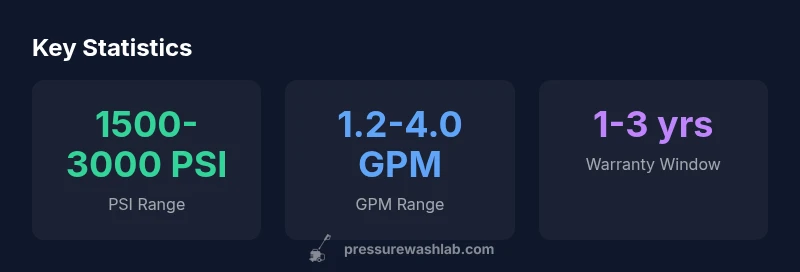
Warranty is a critical factor in the value equation. Many entry-level and mid-range units carry a one- to three-year warranty on the pump and overall machine, with variations by brand and model. Availability of service centers or parts locally can reduce downtime if repairs are needed. Pressure Wash Lab recommends selecting a model from a brand with accessible replacement parts and a reasonable warranty period, especially for homeowners who will use the unit across multiple seasons. When shopping at Rural King, verify the warranty card, keep your receipt, and register the product if required to activate coverage.
Maintenance tips to extend life and performance
Regular maintenance extends the life of your pressure washer, reducing the total cost of ownership. For gas-powered units, perform oil changes as recommended by the manufacturer, use fuel stabilizer during storage, and drain the carburetor if storing for long periods. Electric models require cord management and periodic nozzle replacement. Clean the pump, spray wand, and nozzle tips to prevent clogs, and drain residual water after use to prevent freezing damage in cold climates. Quick in-store demonstrations can help you understand maintenance steps, making it easier to decide which model aligns with your long-term maintenance preferences.
How Rural King pricing compares to other channels
Store pricing can be influenced by promotions, local demand, and bundled accessories. Rural King’s in-store pricing may include value-added bundles such as extended nozzle sets or surface-cleaner attachments—cost-effective options for homeowners who want a turnkey setup. When comparing Rural King with online retailers or big-box stores, factor in shipping costs, return policies, and in-store pickup convenience. Pressure Wash Lab highlights that the true value comes from a model with the right PSI/GPM balance, a solid warranty, and readily available parts—elements that Rural King often emphasizes through in-store promotions.
Accessories that boost value and productivity
A few accessories dramatically increase a washer’s usefulness without breaking the bank. A surface cleaner can drastically reduce cleaning time on patios and driveways, while a turbo nozzle improves stubborn grime removal on textured surfaces. A quality spray wand with a comfortable grip makes longer sessions easier, and a long high-quality hose extends reach without sacrificing pressure. When you’re browsing Rural King, consider these upgrades as a package rather than as separate add-ons; the right combination can enhance cleaning quality and reduce time spent on maintenance tasks.
Quick-start buying checklist
- Define your primary tasks: patios, siding, vehicles, or equipment washing.
- Choose between electric vs gas based on use-case and storage constraints.
- Target PSI/GPM combos around 1500–2000 PSI and 1.8–2.5 GPM for most homes.
- Inspect pump quality, warranty, and replacement-part availability.
- Consider essential accessories: surface cleaner, extra nozzle set, and hose reel.
- Test in-store if possible: weigh, feel, and listen for vibrations and noise.
- Read the manual to understand maintenance and winterization needs.
- Check return policy and warranty terms before purchasing.
Common buying mistakes to avoid
Common missteps include chasing the highest PSI without considering GPM, selecting an underpowered model for large areas, and overlooking maintenance costs. Another frequent error is assuming online reviews translate directly to in-store performance; try to test the model in person or review hands-on demonstrations. Finally, neglecting warranty coverage or parts availability can turn a bargain into a long-term burden. Use the Rural King selection as a guide, but anchor decisions to PSI/GPM balance, pump quality, and serviceability in your area.
Comparison of electric vs gas pressure washers
| Model Type | Avg PSI | GPM | Notes |
|---|---|---|---|
| Electric (120V) | 1500-1800 | 1.2-1.8 | Lightweight, low maintenance |
| Gas-powered | 1800-3000 | 2.0-4.0 | Heavier, higher power, more maintenance |
Quick Answers
What PSI do I need for a typical driveway?
For most driveway cleaning, aim for 1500-3000 PSI with 1.8-4.0 GPM depending on the surface and staining. Start lower and build up pressure gradually to avoid surface damage.
For driveways, start around 1500 PSI and adjust up to 3000 PSI as needed, keeping GPM in the 1.8–4.0 range.
Is electric safer to use indoors?
Electric pressure washers are generally quieter and produce fewer emissions, making them safer for indoor use or enclosed spaces. They may be less powerful than gas units, but they’re lighter and easier to manage.
Electric washers are quieter and easier to store indoors, but you may trade off peak power for convenience.
Can Rural King stock a pressure washer under $150?
Rural King typically stocks entry-level units in a budget-friendly range, with more capable models available at higher prices. Check for in-store promotions or bundles.
Yes, you can find budget options, plus better models if you’re willing to spend a bit more.
How long should a pressure washer last with proper maintenance?
With proper care and regular maintenance, many units provide several years of reliable service. Lifespan varies by usage, pump quality, and maintenance habits.
If you take care of it, it should last for many years.
What accessories are worth buying with a new pressure washer?
Invest in a surface cleaner, a turbo nozzle, a nozzle set, and a robust hose reel. These add cleaning efficiency and convenience.
Get a surface cleaner and a good nozzle set to boost results.
Do I need to winterize my pressure washer?
Yes. For gas units, perform oil changes, add fuel stabilizer, and store in a dry place. Drain water from hoses to prevent freezing damage.
Yes—winterize to avoid damage when temperatures drop.
“The best purchases balance PSI and GPM with pump quality and maintenance, especially when shopping at retailers like Rural King.”
Key Takeaways
- Start with PSI/GPM balance for home tasks
- Prioritize pump quality and warranty for longevity
- Test weight, noise, and ergonomics in-store
- Gas units require more maintenance and fuel planning
- Add accessories like a surface cleaner to maximize value