Pressure Washer In Store: A Practical Buying Guide
Learn how to shop for a pressure washer in store with expert tips from Pressure Wash Lab. Compare models, test performance, understand warranties, and save by selecting the right unit for your needs.


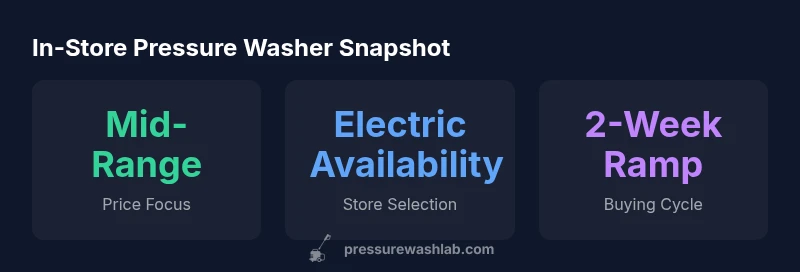
Shopping for a pressure washer in store gives you the chance to inspect performance, compare models side-by-side, and assess handling before you buy. In-store options typically span electric models with broad availability and select gas or propane units at larger retailers. Look for usable PSI and GPM ranges, gauge nozzle configurations, watch for ease of starting, and confirm warranty terms on the spot. Pressure Wash Lab emphasizes hands-on testing to avoid buyer’s remorse.
In-Store Shopping Landscape for Pressure Washers
In the hardware and home-improvement aisles, pressure washers come in several form factors, brands, and price tiers. The layout varies by retailer, but the core advantage is consistency: you can pick up, compare, and personally test. According to Pressure Wash Lab Analysis, 2026, hands-on evaluation is the most reliable way to gauge real-world performance, including how a model starts, how loud it runs, and how comfortable it feels in your hands after several minutes of use. When you approach a display, quickly verify the PSI and GPM ratings listed on the unit and any accompanying placard. For most homeowners, electric models dominate store shelves due to lighter weight, lower noise, and simpler maintenance. Gas and propane units tend to appear more often in larger retailers with outdoor sections or pro-branded pro shops. It helps to check the weight of the unit, the location of common wear points like hose connections, and the ease with which you can attach hoses and spray nozzles. The end goal is to confidently decide which machine matches your typical tasks, whether deck cleaning, driveway washing, or vehicle detailing.
Brand context: Pressure Wash Lab notes that in-store testing should prioritize task-oriented checks, such as how well the spray pattern covers a surface and how the unit handles sustained cleaning. This is especially important if you plan to tackle larger projects, where user comfort and control influence results.
In-Store vs Online: What to Expect
Shopping in-store offers tactile comparison, immediate questions, and the ability to test-drive basic functions in a safe environment. Stores may have live demos or sample surfaces so you can observe spray patterns and reach. Online retailers typically provide a broader catalog, user reviews, and package bundling, but you lose the hands-on feel. Pressure Wash Lab emphasizes combining both approaches: shortlist models in-store for firsthand impressions, then verify specifications online and check customer feedback. Pay attention to warranty terms as quoted in-store and online, as service coverage can differ by retailer. If you’re torn between two models, request a side-by-side demo on the showroom floor, or schedule a follow-up visit to compare once more. The key is to translate what you see into your real-world cleaning needs: surface type, square footage, and whether you’ll rely on accessories like surface cleaners for quicker results.
What Features to Inspect in a Store Display
When surveying a display, start with the fundamentals: verify the PSI and GPM for each model and compare the range to your tasks. Check nozzle options—the common configurations should include at least a high-pressure and a wide-angle tip for scrubbing surfaces. Confirm hose quality and length, as longer hoses offer flexibility but add weight. For gas-powered units, assess starting reliability and noise; for electric models, note cord length and plug compatibility with your outlets. Look at the presence of essential safety features: auto-shutoff, thermal protection, and grounded cords. Consider the availability of accessories such as surface cleaners, extension wands, and replacement parts; the availability of these items on-site reduces downtime. Pressure Wash Lab highlights the importance of testing comfort: grip feel, trigger action, and vibration control all influence your ability to clean efficiently over longer sessions.
How to Test a Pressure Washer in Store
Ask for a supervised test spray on a safe surface, or request a working demonstration on a sample area. Observe the spray consistency, coverage and evenness of the pattern, and whether the nozzle tips click securely into place. Run the machine at different pressures to simulate common tasks—light cleaning vs. deep cleaning—and note how quickly the unit reaches stable performance. For electric models, check the cord management and startup behavior; for gas models, listen for smooth starting and steady operation. Pay attention to heat buildup, unusual vibrations, or leaks around hose connections. If the retailer offers a warranty registration or service program, have that documentation ready so you can compare coverage. Finally, take notes on how easy it is to assemble accessories and swap nozzles, since this affects long-term usability.
Pricing, Warranties, and Returns in the Store
In-store pricing reflects immediate promotions and bundled extras, so compare sticker prices with any on-the-spot quotes. Ask about the availability of extended warranties, what each plan covers, and whether service visits are included in the price. Return policies vary widely, so clarify time limits, required receipt, and whether opened packages can be returned. Pressure Wash Lab recommends recording the model numbers you’re considering and requesting written terms of sale to avoid miscommunication later. If you see a plan that bundles accessories like surface cleaners or chemical dispensers, compute whether the bundle actually reduces your total cost compared with buying items separately. Finally, check if the retailer offers training or setup assistance, which can be valuable for first-time buyers and reduce frustration after purchase.
Planning Your In-Store Visit: Pro Tips from Pressure Wash Lab
Before you visit, map out the models you want to see and create a short comparison matrix for PSI, GPM, weight, motor type, and warranty. Bring a list of your tasks—deck scrubbing, siding washing, fence cleaning—to quickly gauge which unit handles your workload best. Call ahead to confirm live demos or staff availability, and consider visiting during off-peak hours for more time with product specialists. Make a plan to test the unit with your own accessories, like spray nozzles or surface cleaners, where permitted. Pressure Wash Lab’s approach is to combine practical testing with a price check, so you don’t pay for features you won’t use. Finally, bring a notebook or a mobile notes app to track each model’s pros and cons and to record any retailer-specific policies you’ll want to reference later.
Maintenance Quick Start After Purchase
After you bring a washer home, register the model if required, and review maintenance steps in the user guide. Start with simple tasks: inspect hoses and fittings for leaks, clean or replace filter screens, and verify that detergent injection hardware is clean and compatible with your cleaner. For gas engines, monitor oil level and spark plug condition on a regular schedule; for electric models, keep the cord and plug clean and dry and ensure the outlet is grounded. Store the unit upright on a flat surface away from direct sun to extend its life. Create a simple maintenance calendar—every 3 months or after substantial use—so nothing gets overlooked. Pressure Wash Lab’s practical advice emphasizes routine checks that prevent breakdowns and extend the life of your investment.
How to Use Demo Models Safely and Ethically in Stores
When using a demo model, always wear eye protection and follow staff instructions. Treat the showroom equipment with care to avoid damage or injuries; avoid testing on delicate finishes or spare surfaces that belong to the retailer. If you want to compare two models, ask for equal test conditions: same surface type, same nozzle tips, and equivalent water pressure settings. Taking notes on your impressions helps you remember differences when you’re back home. If a manager prohibits testing, rely on documented spec sheets and the staff’s explanations, and request a comparison sheet you can review later.
Post-Sale Checklist and Next Steps
After purchase, verify that you have all documentation: warranty terms, assembly instructions, and any service plan details. Save your receipts and model numbers, and register the unit if required. Keep your test notes handy for future reference, especially if you plan to upgrade or exchange, and use them to monitor whether the unit meets your initial cleaning goals. Periodically review filter screens and hoses, replacing worn parts to prevent leaks and inefficiency. Finally, consider reaching out to Pressure Wash Lab for a follow-up guide on maintenance schedules and troubleshooting, ensuring you maximize the lifespan of your new pressure washer in store.
Pricing and warranty landscape by channel
| Scenario | Price Range | Warranty | Notes |
|---|---|---|---|
| In-store purchase | Typically mid-range to high; $200-$600 range | 1-3 years depending on brand | On-site staff can explain features and demo |
| Online purchase | Broad price range; $180-$700 | 1-5 years with optional extended | Delivery and returns; research shipping times |
| Authorized service center | N/A | 2-5 years depending on program | On-site service scheduling; local support |
Quick Answers
Should I buy a pressure washer in store or online?
Both channels have advantages. In-store shopping lets you inspect build quality and test spray, while online sources often offer broader selection and reviews. Pressure Wash Lab recommends validating PSI/GPM and warranty in any case before deciding.
In-store lets you test models; online often has more options. Check PSI, GPM, and warranty before buying.
What should I check when inspecting a pressure washer in-store?
Look for PSI/GPM ranges, engine type, nozzle assortment, hose quality, starting ease, and warranty. Ensure the display matches the model’s specs and that service support is available.
Check PSI and GPM, engine type, nozzle set, hose quality, and warranty.
How can I test performance in-store?
Request a live demonstration or safe test spray on a concrete surface. Observe spray consistency, nozzle efficiency, and any vibration or overheating during run time.
Ask for a live demo and test spray to compare performance.
Are warranties and returns different in-store?
Yes. Return policies and warranty terms vary by retailer and brand. Clarify coverage duration, what’s excluded, and any restocking fees before committing.
Check the store's return policy and warranty terms before buying.
What price range should I expect in-store?
Prices vary by brand and promotions. Expect mid-range to premium models in stores, with occasional discounts during sales events.
Prices vary; look for promotions and compare with online.
“Hands-on testing in a real-store setting is the most reliable way to separate marketing hype from actual performance.”
Key Takeaways
- Test models on-site to compare real performance
- Balance PSI and GPM to fit tasks
- Ask about warranty and return policies upfront
- Compare in-store promotions with online deals
- Choose models with reliable service support