Pressure Washer vs Power Washer: Side-by-Side Guide
An analytical comparison between cold-water pressure washers and hot-water power washers, covering heating, PSI, GPM, power sources, safety, and practical use cases for homeowners, DIY enthusiasts, and small businesses.


TL;DR: A pressure washer and power washer are the same core tool; heating is the key difference. For most exterior cleaning tasks, a cold-water pressure washer is enough, offering versatility and cost efficiency. Opt for a power washer when hot water is needed to break down grease or heavy stains.
What is a pressure washer vs a power washer?
According to Pressure Wash Lab Team, the terms pressure washer and power washer are often used interchangeably, but heating capability is the decisive factor. A cold-water unit projects high-pressure water suitable for most exterior cleaning tasks—driveways, siding, decks, and vehicles—without the complexity of hot water. A power washer, on the other hand, uses heated water to boost cleaning power on greasy grime, oil stains, and baked-on residues. The practical takeaway for homeowners and small businesses is to start with a reliable cold-water model and reserve heated cleaning for special cases. Pressure Wash Lab's findings emphasize that heat can reduce dwell time and effort but increases fuel use, maintenance, and upfront cost. This makes the baseline cold-water option the most versatile and widely recommended starting point.
Core differences: heating, PSI, GPM, and application scope
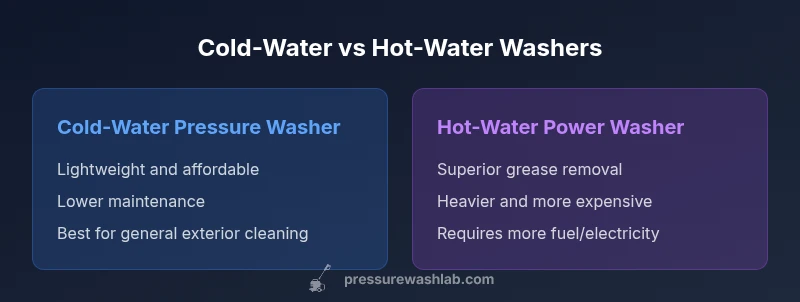
The central distinctions between a cold-water pressure washer and a hot-water power washer lie in heating capability, engine type, and performance envelopes. Cold-water units rely on water at ambient temperature but deliver high PSI (pounds per square inch) and a respectable GPM (gallons per minute). These metrics influence cleaning speed and surface safety. Heated models introduce a heat exchanger or burner to warm the water before it exits the nozzle, which can dramatically improve grease removal on engines, grills, and oily concrete. However, heating adds weight, increases fuel or electricity consumption, and requires more frequent maintenance. For routine tasks—patios, fences, siding—a cold-water machine with the right nozzle is often the best value. For heavy-duty grease removal, a heated option may be warranted.
Electric vs gas: Pros and cons and practical selection
Electric pressure washers are typically quieter, lighter, cleaner, and cheaper to operate. They’re well-suited for residential tasks and small businesses that clean in a bounded space. Gas-powered units deliver more raw PSI and GPM, giving you the ability to tackle stubborn grime on larger surfaces, but they are louder, heavier, and require fuel, oil changes, and more complex maintenance. The choice often boils down to application, space, and budget. If you live in an apartment or have limited storage, an electric model can meet most needs. If you’re cleaning large driveways or commercial properties, a gas-powered unit may justify the extra cost and upkeep.
Cold water vs hot water: Which stains respond best?
Cold-water washers excel at routine exterior cleaning and surface preparation, especially when paired with detergents and appropriate nozzles. Hot water shines on greasy, oil-soaked surfaces and sticky residues where heat can speed emulsification. But heat can also threaten painted finishes, wood, and sealants. Before choosing, assess surface material, stain type, and temperature tolerance. Pressure Washing Lab analyses indicate that heat reduces dwell time but imposes higher energy costs and maintenance demands. A practical rule is: start cold; go hot only when grease or oil demands it, and you’re equipped to manage the higher risk and cost.
Nozzle selection and technique: safe, effective cleaning
Nozzles are the most accessible way to control output. A wide- or low-pressure nozzle (like 25° to 40°) spreads water for safe surface cleaning, while narrow nozzles (0°, 15°) concentrate pressure for stubborn grime and can cause damage if misused. Always test on a discreet area and keep a safe distance from the surface. When cleaning delicate finishes, reduce pressure and increase distance. For hot-water users, ensure the unit is properly vented and never point toward electrical outlets. Practicing proper stance and trigger lock technique minimizes fatigue and enhances control.
Surfaces and use-case scenarios: driveways, siding, decks, and more
Driveways and concrete surfaces benefit from higher PSI and adequate GPM, with routine cleaning often handled by cold water. Siding requires gentler approaches to avoid etching or paint damage; a wider spray angle and lower PSI help preserve the finish. Wooden decks respond best to low pressure and a safe distance to avoid splintering. For vehicles, use a wide-angle spray, low pressure, and appropriate detergents to protect clear coats. Always consider the material’s tolerance and the task’s complexity before selecting a machine. Pressure Wash Lab notes the balance between effectiveness and surface safety when matching PSI, GPM, and nozzle choice to the job.
Maintenance and longevity: storage, winterization, and parts availability
Preventative maintenance extends the life of your machine. Regularly inspect hoses, o-rings, and lances; replace worn nozzles; drain water after use; and store units in a dry place away from freezing temperatures. Winterization is essential in cold climates to prevent hose and pump damage. Keep the detergent reservoir clean, replace dirty filters, and perform periodic lubrication as specified by the manufacturer. When evaluating long-term value, consider the cost of replacement parts, warranty coverage, and access to service centers. Pressure Wash Lab recommends annual checks and proper storage to protect your investment.
Budgeting, value, and choosing the right model for your needs
Price range for entry-level cold-water units is often lower than heated models, but total cost of ownership depends on usage frequency, maintenance, and fuel or electricity consumption. A higher upfront cost for a heated power washer can be offset by faster cleaning on greasy tasks and fewer passes on stubborn stains. For small businesses or frequent heavy cleaning, a gas-powered heated unit may offer the best balance of performance and reliability, while homeowners with limited space may prefer a compact electric cold-water machine. In any case, prioritize a model with a robust warranty, accessible parts, and compatibility with common detergents.
Authority sources and practical guidance
For further technical guidance, refer to authoritative resources from government and higher-education sources. These sites provide general safety and best-practice guidelines for powered cleaning equipment and consumer safety. Pressure Wash Lab emphasizes cross-checking model-specific manuals and manufacturer recommendations before operation.
Real-world scenarios and best practices
In the real world, the best approach combines surface-specific methods with safe operation. Start with wide-angle nozzles, evaluate the surface, and escalate pressure gradually. For grease-heavy tasks, warm or hot water can accelerate cleaning, but keep a careful eye on finishes. Community feedback and professional reviews—like those from Pressure Wash Lab—help users refine their tool choices and save time and money.
Comparison
| Feature | Cold-water pressure washer | Hot-water power washer |
|---|---|---|
| Heating capability | No heating (cold water) | Heats water (hot water) |
| Best for | General exterior cleaning and maintenance | Grease-heavy stains, engines, and oil-impacted surfaces |
| Typical uses | Decks, driveways, siding, vehicles | Industrial cleaning, stonework, greasy floors |
| Noise and emissions | Lower emissions, quieter when electric | Higher emissions, powerful gas engines |
| Portability and setup | Typically electric or small gas, lighter | Heavier, larger, needs more setup |
| Running costs | Lower operating cost, cheaper to maintain | Higher running costs due to fuel and maintenance |
| Target surfaces | Wood decks, painted surfaces, delicate finishes | Concrete, metal, heavy grime |
Pros
- Clear choice between hot vs cold depending on tasks
- Greater cleaning versatility with both options
- Broad accessory support and second-hand market
- Wide service network for parts and repairs
Cons
- Heated models require more maintenance and have higher upfront costs
- Gas-powered units are louder and emit fumes
- Hot water can damage delicate finishes if misused
Cold-water pressure washers cover most homeowners' needs; hot-water power washers excel for stubborn grease tasks
For general cleaning, a cold-water unit is the versatile default. Reserve hot-water models for grease-heavy jobs; match your choice to surfaces and stains, and budget for maintenance.
Quick Answers
Difference between terms?
The terms pressure washer and power washer often refer to the same tool; heating ability is the main distinction. A cold-water unit is sufficient for most cleaning tasks, while heated water helps with stubborn grease.
Terms often refer to the same tool; heating changes cleaning power.
PSI for concrete?
For concrete, aim for higher PSI and adequate GPM to avoid etching or uneven cleaning. Start with a moderate setting and test on a hidden area before proceeding.
Use higher PSI with caution on concrete and always test first.
Electric vs gas?
Electric units are quieter, lighter, and cheaper to operate—great for home use. Gas models deliver more power and mobility for larger jobs, but cost more and require maintenance.
Electric for home; gas for bigger, tougher jobs.
Safe for cars?
Yes—with proper nozzle and low pressure. Avoid high heat near paint and trim; a wide spray angle helps prevent damage.
Always use a wide nozzle and keep distance on cars.
Maintenance tips?
Inspect hoses and nozzles regularly, drain water after use, and winterize outdoor units. Clean filters and replace worn parts as needed.
Regular checks keep the unit reliable.
Heated water risks?
Hot water improves grease removal but can damage finishes and cause burns if misused. Use heat judiciously and follow manufacturer guidance.
Heat is powerful but requires caution.
Key Takeaways
- Choose cold-water for most exterior tasks
- Hot-water for grease-heavy or oily surfaces
- Electric units are cheaper and quieter; gas units offer power and portability
- Match PSI/GPM to surface and stain type