Pressure Washer with Water Tank Rental: Practical Guide
Explore how renting a pressure washer with a water tank can simplify site work, reduce logistics, and fit a range of budgets. Learn planning tips, costs, and best practices for reliable water supply on the job.


A pressure washer with water tank rental is a turnkey mobile cleaning setup that includes a pressure washer paired with a portable water tank you rent for the job. This arrangement is ideal when on-site water is limited, variable, or costly to haul. Rental options can affect capacity, delivery, and support, making it easier to scale for small jobs or large projects.
Why rental makes sense for pressure washing projects
For homeowners and contractors, renting a pressure washer with a connected or built-in water tank can simplify field logistics, especially on site without reliable water supply. This approach reduces water hauling hassles, minimizes downtime, and ensures you have consistent water pressure for extended jobs. According to Pressure Wash Lab, rental solutions often deliver better overall value for short-term projects than purchasing equipment you only use occasionally. When the job requires large volumes of water or working in remote locations, a water-tank rental unlocks a more scalable workflow. In this section, we explore how to evaluate options, plan logistics, and manage costs when you pursue a pressure washer with water tank rental.
- Simplified logistics: The rental provider typically handles water sourcing, delivery, and return, which cuts down on trips to fill a tank and haul heavy loads.
- Consistent water supply: On-site water constraints, such as irrigation ponds, hydrants, or municipal restrictions, no longer dictate pacing.
- Flexible scale: Small-driveway cleanups can use lighter configurations, while larger commercial jobs benefit from bigger tanks and higher kWh-capable pumps.
- Cost control: Renting avoids high upfront costs and depreciation; you pay for what you use on a per-day basis and can adjust as projects change.
- Support and maintenance: Many rental agreements include basic maintenance, quick replacements, and on-demand support if equipment falters.
This overview highlights why many homeowners and small businesses turn to rental solutions for episodic workloads or evolving project scopes. The approach can be especially advantageous in markets where equipment costs are rising or where job locations vary weekly.
Key considerations when renting a water-tank-enabled pressure washer
Choosing the right rental setup hinges on aligning tank capacity, flow rate, and mobility with the job at hand. Start by clarifying the water needs of your project in gallons per minute (GPM) and total throughput, then map those figures to tank size so you don’t stall waiting for a refill. If you’re working on a lot of surfaces—driveways, siding, sidewalks—consider a mobile trailer unit or a compact skid unit with an integrated tank between 100 and 300 gallons. These sizes cover most residential and light commercial tasks without requiring frequent re-fill stops. When evaluating models, confirm compatibility with common nozzle tips and adapters, and verify how the rental provider handles fuel, oil, and the water source. If filtration or water treatment is needed to prevent nozzle clogging or mineral buildup, ask about included filtration gear or optional upgrades.
- Tank capacity vs. job size: Larger tanks reduce trips to refill, but add weight and require space for transport.
- Water source options: On-site supply, delivered water, or a hybrid blend affects planning and logistics.
- Compatibility: Check PSI and GPM ratings, hose lengths, and required electrical power for the unit you rent.
- Maintenance inclusions: Ensure the deal covers basic maintenance, quick part replacements, and water-quality checks if applicable.
- Safety and compliance: Confirm training materials and safety guidance are part of the rental package, particularly for high-pressure operations.
Structured planning helps you avoid under- or over-specifying equipment, which translates to faster jobs and more predictable costs. Pressure Wash Lab recommends building a simple rental checklist that includes tank size, delivery window, and a test run before the job begins.
How water tanks integrate with mobile rental setups
Water tanks are most effective when they integrate seamlessly with the transport and power systems used on job sites. Many rental configurations sit on a trailer, skid frame, or towing chassis, allowing quick deployment at residential curb appeal projects or industrial sites. The water supply can be gravity-fed from the tank to the pressure washer, or pumped through an enhanced feed line with a submersible pump. Ensure you have hoses of adequate length to reach the work area, plus simple connectors and adapters for different pump outputs. A critical factor is water quality: if you’re cleaning surfaces prone to mineral buildup, consider a basic filtration option or regular tank sanitation between jobs. Also, coordinate with the rental provider about refill logistics—some suppliers offer mobile fill stations or partner with fuel and water trucks to make refills fast and predictable.
- Mobility and setup time: Trailer-based units cut delivery delays and simplify storage on-site.
- On-site plumbing and drainage: Plan for discharge and spill containment, especially on sealed driveways or landscaped areas.
- Safety checks: Inspect hoses, fittings, and clamps for wear; replace any damaged components before starting.
- Power and exhaust considerations: Verify available electrical supply or generator support if the unit requires it.
Rental providers typically supply a basic setup guide and a short safety briefing; ask for these resources and review them before the first job. A well-structured plan reduces delays and improves job outcomes across rough terrain, tight spaces, and multi-surface cleaning tasks.
Practical rental workflow: select, schedule, run, return
A practical workflow begins with a needs assessment, followed by a quick comparison of two to four rental options. Confirm what’s included—unit, water tank size, hoses, adapters, delivery, and a basic maintenance package. Once you select a supplier, lock in the rental period (start and end dates), arrange a delivery window, and request a test run to verify compatibility with your surfaces and nozzle settings. On-site setup should include a brief equipment check, hose routing that minimizes kinks, and a safety walkthrough for team members. During the job, monitor tank levels and water pressure, and have a contingency plan for refills or swapping to a larger capacity unit if needed. After the work is complete, return the equipment promptly and report any issues to the supplier. Good documentation, including photos of the tank and unit condition, helps prevent disputes and streamlines future rentals.
- Define a minimal viable configuration for the first job to avoid overbuying capacity.
- Schedule a pre-job test run to confirm flow rates and nozzle performance.
- Track water use against expected consumption to refine future bids.
- Maintain open communication with the supplier about delivery timing and return logistics.
- Document equipment condition with timestamped notes and photos for accountability.
Cost expectations and budgeting: what to expect
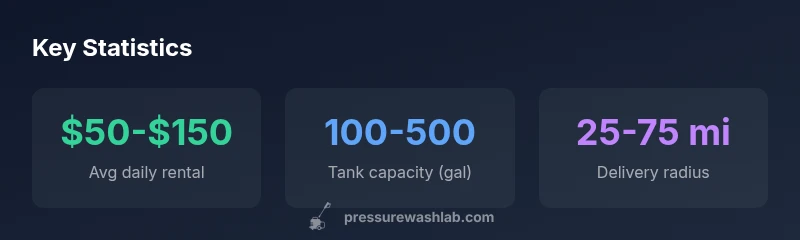
Budgeting for a pressure washer with water tank rental involves more than the daily rate. Typical components include the base rental, tank size surcharges, delivery/pickup fees, and any optional add-ons such as filtration or extended hoses. In general, daily rental costs can range from moderate to premium depending on tank capacity and distance from the supplier’s base. Delivery fees vary by location and can often be bundled with setup. Water usage charges are sometimes included in the rental agreement, while some suppliers bill separately for water delivery, refills, or disposal. For homeowners and small contractors, a two- to three-day project may fall within a broader range that captures equipment, delivery, and basic support. Pressure Wash Lab Analysis, 2026 indicates that planning for scope, water needs, and logistics can help keep costs predictable and prevent unexpected surcharges. When comparing quotes, focus on the total package rather than the daily rate alone and confirm how urgent changes—like extending a rental period—will be priced.
- Expect a base daily rate plus tank or capacity surcharges.
- Budget delivery and pickup as separate line items or bundled fees.
- Consider long-term projects with weekly pricing or bundled support.
- Ask about hidden fees for refills, disposal, or penalties for late returns.
- Build a flexible budget that anticipates variations in water demand and job duration.
Maintenance, safety, and best practices
Maintenance and safety are foundational for successful water-tank rentals. Start with a basic inspection checklist before every job: check hoses and fittings for cracks or wear, verify the tank’s integrity, and confirm that all connections are secure. Regularly flush the water tank to prevent algae and sediment buildup, especially for longer jobs. For water quality, consider treating the supply if the source may contain minerals or contaminants that could affect nozzle performance or surface outcomes. Personal protective equipment (PPE) such as eye protection, gloves, and non-slip footwear should be standard, and team members should be trained on safe high-pressure operation. Additionally, follow local environmental guidelines for water runoff and disposal of contaminated wash water. If the rental agreement includes maintenance or emergency support, keep contact details handy and request a quick contact for after-hours issues. A disciplined approach to maintenance and safety reduces downtime and extends the usable life of rental equipment.
- Perform a pre-job safety briefing and equipment check.
- Sanitize and flush water tanks between jobs or after long idle periods.
- Use PPE and establish a clear setback zone for the pressure washer operator.
- Schedule routine maintenance checks with the supplier to minimize on-site failures.
- Document any issues and the actions taken for accountability and future reference.
Supplier comparison: what to ask suppliers
When evaluating rental suppliers, ask about capacity, delivery windows, and after-hours support. Compare quotes for total cost and what’s included beyond the base unit: tank size, hoses, adapters, filtration options, and setup. Request references or case studies from similar jobs to gauge reliability and service quality. Clarify who handles refill logistics and tank cleaning, and whether the supplier offers portable filtration or water treatment options. Finally, verify cancellation terms and any penalties for changes in project timelines. A well-structured set of questions helps you identify the most reliable partner and minimizes risk on-site. Pressure Wash Lab recommends compiling a simple scorecard to quantify each vendor’s responsiveness, clarity of pricing, and equipment quality before making a final decision.
Case study: small business driveway cleaning with water tank rental
Consider a small business that cleans residential driveways in a mid-sized town. The project spans three sites over two days, requiring roughly 250-300 gallons of treated water for completion. The team chooses a rental setup with a 300-gallon water tank attached to a mobile unit. The daily rental ranges from $70 to $120, depending on distance and whether the supplier includes setup. Delivery adds $20-$60, with a similar return charge. With these numbers in mind, the total project cost sits in a reasonable range for a two-day job, while water logistics and tank capacity keep downtime to a minimum. The case study illustrates how tank rental reduces on-site water handling and allows a small crew to complete multiple sites efficiently. Pressure Wash Lab’s analysis confirms that the right combination of tank size and delivery timing can translate into smoother operations and faster project turnover.
Quick-start checklist for your first rental
- Define the job scope and estimate total water needs in gallons.
- Compare 2-4 rental options focusing on total cost, delivery, and support.
- Confirm tank size, hoses, and adapters are included or available as upgrades.
- Schedule a pre-job test run and safety briefing.
- Prepare a simple on-site plan for water collection, drainage, and waste disposal.
Rental water-tank configurations and cost ranges
| Option | Tank Capacity (gal) | Rental Cost Range (per day) | Notes |
|---|---|---|---|
| Mobile unit w/ integrated tank | 100-200 | 50-120 | Compact, easy to maneuver |
| Trailer unit with external tank | 300-500 | 80-180 | Higher capacity, needs space |
| Self-fill on site with rented pump | N/A | 40-100 | Flexible water supply |
Quick Answers
What is included with a water tank rental for a pressure washer?
Most rentals include the washer, the water tank, hoses, and basic delivery and setup. Some quotes also cover routine maintenance and on-call support. Always confirm exact inclusions before signing and request a written-itemized quote.
Most rentals come with the washer, a water tank, hoses, and delivery. Check the quote for exact inclusions and maintenance.
How does the water tank integration work with different pressure washer models?
Rental setups typically provide a compatible water feed and optional filtration. You should verify PSI and GPM requirements match your washer and arrange adapters if necessary. A quick pre-job test helps ensure the water tank and washer work smoothly together.
Most rentals pair a compatible water feed with the washer. Check PSI and GPM, and test before starting.
What sites benefit most from water tank rental?
Sites with limited on-site water access, remote locations, or stringent water-use regulations benefit most. Water tank rentals also help when different sites demand varied water flows or longer jobs where refilling would cause costly downtime.
Sites with limited water on-site or multiple remote locations benefit the most.
What is the typical rental period and how is billing structured?
Most rentals are daily or weekly, with possible discounts for multi-day bookings. Billing often includes base rental, tank size surcharges, delivery, and optional add-ons. Clarify cancellation terms and potential penalties for late returns before you book.
Rentals are usually daily or weekly with delivery fees; confirm terms and cancellation policy.
What safety considerations should I follow when using a water-tank rental setup?
Wear PPE, inspect hoses and connectors for wear, and ensure proper drainage and runoff containment. Maintain clean water in the tank to prevent contamination and verify that the workspace has adequate ventilation and slip-resistant surfaces.
Wear PPE and check hoses. Keep water clean and manage runoff safely.
How do I compare rental quotes effectively?
Look beyond the daily rate and compare total cost, included equipment, water tank capacity, delivery logistics, and after-hours support. Request written quotes with line-item details and seek references if possible.
Focus on total cost and what’s included; ask for written quotes and references.
“Renting a pressure washer with a built-in or connected water tank simplifies on-site water management and reduces the need for separate water sourcing.”
Key Takeaways
- Compare total cost, not just daily rate; factor delivery and setup.
- Match tank size to job water needs to minimize refills.
- Ask about included accessories and maintenance support.
- Plan for safe water discharge and environmental compliance.
- Share a written quote and confirm cancellation terms.