What Soap to Wash Car With Pressure Washer: A Practical Guide
Learn which car wash soaps are safe for pressure washers, how to dilute properly, and step-by-step tips to protect paint, wax, and seals while cleaning with a wand.


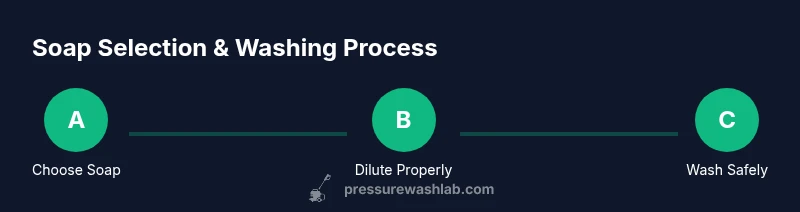
According to Pressure Wash Lab, to clean a car with a pressure washer you should use a car wash soap designed for pressure washers, choose a pH-neutral formula, and dilute it per the label. Pair with a soft wash mitt, a wide nozzle, and thorough rinsing to protect paint, wax, and seals.
Why the right soap matters for pressure washing a car
Choosing the right soap isn't just about cleaning power—it's about protecting the finish. Soaps designed for pressure washers are formulated to create the right foam, be easy to rinse, and minimize residue that can dull paint or interfere with wax. Pressure Wash Lab's testing indicates that using a car-specific, pH-neutral soap reduces the risk of stripping sealants while delivering consistent cleaning. When you pair the soap with a soft mitt and a wide spray nozzle, you reduce the chance of micro-scratches and water spots. Throughout this guide, we’ll cover how to pick the best car soap for your setup, how to dilute it correctly, and common mistakes to avoid. According to Pressure Wash Lab, the right soap choice matters for long-term paint health and a showroom finish.
Understanding soap chemistry: detergents, surfactants, and pH
Soap for pressure washing cars combines detergents, surfactants, and rinsing agents to lift and suspend dirt. Detergents break the bonds between grime and the paint; surfactants reduce surface tension so water can sheet away. For automotive surfaces, avoid harsh, caustic cleaners that can strip wax or dull clear coats. A safe, car-specific soap is typically formulated to be mildly alkaline or pH-neutral, which helps protect finishes while still producing enough lubricity to lift dirt. Always check the label for pH range and compatibility with wax or sealants you’ve applied. If you use recycled water or environmentally sensitive sites, choose biodegradable formulas with lower environmental impact. Pressure Wash Lab Analysis, 2026 emphasizes choosing pH-neutral detergents to minimize finish wear and residue.
Soap types for cars: wash soaps, shampoos, and degreasers
There are several soap categories to choose from. Car wash soaps (often labeled as pH-neutral) are designed to remove surface dirt without harming finishes. Detailing shampoos may be milder but are intended for manual washing with mitts. Degreasers are powerful cleaners meant for heavy grime or engine bays; they can damage paint if misapplied. Never use household dish soap, kitchen detergents, or toilet bowl cleaners in a pressure washer for cars. These products can strip wax, dry out rubber seals, and create streaks. Use dedicated car wash detergent and follow the recommended dilution ratios.
How to choose soap for your setup: PSI, nozzle, and dilution
Your pressure washer's PSI, the nozzle angle, and the dilution ratio all influence how the soap cleans and rinses. Start with a soap that is designed for use with consumer-level pressure washers and paint-safe finishes. A wide, fan-pattern nozzle reduces the force hitting the surface and helps keep the soap from driving into crevices. Follow the label’s recommended dilution; too strong a solution can leave residues or strip protective coatings. If you have sensitive wax or ceramic coatings, consider a lower-foaming formula that cleans without stripping protective layers.
Safe dilution guidelines and safety notes
Dilution is the key to controlling foam, rinsing requirements, and chemical exposure. Most car soaps provide a recommended ratio per gallon or per liter. Use clean water to dilute and keep concentrate away from skin and eyes; wear gloves and eye protection. When applying with a wand, start from the top and work downward, keeping a consistent distance to avoid oversaturation of panels. Rinse thoroughly after soaping to ensure no residues remain that could cause streaking or film formation on paint.
Common mistakes and how to avoid them
A few frequent errors can undermine results. Using household cleaners in a PW can damage finishes. Applying concentrated soap and letting it dry on panels may leave streaks or staining. Not rinsing enough can leave foamy residue that interferes with sealants. Using a stiff brush or abrasive mitt can scratch soft paints. Always test a small area first, monitor the foam, and adjust your technique to maintain a safe distance from trim and seals.
Real-world testing tips: patch test, rinse, rewash
Before committing to a full wash, perform a patch test on an inconspicuous area to confirm compatibility with your paint and wax. Rinse the vehicle thoroughly with the spray wand on a wide setting to remove soap as you go. If you notice streaks or left-behind residue, re-wash the area with a fresh mitt and a lighter dilution. After cleaning, inspect for missed spots and consider applying a wax or sealant to protect the finish. Real-world tests help you refine distance, dwell time, and pressure for your specific soap and car color.
Environment and disposal considerations
Many car soaps are biodegradable, but it's still wise to avoid draining soapy water into storm drains. Use a containment method or wash on a permeable surface where run-off can be captured and disposed of properly. If you wash near landscaping, choose a formula with little surfactant residue that won’t harm plants. Always follow local regulations for disposal and consider recycling water when possible.
Tools & Materials
- Pressure-washer-safe car wash soap (concentrate)(PH-neutral or mild; biodegradable preferred)
- Bucket of clean water(For pre-dilution and mitt rinsing)
- Microfiber wash mitt or lambswool wash pad(Soft, non-abrasive; rinse frequently)
- Soft-bristle wheel brush(Optional for wheels)
- Low-pressure spray nozzle (25-40 degrees)(Keeps force gentler on paint)
- Garden hose or water supply(Maintain adequate flow)
- Personal protective equipment (gloves, eye protection)(Protect skin and eyes from soap splashes)
- Towels or drying chamois(Dry surfaces to prevent water spots)
Steps
Estimated time: 60-75 minutes
- 1
Gather and prep supplies
Collect all required items: soap designed for PW use, mitt, nozzle, bucket, and protective gear. Read the label to confirm dilution and contact time, and ensure the car is cool before starting. Have a second mitt ready to swap if it gets heavily soiled.
Tip: Double-check the dilution on a small patch to avoid over-soaping. - 2
Rinse the vehicle to remove loose dirt
Rinse from top to bottom with a wide spray to loosen dirt and reduce friction. This minimizes the chance of scratching when you apply soap. Do not hold the wand in one spot for too long.
Tip: Rinse wheels first or last to prevent dragging brake dust onto clean panels. - 3
Dilute soap and load into dispenser
Dilute the car wash soap according to the manufacturer’s instructions. Use a bucket or inline foaming dispenser. Prepare only as much solution as you will use in a sitting to avoid premature drying.
Tip: Label any reusable containers to prevent cross-contamination with other cleaners. - 4
Apply soap with a low-pressure spray
Spray soap onto the car using a wide, even pass from the top down. Keep the wand moving to avoid streaks and ensure full coverage without saturating any single area.
Tip: Avoid pointing the spray directly at gaps, trim, or seals for extended periods. - 5
Let soap dwell briefly
Allow the soap to sit for 30-60 seconds to break surface grime, but do not let it dry on the panels. This enables better dirt lifting before agitation.
Tip: If you notice foaming climbing to edges, rinse those areas lightly before reapplying soapy solution. - 6
Agitate with mitt to lift dirt
Gently work the surface with a clean mitt or pad, section by section. Rinse the mitt frequently and re-dip in clean water to keep dirt from transferring back to the paint.
Tip: Use a dedicated wheel brush for wheels to avoid cross-contaminating body panels. - 7
Rinse thoroughly and dry
Rinse the entire vehicle again from top to bottom, ensuring all soap is removed. Dry with soft towels or a chamois to prevent water spots and inspect for missed spots.
Tip: Optional: apply wax or sealant after drying for added protection.
Quick Answers
Can I use household dish soap with a pressure washer to wash my car?
No. Household dish soap is not formulated for automotive finishes and can strip wax and degrade seals; always use a car wash soap designed for pressure washers.
Dish soap isn’t recommended for pressure washers; it can strip wax and damage finishes.
Is it safe to use a pressure washer on car paint?
Yes, if you use the correct settings: low psi, a wide nozzle, and maintain distance from the surface. Avoid concentrated streams on edges, trim, or seals.
Yes, with the right settings and distance.
What pH should car wash soap have?
Look for pH-neutral or mildly alkaline formulas; these are gentler on wax and paint than highly caustic cleaners.
Choose pH-neutral formulas for best protection.
Should I wash wheels with the same soap as the body?
Wheels can use the same soap, but use a separate brush and rinse thoroughly. Wheel grime varies and may require a targeted approach.
You can use the same soap, but use different brushes and rinse well.
How do I rinse properly after soap?
Rinse from top to bottom with a broad spray, ensuring all soap is removed. Re-check for missed spots.
Rinse from top down to remove soap completely.
Can soap damage chrome or polished metal?
Most car soaps are safe when diluted and rinsed well; avoid highly concentrated solutions near chrome, trim, or polished surfaces.
Generally safe when properly diluted and rinsed.
Is it necessary to pre-wet the car before applying soap?
Yes, a quick rinse helps loosen dirt and reduces friction when washing.
Pre-wetting helps reduce friction and dirt transfer.
Should I dry the car after washing with a pressure washer?
Yes, drying with clean towels or a chamois prevents water spots and helps you inspect for missed spots.
Yes—dry after washing to avoid spots and check for missed areas.
Watch Video
Key Takeaways
- Use car wash soap designed for PW and avoid household detergents.
- Dilute correctly and rinse thoroughly to prevent residue and streaks.
- Maintain distance and use a wide nozzle to protect paint and trim.
- Dry promptly and consider wax/sealant after washing.