Do You Need to Use Detergent with a Pressure Washer? A Practical Guide
Discover when to use detergents with a pressure washer, how to choose the right product, and step-by-step techniques to clean surfaces safely and effectively.


You can use detergent with a pressure washer when cleaning exterior surfaces, decks, or driveways, but you must choose a detergent designed for pressure washers and follow dilution and safety guidelines. Always test a small area first, and never mix cleaners. Ensure your machine supports detergent injection and wear eye protection.
Why Detergents Matter in Pressure Washing
According to Pressure Wash Lab, detergents can dramatically improve cleaning results by loosening dirt, oils, and algae so the pressure wash can remove them more effectively. Do you need to use detergent with pressure washer? The answer depends on the surface and the level of soiling. Detergents reduce the surface tension of water, helping the spray lift grime, while giving you time (a dwell period) for cleaners to work before rinsing. Using the right detergent also minimizes the need for aggressive scrubbing, preserving delicate surfaces and coatings. This section explains how detergents fit into a broader cleaning plan and why skipping detergent can sometimes mean more passes and longer jobs. For most exterior cleaning tasks, detergents are a practical asset when used correctly and with the right equipment.
Why Detergents Matter in Pressure Washing
- Detergents break down grime and organic matter, improving lift-off by the stream.
- They enable shorter cleaning cycles by increasing dwell time on tough stains.
- The right product protects surface finishes when used as directed by the label.
- Always test on a hidden spot to ensure compatibility with coatings or sealants.
Tools & Materials
- Pressure washer(Electric or gas-powered; verify compatibility with detergent injection if you plan to use an inline injector.)
- Pressure washer detergent(Use products labeled for pressure washers; avoid household detergents that can create excessive suds or residue.)
- Detergent injector/foam cannon(Many units include an inline injector; if not, use a foaming cannon or downstream application method.)
- Measuring cup or bottle(Helpful for pre-diluting concentrates according to label guidance when required.)
- Protective gear (eye protection, gloves)(Splash protection is essential; detergents can irritate skin and eyes.)
- Hose and fresh water supply(A clean water supply helps prevent introducing contaminants that could reduce cleaning efficacy.)
- Test patch material(Use an inconspicuous area to test compatibility before broader application.)
- Surface-appropriate cleaners or degreasers (optional)(Consider specialized cleaners for wood, concrete, vinyl, or metal surfaces based on manufacturer recommendations.)
Steps
Estimated time: Estimated total time: 60-90 minutes
- 1
Assess the surface and plan
Survey the area to identify surfaces, coatings, and stubborn stains. Decide whether detergent will help and which type is best. Note any plantings nearby that could be affected by runoff, and plan protective measures if needed.
Tip: Document any sensitive areas (like painted wood) to avoid over-treatment. - 2
Assemble and prep equipment
Set up the pressure washer, attach the appropriate nozzle, and confirm the detergent injector is functioning (if your model has one). Prepare protective gear and ensure the water supply is clean and stable.
Tip: Test the injector with a small amount of detergent to confirm flow before you begin on the main surface. - 3
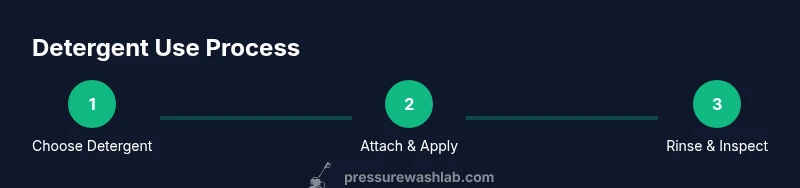
Choose and prepare detergent
Select a detergent that matches your surface and soil type. Read the label for surface compatibility and any safety precautions. If pre-dilution is required, measure the concentrate carefully.
Tip: Avoid mixing different cleaners; incompatibilities can create hazardous fumes or ineffective cleaning. - 4
Attach injector or foaming accessory
Connect the injector or foam cannon according to your equipment manual. Prime the line to eliminate air pockets and ensure consistent delivery of detergent.
Tip: Keep the detergent container above the injector to help gravity feed if needed. - 5
Apply detergent evenly
Engage the detergent flow and apply in broad, even strokes. Allow a brief dwell time as directed by the product label to let the chemicals break down dirt and algae.
Tip: Work from the bottom of the surface upward to avoid streaks. - 6
Rinse and proceed with cleaning
Switch to a rinse mode or change to a clean-water nozzle and thoroughly rinse the area. Move methodically to avoid leaving detergent residues that can attract new dirt.
Tip: Keep the nozzle at the recommended distance to prevent damage or etching. - 7
Inspect and repeat if necessary
Check for remaining stains and reapply if needed, focusing on stubborn spots. Do not over-treat in a single pass to minimize damage to coatings.
Tip: Spot-test repeat applications on a small area first. - 8
Clean up and store
Rinse equipment thoroughly, drain remaining detergent properly, and store tools in a dry place. Recycle or properly dispose of any rinse water per local regulations.
Tip: Rinse plants and landscape areas with clean water to minimize chemical exposure.
Quick Answers
Can I use laundry soap in a pressure washer?
Laundry detergents are not recommended for pressure washers; they can cause excessive suds, residue, and potential equipment damage. Use products labeled for pressure washers.
Laundry soap is not recommended for pressure washers. Use detergents specifically formulated for pressure washers to avoid damage and residue.
Is it safe to use detergent on wood and vinyl siding?
Detergents designed for exterior surfaces are generally safe for wood and vinyl when used as directed. Always test on a hidden spot to confirm color fastness and coating integrity.
Exterior detergents are usually safe on wood and vinyl if you follow the label, but test first to avoid issues.
Do I need a special nozzle to apply detergent?
Some setups include a detergent injector or foam cannon; if your system lacks this, you can apply detergent via a downstream method or by pre-diluting at the source.
If you don’t have an injector, use a foam cannon or downstream delivery; otherwise, apply according to your unit’s instructions.
What if I mix cleaners by accident?
If two cleaners mix, rinse thoroughly and stop using the mixture. Do not run the system with mixed cleaners; flush with clean water and consult the product label for safety guidance.
If cleaners mix, flush with clean water and avoid using the mixture. Check the labels for safety steps.
Should I pre-wet surfaces before applying detergent?
Pre-wetting can help even detergent distribution and protect delicate surfaces. It also gives you a more uniform cleaning result.
Pre-wetting helps spread the detergent evenly and protects delicate surfaces.
How do I minimize runoff and environmental impact?
Use biodegradable, environmentally friendly detergents when possible and contain or direct runoff away from plants and storm drains.
Choose eco-friendly detergents and manage runoff to protect plants and waterways.
Watch Video
Key Takeaways
- Test first; always patch-test a small area.
- Use only detergent designed for pressure washers.
- Choose the right product for your surface type.
- Rinse thoroughly and protect surrounding vegetation.