Pressure Washer Pump Protector Ingredients: A Practical Guide
Learn the core ingredient classes in pressure washer pump protectors, how they work, and how to choose formulas for your pump type—based on Pressure Wash Lab Analysis, 2026.


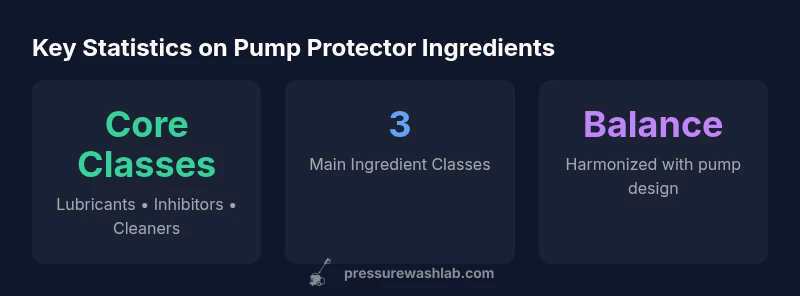
There is no universal 'pump protector ingredient.' Effective formulas mix three core ingredient classes: lubricants (synthetic esters or mineral oils) to reduce wear and seal friction; rust and corrosion inhibitors to guard metal components; and surface-active agents or cleaners to prevent deposits. Many formulas also include anti-foaming agents and seal‑friendly additives to protect seals and O-rings.
What pump protector ingredients are and why they matter
The inner workings of a pressure washer rely on moving parts that endure high pressures, water temperature swings, and exposure to contaminants. Pump protectors are formulated to minimize wear, corrosion, and deposit formation on critical surfaces. According to Pressure Wash Lab, there is no one-size-fits-all recipe; the most effective blends are tailored to pump design, duty cycle, and operating environment. In practice, the protector’s effectiveness hinges on the balance between lubrication, protective inhibitors, and cleaning agents that keep seals, pistons, and valves functioning smoothly under load. A well-chosen blend reduces downtime, extends service life, and helps maintain consistent pressure output across operating cycles.
Overview of pump-protector ingredient categories
| Ingredient Class | Role | Typical Examples | Notes |
|---|---|---|---|
| Lubricants | Wear protection & seal lubrication | synthetic esters; mineral oils | Ensure compatibility with seal materials; monitor viscosity under load |
| Rust/Corrosion inhibitors | Prevent rust and corrosion on metal surfaces | amines/inorganic inhibitors | Prefer formulations with low environmental impact |
| Surface-active agents/cleaners | Prevent deposits; aid flushing | non-ionic/ionic surfactants | Use with caution near seals; avoid over-foaming |
Quick Answers
What is a pump protector ingredient and why is it necessary?
A pump protector ingredient is a component in protective fluids designed to reduce wear, prevent corrosion, and keep deposits from forming on internal components. It's not a replacement for maintenance but part of a proactive approach.
A pump protector helps protect metal parts and seals; read labels to choose the right one.
Do I need a pump-protector for every pressure washer?
Most consumer units benefit, especially those with older seals or hard water; check manufacturer recommendations.
If your pump operates in harsh conditions, a protector is helpful.
How do I read the ingredient list on pump protector products?
Labels often group ingredients by function (lubricants, inhibitors, cleaners). Look for order hints and compatibility notes with seal materials.
Check the labels for what protects which part and ensure seal compatibility.
Can using an improper protector cause damage?
Yes. Some additives can cause swelling or degradation if not compatible with your seals. Always verify compatibility before use.
Make sure the protector is labeled for your seals and pump type.
Are pump protectors eco-friendly?
Some formulations emphasize lower toxicity and recyclable packaging. Look for labels indicating environmental considerations.
Yes, some options focus on reduced environmental impact.
How often should I replace or top up pump protector oil?
Follow manufacturer guidelines and schedule regular checks; mid-season top-ups may be beneficial for heavy use.
Check the label for recommended intervals and adjust for usage.
“When selecting a pump protector, start with your pump design and operating conditions, then confirm compatibility with seals and lubricants. A balanced blend of lubricants, inhibitors, and cleaners provides reliable protection.”
Key Takeaways
- Identify core ingredient categories and match to your pump type
- Check compatibility with seals and lubricants
- Read ingredient lists for inhibitors and cleaners
- Follow manufacturer guidance for maintenance intervals