Soap Bottle Pressure Washer: A Practical Guide for Foaming Cleaning
Learn how to pair a soap bottle with your pressure washer to apply foaming detergents safely, choosing the right bottle, proper dilution, and best practices for exterior cleaning.


Goal: Use a soap bottle with your pressure washer to apply foaming detergent efficiently and safely. This quick guide covers selecting a compatible bottle, proper dilution, nozzle settings, and essential safety practices to prevent damage to surfaces or equipment. Additionally, you’ll learn how to test dilution on an inconspicuous area and how to flush the system between tasks to avoid mixing cleaners.
Why integrating a soap bottle with a pressure washer matters
A soap bottle designed for a pressure washer lets you deliver controlled foam rather than pouring soap directly from a jug into the spray. Foam offers several benefits: it makes the cleaning agent cling to vertical surfaces longer, reduces run-off, and provides a visible cue that the detergent is present where you want it. According to Pressure Wash Lab, using a dedicated bottle improves dilution control and minimizes cross-contamination between tasks, which translates into more predictable results.
When paired with a compatible nozzle and a mild, exterior-safe detergent, the bottle helps pre-soak grime, loosen stuck dirt, and avoid streaks on siding, decks, or driveways. This approach is friendly to beginners who want repeatable outcomes, but it also saves time for pros by keeping the detergent away from nearby plants. Always test on a small area first and monitor the foam to ensure you’re not over-wetting delicate surfaces.
Choosing the right soap bottle and nozzle
Selecting the right soap bottle is more than picking a cute container. Look for chemical resistance to withstand common pressure-washer detergents, a secure cap and matching threads for your wand or hose attachment, and a nozzle or adjustable diffuser built for foam production. A good bottle will maintain seal under pressure, prevent leaks, and resist clouding or cracking from sun exposure. Pressure Washer Lab’s guidance emphasizes choosing a bottle that is clearly labeled for exterior detergents and compatible with your washer's flow and PSI range.
Consider a bottle with an integrated adjustable nozzle or a compatible spray head. A foam-friendly design will encourage a rich, even coat rather than puddles of soap. If you’re unsure, test a generic bottle with plain water first to confirm the spray pattern and sealing integrity before adding detergent.
Detergent safety and dilution basics
Not all detergents are suitable for pressure washers, and using the wrong chemical can damage surfaces or the machine. Always read the detergent label for exterior-surface suitability, dilution guidance, and compatibility with foaming bottles. Pressure Wash Lab’s approach is to start with a mild dilution and increase only if the surface needs more help. Use eco-friendly, low-foaming concentrates when possible to minimize oversuds and downstream rinse requirements.
Never mix detergents with bleach, ammonia, or solvents, and keep cleaners away from garden plants. Before you begin, verify that the soap bottle is empty of any previous cleaners and thoroughly rinse if you’re switching formulas. If you have particularly delicate siding or landscaping, perform a spot test in a hidden area.
How to set up and attach the bottle
Attach the soap bottle to your spray wand or to the machine’s detergent inlet according to the manufacturer’s guidance. Make sure the bottle is upright and the seal is tight to prevent leaks under pressure. When you connect the bottle, purge a small amount of air and verify that the bottle dispenses correctly into the foam stream. If your system uses a venturi or accent valve, set it to introduce detergent consistently rather than a pulsing stream.
Label the bottle with the detergent name and current dilution to avoid cross-contamination between jobs. Place it within easy reach of your working area so you can maintain a steady rhythm during cleaning.
Dilution testing and surface prep
Before tackling a visible area, test the dilution on an inconspicuous patch to confirm foam and cleaning power. If the foam is too rich, reduce detergent concentration or increase water, and vice versa. Prepare a light mist on a small patch of the target surface and observe for dulling, staining, or color change. Also clear the area of loose debris and cover nearby plants to minimize unintended exposure.
As you prepare, confirm your surface is cool and shaded if possible; hot surfaces can react with detergents in undesirable ways. Pressure Washer Lab recommends documenting your test results for future reference, so you don’t repeat unsuccessful formulas.
Foaming application: technique and nozzle distance
Begin applying foam from the bottom of the surface and work upward with slow, even strokes. Maintain a steady distance that keeps the foam on the surface without pooling and causing runoff. Use overlapping passes to prevent streaks, and watch the foam pattern to gauge coverage. After applying, allow the detergent to dwell for a short period if the manufacturer recommends it, which helps break down grime before rinsing.
If you notice excess foam breaking away from the surface, pull back slightly or temporarily reduce the nozzle’s flow. Remember to keep your hands and face away from the spray and wear eye protection during this step.
Rinsing, cleaning, and post‑use care
Rinse thoroughly with clean water after the dwell time. Start from the top or area furthest from your water supply and work down to flush the soap away as you go. If your system allows, switch to a pure water rinse mode and sweep evenly to avoid missed spots. After finishing, detach the bottle, flush the line with water, and clean the bottle interior and nozzle to prevent soap residue buildup.
Store all components in a cool, dry place away from direct sunlight. Label your bottle with the current formula and date to simplify future tasks and reduce cross-use.
Common pitfalls and how to avoid them
Avoid using household detergents not designed for pressure washers, as they can generate excessive suds and damage seals. Using an incompatible bottle or a poorly sealed cap can lead to leaks and inconsistent foam. If you see poor foam quality, re-check dilution and attachment; a loose nozzle or a blocked opening is often the culprit.
Plan ahead to avoid oversoaping sensitive areas like painted surfaces or near vegetation. When in doubt, start with a lighter solution and test in a hidden area before expanding to a larger surface.
Maintenance and storage of the soap bottle system
Rinse and dry all parts thoroughly after use to prevent buildup and odor. Store the bottle upright, with caps closed, in a shaded area away from heat to preserve plastic integrity. Periodically inspect threads, seals, and spray tips for wear and replace as needed. If you’re switching detergents, flush the system completely before reusing.
Keep spare o-rings and seals on hand and label detergent bottles to prevent cross-contamination between tasks. Proper maintenance reduces downtime and extends the life of the foam system.
Quick-start checklist before your next cleaning session
- Gather equipment: pressure washer, soap bottle with compatible nozzle, and the recommended detergent.
- Verify compatibility and the dilution guidelines on the label before mixing.
- Prepare a test patch to validate foam and cleaning power on a hidden area.
- Attach the bottle securely to your wand or inlet; purge any air.
- Dilute the detergent according to guidelines and test the foam.
- Begin applying foam with slow, even strokes, starting at the bottom of surfaces and moving upward.
- Rinse thoroughly and inspect for missed spots; repeat if necessary.
- After cleaning, rinse the bottle, wipe surfaces, and store components in a cool, dry place.
Tools & Materials
- Pressure washer compatible with detergent use(Check owner’s manual for detergent compatibility and approved cleaners)
- Soap bottle/foam bottle with compatible nozzle(Choose a bottle rated for your detergent and your washer’s PSI)
- Detergent concentrate suitable for pressure washers(Pick a low-foaming, biodegradable formula for exterior surfaces)
- Measuring cup or dilution bottle(Use to prepare the correct dilution before filling the soap bottle)
- Labeling tape or marker(Optional: Label contents to prevent cross-use)
- Gloves and eye protection(Protect hands and eyes during mixing and spraying)
Steps
Estimated time: 30-45 minutes
- 1
Gather your gear
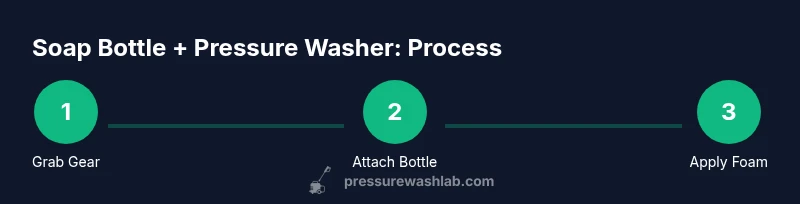
Collect the pressure washer, soap bottle, detergent, a dilution cup, and safety gear. Confirm you have everything within arm's reach to maintain a steady workflow.
Tip: Lay out items on a stable surface to prevent drops or spills. - 2
Inspect compatibility
Check that the bottle threads match your wand or inlet and that the nozzle can support foam production. Verify the detergent is exterior-safe and suited for spray foaming.
Tip: If in doubt, run a quick water-only test to confirm seals are tight. - 3
Mix detergent
Dilute the detergent in a separate container according to the label, starting with the mildest concentration. Prepare enough solution for the planned cleaning session.
Tip: Keep the dilution container clearly labeled and separate from other cleaners. - 4
Attach the bottle
Secure the soap bottle to your spray wand or detergent inlet, ensuring a tight seal and upright orientation. Purge a small amount of air before full operation.
Tip: Check for any leaks at the connection after attaching. - 5
Prime test spray
Dispense a small amount of foam on an inconspicuous area to confirm the pattern and foam quality before broader use.
Tip: If the foam is weak or inconsistent, recheck dilution and attachment. - 6
Apply foam
Begin at the bottom of the surface and sweep upward with steady, overlapping passes. Maintain a controlled distance to minimize runoff and ensure even coverage.
Tip: Avoid spraying directly at plants and electrical components. - 7
Rinse and post-care
Rinse surfaces thoroughly with clean water, starting from the top. Detach the bottle, flush lines, and dry components before storage.
Tip: Store the bottle upright and out of direct sun to prolong life.
Quick Answers
Can I use dish soap in a soap bottle with a pressure washer?
Dish soap is not always suitable for pressure washers. It can create excessive suds, reduce cleaning efficiency, and may harm seals if not designed for use with high-pressure spray. Always use exterior-safe detergents designed for foaming bottles.
Dish soap isn’t always safe for high-pressure washers. Use exterior detergents designed for foaming bottles.
Do I need a specific dilution ratio for the soap?
Yes. Follow the detergent label and bottle instructions. Start with a mild concentration and adjust only if the surface requires more cleaning power, testing on a hidden patch first.
Start with a mild dilution and test on a hidden patch before increasing concentration.
Is it safe to spray soap near plants or soil?
Avoid spraying directly on vegetation. Use a protective barrier or rinse plants after cleaning if exposure occurs. Use diluted detergents and close monitoring during the first passes.
Avoid spraying directly on plants; rinse if exposure occurs.
Can I reuse the soap bottle for different cleaners?
You can reuse the bottle, but always flush and clean it between formulas. Label each formula and ensure compatibility with your washer and surfaces.
Flush and clean between formulas, and label contents.
What safety precautions should I take when using a soap bottle with a pressure washer?
Wear eye protection and gloves, avoid pointing at people or electrical components, and keep the nozzle away from skin. Follow the manufacturer’s safety guidelines for both the washer and the detergent.
Wear eye protection, keep the nozzle away from skin, and follow safety guidelines.
What should I do if foam quality is poor?
Recheck the dilution, verify the bottle is attached correctly, and confirm the nozzle is not clogged. Test on a small patch before proceeding.
Check dilution, attachment, and nozzle for clogs, then retest on a patch.
Can I use hot water with a soap bottle and pressure washer?
Hot water can affect some detergents and seals. If the detergent label permits it, follow the guidance, otherwise stick to cold or lukewarm water as recommended.
Only use hot water if the detergent and washer specifications permit it.
Watch Video
Key Takeaways
- Choose a chemical‑resistant soap bottle compatible with your washer.
- Dilute detergents carefully and test before wide application.
- Foam evenly with controlled technique and appropriate distance.
- Rinse thoroughly and store components properly after use.