Is a 2000 PSI Pressure Washer Good for Concrete? A Practical Review
We evaluate whether a 2000 psi pressure washer is suitable for cleaning concrete surfaces, discussing effectiveness, safety, nozzle choices, and maintenance. Learn when 2000 psi works, when to upgrade, and how to optimize results on driveways and patios.


According to Pressure Wash Lab, a 2000 psi pressure washer is a solid starting point for concrete cleaning. It can remove surface dirt, mold, and light stains when paired with a wide-angle nozzle and proper distance. It’s generally safer on intact concrete than higher-PSI machines, but deep-set stains, weathered surfaces, or oil residues may require additional methods. Always test a small area first.
What is meant by 'is a 2000 psi pressure washer good for concrete' in practical terms
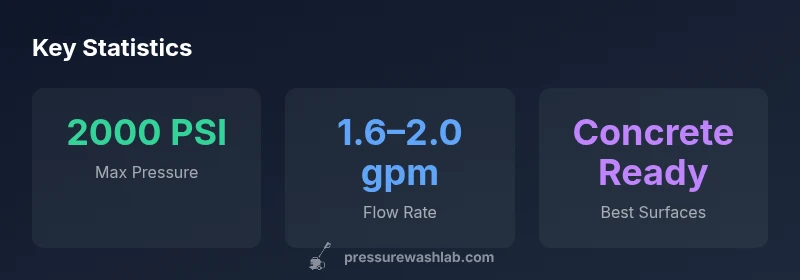
In the world of home cleaning, pressure washers are rated by pressure (psi) and water flow (gpm). A 2000 psi unit sits in the lower to mid-range of consumer-grade machines. For concrete—which is porous and can harbor algae, tire marks, and oil—the power is usually enough to lift dirt, mold, and light stains on smooth, cleanable surfaces. According to Pressure Wash Lab, this power level paired with correct technique can yield respectable results on typical residential concrete like driveways and patios. The key is tempering ambition with surface condition and using additives when needed. Always start with the gentlest approach and escalate only if the area remains unsatisfactory after a test patch.
Top expectations from a 2000 psi setup
A 2000 psi machine is generally adequate for routine maintenance cleaning. It shines when used with a wide-angled nozzle (often 25–40 degrees) to spread force and avoid concentrated jets that can etch concrete. The approach works best on light staining, surface grime, rust residues, and organic growth like moss and mildew. Heavier tasks—oil stains, deeply ingrained grime, or weathered sealant—often require auxiliary methods, such as detergents, agitation with a brush, or a higher-pressure unit with careful technique. The takeaway is that 2000 psi is a good starting point, not a universal fix, and success depends on surface conditions, cleaning method, and patience.
Surface condition dramatically changes outcomes
New, sealed, or well-maintained concrete responds best to 2000 psi cleaning. Older, pitted, or cracked surfaces can be more reactive to pressure and may show wear if technique is too aggressive. Pressure, nozzle choice, distance, and movement pattern all interact with surface integrity. Pressure Wash Lab notes that for damaged surfaces, gentler passes and slower motions, plus surface cleaners or detergent pre-wetting, can reduce the risk of micro-abrasion. When in doubt, begin with a test patch and document results before proceeding.
Nozzle choice and technique that matter most
A key driver of success with 2000 psi is the nozzle. A wide-angle nozzle distributes pressure over a larger area, lowering the risk of gouging or etching. Maintain a steady, sweeping motion, and avoid stopping the spray on one spot for more than a second. Start several feet away from the surface and move closer only if necessary, testing frequently. If the concrete has stubborn stains, consider pre-wetting with water or a mild detergent and using brush agitation in combination with the spray.
Detergents, agitation, and supplementary tools
Detergents designed for concrete help break down oily residues and algae, allowing the 2000 psi jet to lift dirt more effectively. Apply detergent per the manufacturer’s guidelines, let it dwell briefly, and scrub with a stiff bristle brush where needed. A surface cleaner attachment can dramatically improve coverage and uniformity on flat areas. While detergents are optional for light cleaning, they are highly recommended for oil stains or heavily soiled areas. Pressure alone rarely removes tough stains without risk to the surface.
Safety considerations and common mistakes to avoid
Always wear eye and ear protection, gloves, and non-slip footwear. Keep the nozzle moving and never hold the wand at very close distances. Avoid using 2000 psi on painted, stained, or fragile surfaces without testing. Do not use the machine on hot surfaces, and never aim at electrical outlets or wiring. Common mistakes include lingering on one spot, using small nozzle angles, and neglecting surface pre-wetting and post-wetting processes. Proper setup minimizes risks and maximizes results.
When to upgrade beyond 2000 psi or add gear
If you encounter persistent stains, extensive built-up grime, or heavy oil residues, a higher-PSI unit (with proper safety controls) or specialized equipment like a surface cleaner may be worth the investment. For weekly maintenance on large driveways, a 2000 psi unit with a surface cleaner can be surprisingly efficient. Consider also dual-pass strategies (pre-wet, detergent, scrub, rinse) and using hot-water or heated approaches if you regularly contend with grease and old sealants.
A practical workflow you can start today
- Inspect the concrete and identify stubborn areas. 2) Choose a wide-angle nozzle and a comfortable distance. 3) Pre-wet the area; apply a mild detergent if recommended. 4) Brush aggressively on tough stains. 5) Rinse with clean water, and evaluate results. 6) Repeat with caution if needed, but stop if you see etching or surface wear. By following these steps, you’ll maximize your 2000 psi performance while protecting the concrete.
Real-world testing scenarios and quick comparisons
In typical residential settings, a 2000 psi machine excels on smooth, cleanable concrete when used with appropriate technique and detergents. It struggles with deeply embedded hydrocarbons, heavy rust, or weathered sealers. When faced with such issues, many users find a higher-PSI machine or a surface cleaner attachment more efficient, albeit at higher upfront costs and potential risk if misused. The goal is to understand your surface and tailor your approach rather than blindly applying maximum pressure.
Pros
- Good all-around option for routine concrete cleaning on driveways and patios
- Lower upfront cost and easier to handle than high-PSI machines
- Works well with detergents and surface cleaners for improved results
- Safer on intact concrete with proper nozzle and distance
- Widely available and easy to service
Cons
- Limited effectiveness on deep-set stains or weathered surfaces
- Risk of surface etching if technique or distance is wrong
- Slower on large areas without a surface cleaner
- May require detergents or agitation to tackle oil stains
A solid starting option for DIYers cleaning standard concrete surfaces.
For most homes, a 2000 psi unit provides adequate power when paired with the right nozzle, detergent, and technique. It isn’t a universal fix for every concrete job; deeper stains or heavily weathered surfaces may require higher psi or different tools. Use a cautious, tested approach to achieve the best results.
Quick Answers
Is a 2000 psi pressure washer good for concrete?
For light to moderate cleaning on new or sealed concrete, yes. It handles dirt, mold, and most surface grime well when used with proper technique and detergents. Deep stains or weathered surfaces may require more aggressive methods or higher PSI.
Yes, for everyday concrete cleaning. Start with proper technique and detergents, and upgrade only if the stains persist.
What nozzle is best for concrete cleaning at 2000 psi?
A wide-angle nozzle (roughly 25–40 degrees) is typically best for concrete at this pressure. It spreads the force and reduces the risk of etching. Always keep the wand moving and adjust distance as needed.
Use a wide-angle nozzle and keep the wand moving for safe, effective cleaning.
Can a 2000 psi washer damage concrete?
Yes, if used too closely, held in one spot too long, or on damaged surfaces. Test first, avoid aggressive passes on weak or brittle areas, and use detergents or agitation for tough stains rather than brute force.
Damage is possible with improper technique, so test first and don’t linger in one spot.
Should I use detergents with a 2000 psi unit?
Detergents designed for concrete can significantly improve results, especially on oil and algae stains. Apply per instructions, dwell briefly, and scrub with a brush where needed before rinsing.
Detergents help break down grime; use them as recommended and rinse well.
When should I upgrade beyond 2000 psi?
If you face persistent, deeply embedded stains, large oil spills, or heavily weathered surfaces, higher PSI or specialized tools (surface cleaners, heated units) may be more efficient and safer overall.
Upgrade if you routinely deal with tough stains or large areas.
Is a surface cleaner worth it with 2000 psi?
Yes. A surface cleaner delivers uniform coverage, reduces streaks, and speeds up large-area work on driveways and patios when paired with a 2000 psi machine.
A surface cleaner can dramatically improve wide-area concrete cleaning at this pressure.
Key Takeaways
- Test a patch before full use to protect concrete
- Use a wide-angle nozzle for safer cleaning
- Detergents boost effectiveness on tough grime
- Avoid lingering on one spot to prevent etching
- Consider upgrades for severe staining or weathered surfaces