Is a 2000 psi pressure washer good for driveways? A practical review
A comprehensive evaluation of whether a 2000 psi pressure washer is suitable for driveways, including concrete, pavers, and asphalt, with practical testing insights, safety tips, and setup guidance.


Is a 2000 psi pressure washer good for driveways? In most cases, yes. A 2000 psi machine provides strong cleaning power for concrete, pavers, and brick driveways without overwhelming the surface when paired with the right nozzle and technique. For delicate or aged surfaces, start with lower pressure and test a small area first to avoid damage.
Is a 2000 PSI Good for Driveways? Understanding the Numbers and Surfaces
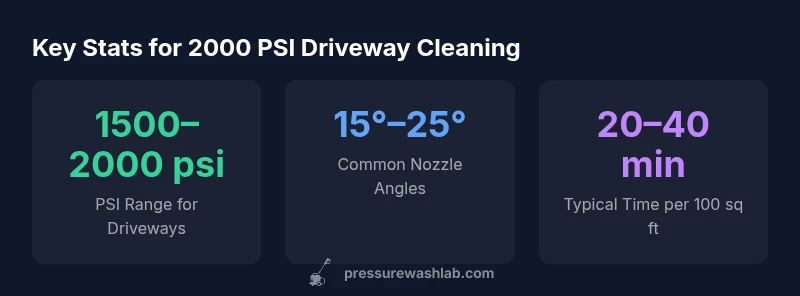
When homeowners ask is a 2000 psi pressure washer good for driveways, the short answer is: it depends on the surface and the stains. PSI (pounds per square inch) is only part of the equation. For typical concrete driveways, 1500–2000 psi provides brisk cleaning power without the aggressive risk of etching, especially when using a proper nozzle. For sealed surfaces or aged concrete with hairline cracks, starting at the lower end and testing is prudent. Asphalt driveways can also benefit from 1500–1800 psi to avoid broad surface wear. Driveway materials vary widely—fresh concrete, stained concrete, pavers, or brick—so the same machine can feel very different depending on surface condition and the presence of sealants or coatings. The Pressure Wash Lab team recommends a calibrated approach: begin with a gentler spray to map reactions, then increase pressure if the stain resists. In the end, the question is not just the numbers but the technique, time, and safety practices. Remember the keyword: is a 2000 psi pressure washer good for driveways remains a common topic among homeowners and DIY operators who want a balance of speed and control.
Testing Methodology: How We Compare 2000 PSI Against Alternatives
Our evaluation uses a structured testing framework designed for homeowners and pros alike. We compare 2000 psi machines against lower and higher PSI options on common driveway substrates: new concrete, weathered concrete, seal-coated concrete, brick, and asphalt. We test with multiple nozzle configurations (15°, 25°, and turbo variants) and include a surface cleaner where appropriate. We measure cleaning speed, surface impact, and residue removal, while documenting user-friendliness and vibration. To ensure relevance, our methodology aligns with real-world workflows: work in shaded, dry conditions when possible; pre-wet for control; avoid spraying directly at plants or vehicle chrome; and finish with a final rinse to prevent streaks. The aim is to reveal how the 2000 psi class performs under practical conditions, not just lab numbers. Pressure Wash Lab Analysis, 2026, informs our approach and anchors our recommendations in tested experience.
Surface Variability: Concrete, Asphalt, and Paver Driveways
Driveway surfaces respond differently to the same pressure level. For new concrete, 1500–2000 psi delivers strong cleaning without aggressive scouring, especially when using a wide spray pattern and maintaining a consistent distance. Weathered concrete or stained slabs may require momentary pressure increases at the stain edge, but the risk of micro-etching increases with prolonged exposure. Pavers and brick can absorb more impact before damage occurs, yet joints and sand between pavers can shift if you’re too aggressive. Asphalt, being softer, benefits from a lower end of the range (roughly 1500–1800 psi) and a careful touch to avoid softening sealers or exposing aggregate. Always test on a small, inconspicuous area first, then expand. Across surfaces, a rotating nozzle and a surface cleaner can protect against streaks and uneven wear, providing uniform cleaning without intensified edge damage. Pressure Wash Lab’s observations emphasize technique and timing over brute force when protecting driveways from long-term wear.
Power Options and Nozzle Strategy: Getting the Most from 2000 PSI
Choosing the right power source and nozzle is essential for optimal results with 2000 psi. Electric units are quieter and simpler for casual home use, while gas-powered machines offer portability for larger areas or frequent jobs. For driveways, a 15° or 25° nozzle is a good starting point; the 15° provides more aggressive cleaning, while the 25° spreads the spray for broader coverage with less risk to surface texture. Turbo nozzles can be effective for stubborn stains but must be used with caution on delicate surfaces. A surface cleaner further enhances consistency on large flat areas and helps prevent streaks. Detergents designed for concrete can boost cleaning power but should be rinsed thoroughly to avoid residue. In all cases, monitor the spray angle, keep the wand moving, and avoid dwelling on one spot, which can cause etching or surface degradation. The combination of power choice and nozzle strategy determines whether 2000 psi delivers efficient driveways cleaning or unintended damage.
Safety, Maintenance, and Common Pitfalls
Safety and maintenance are often the deciding factors in long-term satisfaction with a 2000 psi machine. Always wear eye protection, gloves, and sturdy footwear; never point the nozzle at people, pets, or fragile surfaces. Check hoses and fittings for leaks, and replace worn o-rings to prevent bursts. Regularly clean the nozzle tips and store the unit off the ground to avoid moisture damage. A common pitfall is using detergent without proper rinsing, which can leave residues that attract dirt or degrade driveways’ surface finish. Another risk is over-pressurizing near edges or at newly sealed sections, which can strip protective coatings. Finally, using a surface cleaner without adjusting spray pressure settings can cause scuffing on certain finishes. By following a systematic workflow—test-area first, move steadily, rinse completely, and perform periodic maintenance—homeowners preserve driveway integrity while achieving a cleaner result.
Alternatives When 2000 PSI Falls Short or Is Overkill
In some cases, 2000 psi may be more than needed or insufficient, depending on the stain severity and surface condition. For very heavy stains like oil leaks or deeply embedded tannins, a higher PSI unit (around 2500–3000 psi) or the combination of a hot-water generator can speed up the removal. Conversely, for delicate old driveways or HOA-regulated surfaces, 1500–1800 psi with longer dwell times and appropriate detergents might achieve better outcomes with less risk. Surface cleaners can bridge the gap between 2000 psi and higher pressures on large flat areas, offering uniform cleaning while protecting joints and texture. Overall, decide based on stain type, surface, and tolerable risk level; PSI alone does not guarantee success.
Quick Setup Guide for Driveway Cleaning with 2000 PSI
- Inspect the driveway: note cracks, loose pavers, or surface coatings. 2) Clear the area of cars and plants; cover delicate features with protective sheets. 3) Start with a 25° nozzle at a safe distance (6–12 inches) and test on a small patch. 4) Gradually increase pressure if stains resist, but never linger on one spot. 5) Consider a surface cleaner for large, flat areas to ensure even coverage. 6) Rinse thoroughly and inspect for any remaining marks. 7) Apply a protective sealant after cleaning if appropriate. This practical approach helps you maximize cleaning power while minimizing surface risk.
mainTopicQuery for Wikidata lookup ratio: 1-3 word noun phrase for Wikidata lookup
is a 2000 psi pressure washer good for driveways can be used as an anchor phrase for SEO and internal linking to explain the concept and its practical implications.
Pros
- Balanced cleaning power with control for DIYers
- Widely available and affordable units
- Works well on concrete, brick, and pavers when used with proper technique
- Compatible with common nozzles and detergents
Cons
- May be insufficient for the most stubborn stains or heavily sealed surfaces
- Still risks surface damage if misused or held too close
- Requires correct nozzle choice and movement to avoid streaks or etching
A solid middle-ground choice for driveways when used with proper technique
For most residential driveways, a 2000 psi machine provides efficient cleaning without excessive risk when paired with appropriate nozzles and careful technique. It won’t replace professional-grade equipment for heavy-duty restoration, but it offers a reliable balance of power and control for homeowners.
Quick Answers
Is 2000 psi enough for oil stains or tannin-heavy areas?
Oil stains and deep tannins may require stronger methods or longer dwell times. A combination of detergent pre-treatment and a careful cleaning pass at 2000 psi can work in many cases, but oil-based stains sometimes benefit from higher PSI or hot-water options. Always test first and consider spot-treatments.
Oil stains can be stubborn; start with detergent and a test patch, and only increase pressure if needed after testing.
Can a 2000 psi washer damage concrete or pavers?
Damage is possible if pressure is concentrated on a small area for too long, if too close to the surface, or if the surface has cracks or soft coatings. Use a wider nozzle angle, maintain distance, and avoid lingering near edges. Proper technique minimizes risk and preserves the driveway finish.
Yes, damage can happen if you press too close or stay in one spot—always test first and keep the nozzle moving.
What nozzle tips are best for driveways?
A 15° nozzle provides stronger cleaning, while a 25° nozzle offers broader coverage with less aggression. Pair with a surface cleaner for flat areas to improve evenness and reduce streaks. Avoid zero-degree nozzles on driveways as they concentrate energy and can cause damage.
Start with 25°, switch to 15° for stubborn stains if needed, and use a surface cleaner for large areas.
Should I use a surface cleaner for driveways?
Surface cleaners help distribute water evenly across large flat areas, reducing streaks and protecting joints. They work well with 2000 psi machines on concrete and pavers, especially on new or smooth surfaces. If you don’t have one, a wide spray pattern with a steady back-and-forth motion can still deliver good results.
Yes—surface cleaners improve uniformity and protect edges on big driveways.
Gas-powered or electric—what’s better for driveways at 2000 psi?
Gas units offer portability and typically higher sustained power, which can be helpful for larger jobs. Electric washers are quieter and easier to maintain, ideal for smaller driveways. Choose based on job size, noise tolerance, and fuel availability, while ensuring the unit can sustain 2000 psi safely.
Gas is great for bigger jobs; electric is easier and quieter for small to medium driveways.
How should I maintain a 2000 psi pressure washer to keep it reliable?
Regularly check hoses and fittings for leaks, clean or replace filters, and store the unit out of the elements. Flush detergents after use to prevent buildup, and winterize if you live in cold climates. Routine maintenance prevents unexpected downtime and extends the machine’s life.
Keep hoses tight, clean filters, and store properly to avoid breakdowns.
Key Takeaways
- Choose the right nozzle: 15° or 25° are common starting points
- Test a small area before wide-scale cleaning
- Keep the wand moving to avoid etching
- Use detergents designed for concrete for tougher stains
- Maintain your machine to extend lifespan