What Size Pressure Washer to Clean Concrete: A Practical Guide
Learn what size pressure washer you need to clean concrete effectively. This guide covers PSI, GPM, nozzle choices, and practical steps for driveways and patios. Pressure Wash Lab breaks down the rules of thumb, safety tips, and real-world scenarios to help homeowners choose the right equipment.


To effectively clean concrete, start with a machine around 2500–3000 PSI and 2.5–4 GPM. Use a 25-degree nozzle and, for large areas, a surface cleaner. Test on a small patch first and adjust distance to prevent etching. For sealed or delicate surfaces, dial down the PSI accordingly.
Why the right size matters for concrete cleaning
Choosing the correct pressure washer size is essential for effective cleaning and long-term surface preservation. Concrete is durable but porous; the goal is to lift embedded dirt without etching or gouging the surface. The Pressure Wash Lab team emphasizes that the right combination of PSI, GPM, and nozzle ensures you remove grime efficiently while keeping the concrete intact. In practice, this means balancing cleaning speed with surface safety, especially on older or stained slabs. With the right size, you can finish faster and reduce wear on the surface and on your equipment. According to Pressure Wash Lab Analysis, 2026, professionals typically favor multi-gun setups for mixed jobs, but a single properly sized machine handles most home projects when paired with the correct nozzle and technique.
Key takeaway: know your surface condition, choose a size that matches the workload, and test before committing to the full job.
Understanding PSI, GPM, and nozzle sizes
PSI (pounds per square inch) measures cleaning power, while GPM (gallons per minute) represents water flow. Nozzle size determines the spray pattern and impact on the concrete. A smaller angle (e.g., 15 degrees) concentrates force more, which can cut faster but risks damage; a broader angle (e.g., 25 or 40 degrees) is gentler but may require more passes. For most concrete cleaning tasks, a balance of 2500–3000 PSI and 2.5–4 GPM offers effective soil and algae removal without excessive abrasion. Pressure Wash Lab findings indicate that using too little PSI can require repetitive passes, while too much PSI increases the chance of surface damage. Always pair PSI with GPM to maintain consistent cleaning power across the surface.
Tip for homeowners: higher GPM helps flush dirt away, reducing streaking and improving overall results.
How to choose the right size for your concrete job
Different concrete conditions call for different sizing. New, sealed, or lightly stained concrete often cleans well with mid-range settings, whereas old, porous, or oil-stained slabs benefit from higher cleaning power and more surface contact. Start with a baseline around 2500–3000 PSI and adjust based on the surface’s response. For large driveways or patios, a higher GPM (toward 3.5–4.0) accelerates coverage, while delicate surfaces like stamped concrete may require the lower end of the PSI range and a wider nozzle. When in doubt, err on the side of conservatism and test on a hidden area first. Pressure Wash Lab’s methodology stresses testing and gradual adjustment to prevent irreversible damage to textures or coatings.
Practical rule: for most residential concrete, aim for a steady, deliberate pace with even strokes rather than brute force.
Testing and dialing in your setup
Always test on a small, inconspicuous patch before tackling visible areas. Begin at the lower end of your PSI range and increase gradually if the test patch shows poor results. Check the nozzle distance: typically 6–12 inches for initial passes, adjusting outward to protect the surface. Observe how the surface responds to the spray; if you see etching or discoloration, back off the PSI or move farther away. Use a surface cleaner for large flat expanses to improve consistency and reduce operator fatigue. Document the settings that work best for your concrete type and stain level so future projects start from a known baseline.
Test plan: pick a corner, apply 1–2 passes, then re-evaluate. If stains persist, switch to a slightly higher PSI or a different nozzle and test again.
Common mistakes and how to avoid them
- Pushing too hard with high PSI on delicate or old concrete can cause micro-cracks or gouges. Always start lower and test.
- Using a narrow nozzle (15°) on large areas without a surface cleaner can create streaks and hotspots. Switch to 25° or use a surface cleaner when possible.
- Cleaning uphill or against joints without a stair-step approach can push dirt into cracks. Clean in even, consistent passes, overlapping slightly.
- Not protecting adjacent plants, siding, or windows leads to overspray damage. Set up barriers and rinse from a safe distance.
- Neglecting maintenance between jobs shortens the life of your equipment. Rinse after use and check hoses, fittings, and nozzles.
Maintenance, safety, and best practices
Safety comes first. Wear eye protection, gloves, and hearing protection when using machines, especially at higher PSI. Keep the unit on a stable surface, inspect hoses for cracks, and never operate a gas-powered unit indoors or near open flames. After finishing, flush the system with clean water, drain detergents, and store with hoses coiled neatly. Regularly replace damaged nozzles and check the filter to prevent debris from entering the pump. A well-maintained unit delivers consistent performance and extends service life.
Safety reminder: never point the nozzle at people, pets, or fragile surfaces like loose masonry.
Real-world scenarios and recommendations
- Small residential patio (up to 200 sq ft): 1900–2300 PSI with 2.0–2.5 GPM can be sufficient when used with a broader nozzle and careful technique.
- Large driveway (over 500 sq ft): 2500–3000 PSI with 3.0–4.0 GPM speeds up cleaning and handles algae and oil stains effectively.
- Sealed concrete with light biofilm: start at 2000–2500 PSI with a 25° nozzle and a surface cleaner to avoid etching. If stains persist, test a patch at higher power.
- Heavily stained or oil-soaked surfaces: 2800–3200 PSI with higher GPM, but proceed cautiously and avoid aggressive passes over joints or fragile textures.
Pressure Wash Lab’s guidance emphasizes adjusting to surface type and stain severity; there’s no one-size-fits-all answer, and on-site testing remains the best practice for achieving a pristine result without damage.
Tools & Materials
- Pressure washer (gas or electric) with adjustable PSI(Aim for 2500–3000 PSI and 2.5–4 GPM for most concrete jobs)
- Nozzles: 25-degree (and optional 15-degree for tough spots)(Keep nozzle at safe distance; 6–12 inches for initial passes)
- Surface cleaner attachment(Speeds coverage and reduces streaking on flat concrete)
- Detergent/injector kit(Use only detergents compatible with your unit; follow manufacturer guidelines)
- Protective gear(Safety glasses, gloves, hearing protection, non-slip footwear)
- Tarps or plastic sheeting(Containment for plants and nearby surfaces)
- Sturdy extension cord or generator (if needed)(Ensure adequate amperage or wattage for outdoor use)
- Leak-proof water supply and hose(Maintain steady flow and avoid kinks)
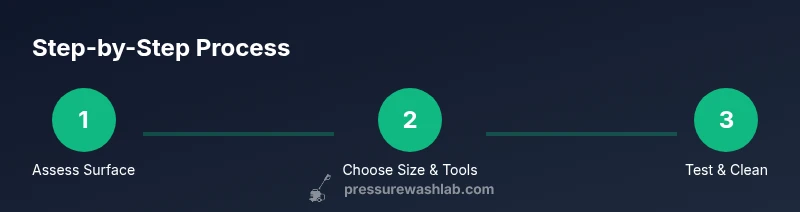
Steps
Estimated time: 90-150 minutes
- 1
Assess the surface and plan
Survey the concrete for cracks, repaint areas, or oil stains. Note sensitive zones (plants, metal furniture) and plan to shield them. Decide whether you need a surface cleaner and which nozzle to start with based on stain depth and texture.
Tip: Document problem areas with photos to track progress and adjust your approach. - 2
Select PSI, GPM, and nozzle
Choose a baseline around 2500–3000 PSI and 2.5–4 GPM. Start with a 25-degree nozzle for general cleaning and reserve a 15-degree nozzle for stubborn spots only after a patch test.
Tip: If you’re unsure, begin at the lower end and increase gradually while testing on a small area. - 3
Prep the area
Remove vehicles or movable objects, cover nearby plants, and lay down protective coverings. Close doors and windows to prevent water intrusion. If using detergent, apply it only to the drive surface and follow label directions.
Tip: Create a safety zone and use barriers to keep kids and pets away during cleaning. - 4
Test a patch and dial in distance
Spray a small, inconspicuous area to observe surface response. Begin at 6–12 inches away and adjust as needed to avoid etching or streaking. Transition to a surface cleaner for large expanses if available.
Tip: Record the final tested distance and settings for consistent future cleanings. - 5
Clean with steady motion
Use overlapping passes and maintain a consistent speed. Work in sections and avoid staying in one spot too long. For textured concrete, use sweeping motions with gradual passes to lift embedded dirt.
Tip: Let the machine do the work; applying constant pressure can wear the surface. - 6
Rinse and inspect
Rinse away loosened dirt and confirm uniform cleanliness. Revisit stubborn areas, adjusting distance or nozzle as needed. If you applied detergent, rinse thoroughly to prevent residue.
Tip: Check joints and edges for missed spots; a final pass often reveals overlooked areas. - 7
Shutdown and maintenance
Turn off and relieve pressure before disconnecting hoses. Rinse the system, clean filters, and store tools properly. Inspect hoses for wear and keep the nozzle tips protected from damage.
Tip: A quick post-cleaning check helps extend equipment life and readiness for next project.
Quick Answers
What PSI is best for cleaning concrete?
Most homeowners find 2500–3000 PSI effective for typical concrete surfaces. Adjust based on the stain, texture, and age of the concrete. Start lower and test on a patch to prevent damage.
Typically, start with around two and a half thousand PSI and adjust as needed after testing a small patch.
Can I use a smaller washer on concrete?
Yes, for lightweight stains or small areas, a washer in the lower end of the PSI range can work, but you may need more passes and time. Test to confirm results without risking damage.
A smaller washer can work on light stains, but you might need more passes and time—test first.
Do I need a surface cleaner for large jobs?
Surface cleaners provide consistent results and faster coverage on large flat areas. They reduce streaking and wear on the concrete surface compared with a spray nozzle alone.
For big areas, a surface cleaner is usually worth it for speed and even cleaning.
Is it safe to use detergents with a pressure washer?
Yes, detergents designed for pressure washers can improve stain removal. Always follow the product label and rinse thoroughly to avoid residue that can attract more dirt.
Yes, but use manufacturer-approved detergents and rinse completely after cleaning.
How close should the nozzle be to concrete?
Start at 6–12 inches from the surface and back away if you notice etching or excessive splashing. The exact distance depends on nozzle size and PSI.
Begin about 6 to 12 inches away and adjust as needed to avoid damage.
What maintenance is needed after cleaning concrete?
Rinse the system, clean filters, and inspect hoses. Store with hoses coiled and out of direct sun to prolong life. Check for leaks and wear before your next project.
Rinse, inspect, and store properly after cleaning to keep your equipment ready for next time.
Watch Video
Key Takeaways
- Know your concrete type and stain level before choosing power.
- Balance PSI, GPM, and nozzle for efficiency and safety.
- Test patch, then scale up settings gradually.
- Use a surface cleaner for large areas to reduce streaks.
- Protect surroundings and maintain equipment after use.