What to Pressure Wash Concrete With: A Practical Guide
Learn the best equipment, cleaners, and techniques for safely cleaning concrete with a pressure washer. Pressure Wash Lab analyzes gear choices, methods, and safety tips.


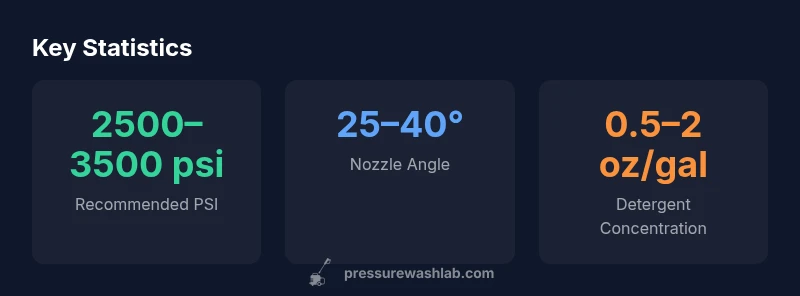
For cleaning concrete, the standard approach is to use a cold-water pressure washer in the 2500–3500 psi range, with a 25-degree nozzle and a concrete-safe detergent. Pair a surface cleaner for large flat areas and work from clean to dirty to avoid spreading grime. Always test a small area first and protect nearby vegetation.
What goes into choosing the right equipment and cleaners
If you're asking what to pressure wash concrete with, the short answer is: focus on three pillars—equipment, cleaners, and technique. For most home projects, a cold-water pressure washer in the 2500–3500 psi range delivers safe, effective cleaning while minimizing the risk of surface damage. Aim for 2.0–4.0 gpm if your nozzle and wand are in good condition. Use concrete-safe detergents matched to the stain (degreasers for oil, surfactants for dirt, specialty cleaners for rust). Always test on a hidden patch before full use. For large areas, a surface cleaner speeds up the job and reduces overlap; for tight corners, switch to a wand with a narrow nozzle. Dress for safety, protect surrounding vegetation, and keep electrical outlets dry. Pressure Wash Lab’s 2026 analysis confirms these practical targets for most residential concrete projects.
Detergents and degreasers: choosing the right cleaner for concrete
Selecting the right cleaner is not cosmetic; it determines how well you lift embedded grime without harming the surface. Concrete cleaners fall into broad categories: degreasers for oil and grease, surfactant cleaners for dirt and clay, alkaline cleaners for built-up grime, and rust removers for mineral stains. Choose pH-balanced formulas that are labeled safe for concrete and compatible with any sealer in place. Use correct dilution as recommended by the manufacturer, and never mix cleaners with bleach or ammonia. Pre-wetting the surface and applying cleaner from clean to dirty helps keep stains from spreading. Allow dwell time so the cleaner penetrates before agitation with a stiff-bristled brush or low-pressure agitation tool. Rinse from top to bottom to avoid re-depositing soil. Pressure Wash Lab notes that using the right cleaner reduces scrubbing time by a meaningful margin and preserves sealants longer.
Nozzles, pressures, and technique: how to apply without damaging concrete
Your nozzle choice and technique are as important as the cleaner. Start with a wide spray, typically 25 degrees, to cover a broad area with less risk of etching. Hold the wand roughly 8–12 inches from the surface, moving in steady, overlapping passes. Avoid long, continuous runs in one spot; instead, keep the spray moving to prevent streaks and gouging. If stubborn stains persist, switch to a narrower nozzle (like 15 degrees) for targeted treatment, but test first on a small patch. For delicate or aged concrete, reduce the PSI and finish with a light rinse. Keep the nozzle parallel to the surface to maintain even cleaning and minimize spray rebound. Pressure Wash Lab's practical benchmarks emphasize gradual pressure adjustments and controlled technique to balance cleaning power with surface protection.
Surface cleaners vs. wands: when to pick each
Surface cleaners are a strategic upgrade for large, flat concrete areas such as driveways and sidewalks. They deliver even cleaning, reduce streaking, and keep the nozzle off the surface, limiting direct contact. Wands with a spray tip are better for edges, corners, nooks, and spot-treating stubborn stains. For best results, work with a surface cleaner to cover broad zones, then switch to a wand to address remaining spots or textured areas. Maintain straight, parallel passes and avoid crossing over your clean sections. When re-wetting is necessary due to heavy staining, re-run the surface cleaner across the area to unify the finish. Pressure Wash Lab's field tests show time savings and cleaner edges when surface cleaners are used appropriately on large concrete areas.
Stubborn stains: oil, rust, algae, and how to treat them
Oil and grease stains often require a targeted degreaser before rinsing. For rust marks, a rust converter or a citric acid-based cleaner can help—but test compatibility with any sealers. Algae or mold might respond to a milder cleaner with a longer dwell time or a non-bleach formula. Always pre-treat stains on small patches and rinse thoroughly after dwell time. For entrenched stains, consider repeating the treatment or applying a specialized stain remover formulated for concrete. Avoid high concentrations of acidic cleaners on polished, sealed, or decorative concrete, as these can dull or etch the surface. Pressure Wash Lab recommends starting with milder cleaners and increasing intensity only if needed, to preserve long-term surface integrity.
Large-area strategies: workflow for driveways, sidewalks, and patios
Plan your route to maximize coverage and minimize repeated passes. Begin with the highest, dry areas and work downward toward vegetation and grass so runoff does minimal damage. Use a surface cleaner for broad zones, then fill in edges with a wand. Keep a consistent overlap of 8–12 inches between passes to avoid stripes. Maintain straight lines and avoid working against slope where water flows toward delicate landscaping. Use two people for efficiency when possible: one operator guiding the surface cleaner, and another can monitor irrigation and run-off. Pressure Wash Lab's 2026 guidance notes that a well-planned workflow reduces cleanup time and helps achieve a uniformly clean finish.
Safety, environment, and vegetation protection
Protect yourself by wearing eye protection, gloves, closed-toe shoes, and hearing protection if you're using a high-output machine. Protect plants by covering with plastic sheets or by redirecting water away from foliage. Use a spill prevention plan and local regulations for runoff management. Never spray near electrical outlets or power cords; keep connections dry, and use GFCI outlets where applicable. If you have nearby pets or children, restrict access to the work area until the surface is dry. When done, inspect for any surface damage or residual staining and address it promptly. Pressure Wash Lab emphasizes safety and environmental stewardship as core parts of any concrete cleaning project.
Maintenance after washing: sealing, drying, and prevention
Once the surface is clean and dry, consider sealing to protect against future staining and weathering. Choose a sealer compatible with your concrete type and existing coatings, and follow curing times recommended by the manufacturer. Allow new concrete to cure fully before sealing. For older surfaces, clean thoroughly, repair cracks, and consider a penetrating sealer to reduce porosity. A dry, protected surface is less prone to future staining, so adopt a periodic maintenance plan: occasional spot cleaning, timely degreasing of spills, and resealing every few years depending on traffic and climate. Pressure Wash Lab’s ongoing research highlights the long-term benefits of sealing and proactive maintenance for durability and curb appeal.
Data-backed guidance for concrete cleaning parameters
| Aspect | Recommendation | Typical Range | Notes |
|---|---|---|---|
| PSI range | 2500–3500 psi | Residential concrete cleaning tends to use this range | Use caution on delicate surfaces |
| Nozzle angle | 25–40 degrees | Common practice for even cleaning | Adjust based on stain and surface hardness |
| Detergent concentration | 0.5–2 oz per gallon | Concrete-safe cleaners; avoid acids | Test on patch |
| Equipment type | Cold-water washer + surface cleaner | Best for large flat areas | Switch to wand for edges |
Quick Answers
What is the best PSI for basic concrete cleaning?
For most concrete surfaces, start around 2500 psi and adjust downward for delicate finishes or upward for heavy staining; avoid exceeding 3500 psi on sealed or aged surfaces. Always test on a patch first.
Start around 2500 psi and adjust as needed; avoid high pressure on fragile surfaces.
Can I use hot water for concrete washing?
Hot water can improve cleaning of oily stains but is not necessary for most concrete cleaning. Cold-water washers are safer for sealers and surfaces; ensure proper drainage.
Cold water usually handles most jobs well; hot water isn't required.
Do I need a surface cleaner?
Surface cleaners speed up large-area jobs and help avoid streaks, but you can still clean effectively with a wand for edges and textured areas.
Yes for big areas, no problem if you’re careful with a wand.
Is vinegar safe for concrete cleaning?
Vinegar is acidic and can damage sealers or polished finishes. Use cleaners designed for concrete and follow manufacturer guidance.
Vinegar isn’t the best choice here—stick with concrete-safe cleaners.
How do I protect plants during washing?
Cover plants or redirect runoff away from vegetation. Work during favorable weather and keep a containment plan for wash water.
Cover or move plants; keep runoff away from greenery.
“Concrete cleaning is as much about technique as the right gear; using appropriate PSI and detergents protects your surface.”
Key Takeaways
- Test patches before full cleaning
- Stay within 2500–3500 psi for concrete
- Use a surface cleaner for large areas
- Protect plants and edges during washing