Will a Pressure Washer Remove Oil from Asphalt? Practical Guide
Explore whether a pressure washer can remove oil stains from asphalt, with tested steps, materials, and safety tips for driveway cleaning and maintenance.


will pressure washer remove oil from asphalt? This is a common question for homeowners tackling driveway stains. The answer depends on oil type, stain age, and asphalt porosity, among other factors. Pressure Wash Lab analysis shows that outcomes improve when you combine heat (where available), a degreaser, and a properly chosen nozzle. This quick reality check helps homeowners decide whether to proceed and how to set expectations before you begin.
Will a Pressure Washer Remove Oil from Asphalt?
will pressure washer remove oil from asphalt? This is a common question for homeowners tackling driveway stains. The answer depends on oil type, stain age, and asphalt porosity, among other factors. Pressure Wash Lab analysis shows that outcomes improve when you combine heat (where available), a degreaser, and a properly chosen nozzle. This quick reality check helps homeowners decide whether to proceed and how to set expectations before you begin.
Key factors that influence oil stain removal
Oil stains on asphalt vary by product: motor oil, engine oil, or cooking oil. Their chemical composition changes how they emulsify and lift when treated with cleaners and water. Porosity and the presence of any previous sealing or crack fillers also affect results. Pressure Wash Lab analysis shows that fresh, light-colored stains respond better to washing than deep, baked-on residues, so plan accordingly.
Cleaning approaches: heat, degreaser, and agitation
For best results, start with hot water if your equipment supports it, combined with a solvent-based or enzymatic degreaser. A wide spray nozzle (15–25 degrees) provides adequate cleaning power with less risk of surface damage. Use light agitation with a stiff brush on stubborn patches, then rinse with a two-pass sweep to lift and flush residues.
Safety, drain management, and asphalt health
Oil cleaning generates runoff that may contain detergents and contaminants. Always check local regulations and avoid draining into storm sewers. Use containment methods or direct rinse water to an appropriate disposal area when possible. Avoid excessive PSI near cracks or edges, which can worsen damage. Wear gloves and eye protection when handling cleaners and solvents.
When to call a pro or try alternatives
If the stain is very old, deeply-set, or near structural cracks, professional services or asphalt repair may be necessary. Poultices or specialty absorbents can help draw oil out of the surface, but results vary. After cleaning, sealing the area can brighten the surface and improve future cleanability, if the pavement is dry and rated for sealing.
Tools & Materials
- Pressure washer(Wide spray nozzle (15–25 degrees); moderate PSI to avoid edge damage.)
- Degreaser or solvent(Choose oil-specific degreaser; follow label directions.)
- Hot water option(If available, hot water improves emulsification.)
- Stiff brush(Use a deck brush or nylon scrub brush for agitation.)
- Absorbent material(Baking soda or cat litter can help soak initial spills.)
- Safety gear(Gloves, goggles, and closed-toe shoes.)
- Sealer or patch material(Optional for after cleaning to restore surface.)
Steps
Estimated time: 60-90 minutes
- 1
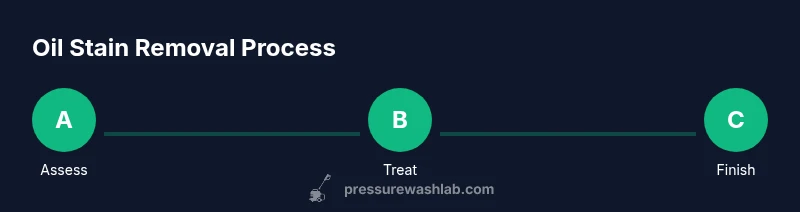
Assess stain
Inspect the stain to determine if it’s fresh or aged. Note the stain size, location, and any cracks nearby. This helps you choose cleaners and clamping options for containment.
Tip: Document with photos before you start so you can track progress. - 2
Pre-wet and contain
Rinse the area lightly to prevent cleaner from soaking too deeply. Use tarps or plastic sheeting to contain runoff if possible.
Tip: Avoid letting rinse water pool into nearby vegetation or drains. - 3
Apply degreaser
Apply a degreasing cleaner per label directions and let it dwell for 5–10 minutes to emulsify the oil. Do not let the product dry on the surface.
Tip: Use a brush to lightly agitate while the cleaner sits. - 4
First wash pass
Rinse with the pressure washer at a wide angle 15–25 degrees, keeping the nozzle 6–12 inches from the surface. Use overlapping strokes to lift the oil.
Tip: Work from outside the stain toward the center to prevent spreading. - 5
Second pass and scrub
If stains persist, reapply cleaner and scrub with a stiff brush before a second wash. Rinse thoroughly to remove emulsified oil and cleaner residue.
Tip: Do not let cleaner sit on asphalt longer than recommended. - 6
Evaluate and repeat if needed
Check the stain after drying for residual color. Repeat steps 4–5 for stubborn spots, allowing a short dry-out between attempts.
Tip: Patience improves results; forcing quick drying can set stains. - 7
Optional poultice for stubborn stains
For very stubborn areas, apply an appropriate poultice or absorbent material to draw oil out of the asphalt, then remove and rinse.
Tip: Follow product instructions and test a small patch first. - 8
Dry and consider sealing
Let the pavement dry completely before applying any sealant or patch. Sealing after cleaning helps future stain resistance and prolongs pavement life.
Tip: Choose a sealant compatible with weather exposure and traffic.
Quick Answers
Can I use household cleaners to remove oil stains from asphalt?
Household cleaners can help in some cases, but oil-specific degreasers are more effective. Always follow label directions and test on a small patch first.
Household cleaners can help, but oil-specific degreasers work better. Test first.
What nozzle is best for oil stains on asphalt?
A wide-angle nozzle (15–25 degrees) provides cleaning power with less surface damage. Avoid high-pressure, which can erode asphalt.
Use a wide-angle nozzle; avoid high pressure.
Will a pressure washer damage asphalt?
Using too high PSI or improper distance can abrade asphalt or widen cracks. Use moderate pressure and test on a small area.
High PSI can damage asphalt; test first.
Should I let the degreaser sit before washing?
Yes, allow 5–10 minutes for emulsification, but do not let it dry. Re-apply if needed.
Let it sit briefly, not dry.
Is sealing necessary after cleaning?
Sealing after cleaning can improve future stain resistance and prolong pavement life. Ensure the surface is completely dry.
Sealing helps; wait until dry.
Can old stains be removed completely?
Old, baked-on stains may require multiple cleanings or professional repair. Some stains may remain faint but will brighten with sealing.
Old stains may persist; consider pro help.
Watch Video
Key Takeaways
- Test a small area first before full-scale cleaning.
- Hot water and degreaser improve oil removal.
- Use moderate PSI and avoid edge damage.
- Dry thoroughly and seal if needed.