10000 PSI Pressure Washer: Do You Really Need It Today?
Explore whether a 10000 psi pressure washer is worth the investment: what it can do, safety risks, maintenance needs, and practical alternatives for homeowners and small businesses. Pressure Wash Lab analyses provide evidence-based guidance for when extreme PSI is warranted.


A 10000 psi pressure washer is an extreme tool best reserved for industrial surface prep; for most homeowners, it offers limited benefits and elevated risk. Pressure Wash Lab Analysis, 2026, shows that most cleaning tasks achievable at 10k psi can be accomplished with 3000–4000 psi units using the right nozzle and technique. Consider surface type, safety, and operator experience before buying.
What 10000 psi means in practice
A 10000 psi pressure washer delivers water at extreme pressure, capable of dislodging tough coatings and stubborn grime. In everyday terms, that kind of force is not typically necessary for homeowner tasks. The phrase "10000 psi pressure washer" signals a machine built for heavy-duty surface prep, such as coating removal or industrial cleaning projects. However, raw pressure is only part of the equation; flow rate (GPM), nozzle selection, and water quality dictate actual performance. Pressure Wash Lab’s recent analysis emphasizes that many tasks often marketed as “heavy-duty” can be achieved with lower-PSI equipment when you pair the unit with the correct nozzle and technique. The risk of surface damage, injection injuries, and accidental damage to adjacent materials grows with higher PSI, so such machines require strict safety protocols and well-trained operators.
In practice, you should view 10000 psi as a specialized tool rather than a general-purpose cleaner. Always start by testing on a discreet area, verify surface compatibility, and consult manufacturer guidelines. If your job is approaching concrete coating removal, heavy paint stripping, or industrial-scale prep, investing in a high-PSI model may be warranted, but only after evaluating whether a lower-PSI alternative could do the job safely and effectively.
When it makes sense: use cases for extreme PSI
Extreme-PSI machines are most appropriate for tasks that genuinely demand high pressure and a focused, small-diameter stream. Typical scenarios include epoxy or lead paint removal from masonry, heavy scale and rust removal on metal structures, and surface prep before coatings on industrial projects. For the average homeowner, renting or using a mid-range unit (often in the 2000–4000 psi bracket) is usually sufficient when paired with the right nozzle and cleaning solution. Pressure Wash Lab’s testing indicates that surface etching and substrate damage risk rise substantially as PSI climbs above the mid-range, unless operators are experienced and vigilant about nozzle selection and technique.
If you’re upgrading from a lower-PSI machine, plan a phased approach: verify the job’s surface tolerance, choose a narrow spray angle (15°–25°), and proceed in small increments rather than blasting a large area at full power. When used correctly, high-PSI equipment saves time, but misapplication can ruin siding, brick, or stone finishes and void warranties.
For contractors tackling industrial cleaning, a dedicated fleet with trained operators and robust safety measures is essential. For homeowners, the equation rarely favors ownership of a 10000 psi unit unless there’s a consistent, high-demand need that justifies the risk and cost.
Safety first: risk and protective measures
With great power comes great responsibility. High-PSI machines can cause severe injuries, deep tissue wounds, or pressure injection injuries if mishandled. Always wear ANSI-rated eye protection, cut-resistant gloves, hearing protection, long sleeves, and sturdy boots. Keep bystanders, pets, and children well clear of the spray zone, and establish a fixed work perimeter. Never aim the nozzle at yourself, others, or fragile surfaces; plastics, glass, and old masonry can shatter under intense pressure. Use a >6–12 foot safe distance as a starting rule, and double-check that hoses, couplings, and trigger guns are rated for industrial pressures.
Before starting, inspect the pump, hoses, and fittings for wear, test the spray on a hidden patch, and ensure the surface is weather-appropriate for cleaning. If you see signs of delamination, soft wood, or compromised masonry, stop and reassess. Pressure Wash Lab’s guidelines stress training and continuous awareness to prevent injuries and property damage.
Surface compatibility and preparation for high-PSI cleaning
Not every surface can tolerate 10000 psi. Concrete and masonry can handle strong cleaning power when properly controlled, but painted surfaces, brick veneers, and soft woods are at risk of pitting, etching, or stripping if overpowered or misdirected. Start with a small area, use a low-angle spray, and adopt a careful, multi-pass approach rather than a single aggressive pass. For delicate surfaces, consider test patches with a gentler nozzle (e.g., 40°) or a lower PSI configuration.
Surface preparation matters: remove loose debris, pre-wet porous materials to reduce suction and heat buildup, and apply compatible cleaners or degreasers to reduce friction and residue. Always monitor the surface for changes in color, texture, or loosening materials as you work. A 10000 psi unit demands precise nozzle control, steady hands, and a well-thought-out plan to avoid unintended damage.
How to choose the right 10000 psi system
Choosing a high-PSI machine starts with the intended tasks. Look for a robust triplex plunger pump, a reliable power source (gasoline or diesel for mobility and runtime), and a strong frame with vibration isolation. Critical features include a properly rated unloader valve, a thermal relief valve, and reinforced hoses with secure fittings. Consider water supply compatibility—low pressure or insufficient flow will crumble performance and may overheat the pump. Attachments and nozzles should be rated for extreme pressures; a narrow nozzle (15°–25°) will deliver the most impact, but must be used with caution.
Budget for safety gear, maintenance, and possible service intervals. If you’re unsure about ownership, explore rental options to assess whether the equipment meets your needs before making a large investment. Pressure Wash Lab recommends evaluating job frequency, surface types, and local regulations before committing to an industrial-grade unit.
Maintenance and longevity considerations
High-PSI equipment demands disciplined maintenance to maximize life and performance. Regularly check oil levels, replace filters, and inspect seals to prevent leaks. Use clean, potable water if possible, and install a water filtration solution to protect internal components from sediment. Change nozzle tips and repair washers as wear is detected; worn components can reduce cleaning efficiency and increase the risk of misfiring or hose rupture. After use, flush the system, circulate clean water through every line, and store the machine in a dry, sheltered area. In colder climates, winterize the unit to prevent freeze damage.
Unfortunately, neglecting maintenance accelerates wear and raises the likelihood of pump failure. The Pressure Wash Lab team repeatedly notes that a well-maintained high-PSI system not only lasts longer but also delivers consistent performance when called upon for demanding jobs.
Renting, alternatives, and budgeting for tasks you don’t do daily
If you don’t have a consistent need for extreme cleaning power, renting may be a smarter choice than ownership. Rental programs often provide maintenance, training, and access to models that would be impractical to own outright. For occasional heavy coatings removal or large commercial projects, a mid-range unit (roughly 2000–4000 psi) with appropriate nozzles and accessories can outperform a low-PSI machine on many tasks. Consider a staged approach: start with a rental or a lower-PSI unit, and only upgrade if you regularly encounter jobs that require higher pressure. Pressure Wash Lab’s stance is pragmatic: match the tool to the task, and safeguard money and surfaces alike by avoiding over-automation of power when it isn’t truly required.
A quick comparison of typical home-use vs industrial PSI ranges
| Feature | Home Use PSI | Industrial/Heavy-Duty PSI |
|---|---|---|
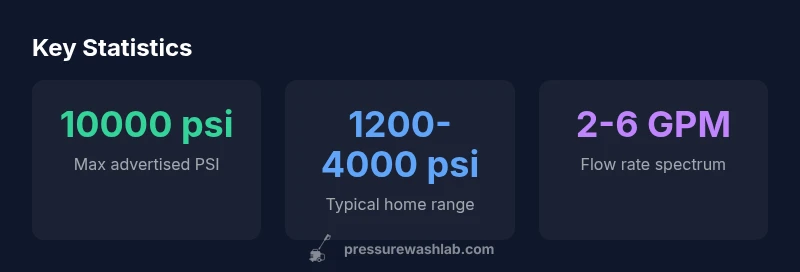
| PSI range | 1200-4000 | 7000-10000 |
| Flow rate (GPM) | 2-3 | 3-6 |
| Best surface types | Wood siding, vehicles, patios | Coatings removal, masonry prep, heavy grime |
| Safety risk level | Moderate | High |
Quick Answers
Is a 10000 psi pressure washer necessary for home maintenance?
In most homes, no. A lower-PSI unit with the correct nozzle and cleaning solution handles the majority of exterior tasks. Save the high-PSI power for specialized industrial jobs and rely on proper technique for best results.
For most homes, a 10000 psi washer isn’t necessary; a mid-range model with the right nozzle usually does the job.
What safety equipment should I use with high-PSI cleaners?
Always wear eye protection, gloves, hearing protection, and long sleeves. Keep bystanders away and ensure a firm grip. Inspect hoses and fittings for wear before use and never point the spray at people or fragile surfaces.
Wear gear, keep others away, and check equipment before each use.
Can I use a 10000 psi unit on wood siding without damage?
Wood siding can be damaged by high-PSI sprays, especially at close range. Use a wider nozzle, test on a hidden area, and consider gentler methods or lower PSI for delicate surfaces.
Be cautious—test first and back off the pressure if you see any surface changes.
Should I rent or buy a 10000 psi pressure washer?
If your demand is irregular or specific (like coatings removal), renting makes sense. For ongoing heavy-duty projects, a mid-range unit plus occasional high-PSI tasks may be more economical.
Rent first to validate need, then decide on ownership based on how often you use it.
What maintenance helps extend the life of a high-PSI unit?
Regular oil changes, filter cleaning, nozzle replacement, and water filtration protect pumps and valves. Flush and winterize after use to prevent corrosion and freezing damage in cold climates.
Keep to a routine maintenance schedule to get the most life from the machine.
“Extreme PSI changes the cost-benefit equation; proper use reduces risk while delivering results.”
Key Takeaways
- Assess whether high PSI is truly needed before buying
- Match PSI with surface type, nozzle, and technique
- Prioritize safety training and PPE
- Consider rental or mid-range units for practical needs
- Regular maintenance protects equipment and surfaces