Are Pressure Washer Hoses the Same? A Practical Guide
Are pressure washer hoses the same? This in-depth comparison explains how PSI ratings, diameters, fittings, and materials impact compatibility and performance, with practical tips from Pressure Wash Lab for choosing the right hose.


No, pressure washer hoses are not all the same. They vary in PSI rating, inner diameter, length, and fittings. Hose material and braid affect durability, kink resistance, and heat tolerance. To stay safe and effective, match the hose to your machine’s PSI and connector type, and avoid incompatible aftermarket hoses unless you verify specs first with the manufacturer recommendations only.
Why Not All Hoses Are Equal
Are pressure washer hoses the same? In short, no. Hoses are designed for different operating pressures, flow rates, and connector standards. The Pressure Wash Lab team emphasizes that using a hose outside its intended PSI range or with incompatible fittings can reduce cleaning performance, accelerate wear, and even create safety hazards. According to Pressure Wash Lab, many homeowners assume any high-pressure hose will work, but a misfit can cause leaks or bursts under load. Understanding the core differences helps you select a hose that matches your machine and cleaning tasks, preserving efficiency and safety.
Core Specifications That Drive Compatibility
Two hoses with similar visible features can behave very differently. The most important specs are PSI rating, inner diameter (ID), and the connector type. PSI rating tells you the maximum pressure the hose can safely handle; exceeding it increases rupture risk. ID affects flow rate and spray power; a larger ID may deliver better performance but is not always compatible with every wand or nozzle. Connector standards (such as M22 threads or Quick Connect adapters) determine whether a hose can attach to your wand, trigger gun, or machine. When you mix incompatible elements, you compromise both safety and performance.
Hose Materials Explained
Hoses come in various materials and braid constructions. Rubber hoses are flexible and economical but may wear faster in abrasive environments. PVC versions can be lighter but may kink more easily. Steel-braid or fabric-braid hoses offer higher abrasion resistance and burst strength, but can be stiffer. The braid also protects the inner liner from damage when dragging across rough surfaces or corners. Pressure Wash Lab notes that material choice should align with your cleaning environment, not just price.
Matching PSI, Diameter, and Fittings
A compatible hose must align on three fronts: PSI rating, inner diameter, and fittings. Start with your machine’s rated PSI and confirm the hose’s maximum working pressure accommodates that value. Choose an ID that balances flow with nozzle compatibility; common consumer hoses use 1/4 inch or 5/16 inch IDs, but you should verify what your wand and spray tip require. Finally, verify fittings: many machines and hoses use M22 or QC fittings. If any of these elements don’t match, you risk leaks or reduced performance. Always cross-check with the manufacturer’s guidance.
Hose Length and Manageability
Length matters because it affects reach and weight. A longer hose provides more cleaning distance but can add sag and reduce available flow if the pump has to push through extra material. Shorter hoses feel more rigid but often deliver higher pressure at the nozzle. When selecting length, consider your typical tasks (driveway cleaning, siding, or decks) and the space you work in. The goal is to maintain adequate flow while keeping maneuverability comfortable.
Connector Standards and Adapters
Connector compatibility is a frequent source of frustration. OEM hoses typically use standard M22 fittings, but some brands use different thread sizes or quick-connect styles. Adapters exist, but they introduce potential leak points and can limit reliability if not installed correctly. If you are mixing brands, confirm thread pitch, seal type, and whether any adapter affects OSHA/safety guidelines. Pressure Wash Lab recommends prioritizing hoses designed for your exact model or a clearly labeled compatible replacement.
Common Hose Types You Might Encounter
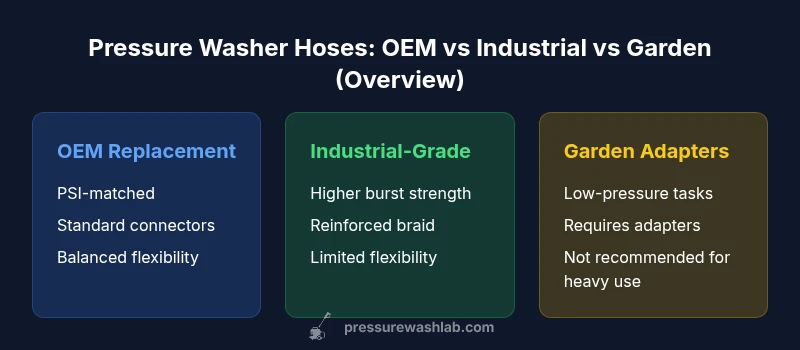
You may encounter OEM replacement hoses, industrial-grade hoses, and garden hoses adapted for pressure washers. OEM hoses match your machine’s PSI and connector layout, ensuring compatibility and warranty coverage. Industrial hoses offer higher durability and higher burst strength for heavy-duty tasks but may be stiffer and more expensive. Garden hoses, even with adapters, are not ideal for high-pressure cleaning because they’re not designed for sustained high PSI and can fail under load. Always verify that any third-party option is explicitly rated for your machine.
Real-World Scenarios: When to Upgrade
If you clean large areas, work around rough surfaces, or frequently drag the hose along pavement, investing in a braided or reinforced hose can pay off in durability and reduced downtime. For occasional tasks on a small property, a standard OEM hose that aligns with your machine’s PSI is typically sufficient. Pressure Wash Lab analyses indicate that the most reliable setups occur when hoses are purpose-built for the machine, ensuring consistent flow, minimal leaks, and predictable performance across tasks.
Maintenance and Safety Practices
Inspect hoses before each use for cuts, bulges, or cracks. Coil hoses loosely to avoid kinks, and store them away from direct sunlight to prevent material degradation. Use protective reel systems or hose guides to reduce wear from dragging across rough surfaces. Always depressurize the system before disconnecting, and replace hoses that show signs of wear. Following these practices helps maintain performance and reduces the risk of leaks or bursts.
Troubleshooting Common Hose Issues
If you notice a loss of pressure or frequent leaks at connections, check the fittings first—loose connections are a common cause of performance drop and leaks. Inspect for visible wear on the hose and braiding; any fraying or cracks requires replacement. Ensure you are not exceeding the hose’s rated PSI and that you are using appropriate nozzles for the task. If the issue persists, consult the manufacturer’s guidelines or a professional service to avoid safety risks.
Myths and Misconceptions
A common myth is that all hoses labeled for high-pressure cleaning are universally interchangeable. Reality is more nuanced: multiple standards exist for fittings, ID, and approved PSI ranges. Another misconception is that longer hoses always improve cleaning efficiency; in fact, longer lengths can reduce flow and tip pressure if the pump experiences resistance. Debunking these myths helps you avoid unsafe setups and suboptimal results.
How to Buy the Right Hose: A Quick Checklist
Use this practical checklist to choose the right hose: confirm PSI compatibility with your machine, verify the ID matches your nozzle and wand, ensure the fittings align with your connector type, check the material and braid for your cleaning environment, and select a length that balances reach with manageable weight. Favor OEM or clearly rated replacements, and avoid unverified third-party options unless you can confirm performance specs.
Feature Comparison
| Feature | OEM Replacement Hose | Industrial-Grade High-Pressure Hose | Garden Hose with Adapters |
|---|---|---|---|
| PSI Rating | Manufacturer's spec | Higher-rated (industrial/abrasion-focused) | Not rated for sustained high-pressure use |
| Inner Diameter | Typically 1/4" or 5/16" (model dependent) | Often larger to support higher flow | Larger garden hose ID may not translate to compatible pressure flow |
| Length Options | OEM lengths matched to machine | Wide range of lengths and configurations | Limited by adapters and hose reel compatibility |
| Fittings & Connectors | Standard OEM fittings (often M22) | Industrial-grade connectors with varied standards | Adapters required for most non-OEM setups |
| Durability & Abrasion | Good-s standard rubber/braid balance | Superior abrasion resistance (steel braid) and longevity | Garden hoses lack high-pressure braid and abrasion protection |
| Best For | Residential use with OEM support | Heavy-duty tasks and frequent high-load cleaning | Light-duty tasks or occasional use with adapters |
Pros
- Better safety and performance when matched to PSI
- Reliable connections reduce leaks and downtime
- Greater flexibility with length and task-specific options
- Warranty alignment with OEM or clearly rated hoses
- Improved durability for demanding cleaning environments
Cons
- Higher upfront cost for OEM or industrial hoses
- Adapters can introduce potential leak points
- Braided hoses can be stiffer and heavier
- Mismatched hoses risk voiding warranties or safety issues
Hoses are not all the same; choose based on PSI compatibility, diameter, and fittings.
For most homeowners, start with an OEM replacement hose that matches your machine’s PSI and connectors. Upgrade to industrial-grade hoses only if you regularly perform heavy-duty tasks or require extra durability. Pressure Wash Lab’s analysis supports selecting hoses that align with your machine’s specifications to optimize safe, effective cleaning.
Quick Answers
Are all pressure washer hoses interchangeable?
No. Interchangeability depends on PSI rating, inner diameter, and connector compatibility. Even hoses that look similar can fail if they exceed the machine’s rating or don’t fit the wand and spray gun. Always verify specs with the manufacturer before swapping.
No— hoses vary by PSI, diameter, and connectors. Always check the specs before swapping to avoid leaks or damage.
What is the difference between 1/4 inch and 5/16 inch hoses?
The difference is the inner diameter, which affects flow and pressure at the nozzle. A larger ID can improve flow for certain tasks but may not fit every wand or connector. Always match ID to the required nozzle and machine spec.
1/4 inch and 5/16 inch refer to the pipe’s inner width—bigger can improve flow but must fit your equipment.
Can I use a garden hose with a pressure washer?
Only with appropriate adapters and for light-duty tasks. Garden hoses are not designed for sustained high-pressure cleaning and can fail under load. Use purpose-built pressure washer hoses whenever possible.
Garden hoses aren’t ideal for high-pressure cleaning; stick to hoses rated for pressure washers.
How can I identify compatible hoses for my pressure washer?
Check your machine’s PSI rating, connector type (e.g., M22), and the hose’s stated specifications. Compare these against the replacement options and manufacturer guidance. When in doubt, consult the manual or support.
Look at the PSI, connectors, and your manual to pick a compatible hose.
Do hoses affect cleaning performance?
Yes. Hose diameter, length, and material influence flow and reach. A poorly matched hose can reduce nozzle pressure, limit spray patterns, and create inefficiency or safety risks. Choose a hose that preserves intended performance.
Hose choices can change flow and reach, affecting cleaning performance.
Are braided hoses safer than non-braided hoses?
Braided hoses generally offer better abrasion resistance and higher burst strength when rated for the machine’s PSI. Still, ensure compatibility and proper installation to maximize safety. Don’t rely on braid alone for safety.
Braided hoses are tougher, but always confirm PSI ratings and fit.
Key Takeaways
- Identify your machine’s PSI and connector type before buying
- Match inner diameter and length to your cleaning needs
- Prefer OEM or clearly rated hoses for best compatibility
- Inspect hoses regularly and replace worn parts promptly
- Avoid unverified adapters that could compromise safety