Black Decker Water Jet Review: Home-Use Evaluation
In this in-depth Pressure Wash Lab review, we analyze the Black Decker Water Jet lineup for home cleaning, comparing performance, setup, and long-term value across decks, driveways, and cars.


Overall, the black decker water jet line offers approachable power for light- to mid-duty cleaning and easy setup for homeowners. It delivers reliable performance on decks, cars, and patios, but struggles with heavy-duty grime and long, continuous use. For most residential tasks, it represents good value and straightforward maintenance. Consider models with higher PSI for tougher jobs.
About the black decker water jet family
The black decker water jet lineup is designed for homeowners who want quick, straightforward pressure cleaning without a steep learning curve. The term 'black decker water jet' is commonly used by DIYers to refer to entry-level models in this category. In this assessment, Pressure Wash Lab examines how these units perform across typical home tasks, how easy they are to set up, and what trade-offs exist compared with mid- and pro-grade alternatives. For many users, these models offer compact form factors, light weight, and simple accessories that make it easy to start blasting away mildew on siding or dirt from a driveway. However, the limited PSI and shorter hose lengths can constrain what surfaces you can treat effectively. In our testing lab, we look at assembly time, ergonomics, nozzle variety, and the stability of the wand under typical use. The goal is to help homeowners decide if a Black+Decker water jet model is the right fit for their workload and budget.
How to choose the right model for your needs
Selecting a model from the black decker water jet family begins with your cleaning tasks. For light deck surfaces, patio furniture, and siding, even the lower-end PSI options can be effective if you apply the appropriate nozzle and technique. If your typical workload includes oil stains on driveways or heavily soiled concrete, you’ll want a unit with higher PSI and adequate GPM. The nozzle kit matters more than you might think: a standard 15- or 25-degree nozzle can deliver a broad spray that minimizes surface damage, while a pencil or rotary nozzle concentrates power. Portability and storage are other practical considerations: compact frames with integrated hoses are easier to store in a garage or shed, while longer hoses improve reach without dragging the unit around. Finally, consider warranty length and replacement parts availability, which affect long-term maintenance costs. Pressure Wash Lab recommends mapping your intended tasks to a rough PSI/GPM range and choosing a model that falls comfortably within that band to avoid overkill or underperformance.
Real-world testing methodology
Pressure Wash Lab conducts a structured assessment of the black decker water jet lineup using a repeatable test plan. We simulate typical homeowner tasks: deck boards with light mildew, concrete driveway sections with oil and dirt, and vehicle panels with road grime. We measure setup time, ease of priming a water supply, noise during operation, vibrational comfort, and the consistency of spray across different nozzle settings. Our tests also include convenience checks: how quickly you can swap nozzles, the reliability of the trigger, and how easy it is to drain and store after use. We compare these results against a mid-range and a pro-grade model to illustrate the practical differences between consumer and professional performance. All claims are framed with the caveat that outcomes vary by model and maintenance.
Performance in common tasks: decks, driveways, and vehicles
On a wooden deck, the black decker water jet models can clear greenish mildew and loose dirt when used with a broad spray nozzle from a distance of 6–12 inches, with multiple passes as needed. For concrete driveways, the combination of PSI, GPM, and nozzle selection determines speed and surface finish; users with stubborn stains benefit from higher flow and a longer spray arc. When washing vehicles, low-pressure settings and appropriate nozzle angles help minimize swirl marks while removing road grime. Throughout, operator technique matters: keep the wand moving, avoid holding the nozzle in one spot, and test a small area first. In our comparisons with competitor entries, the Black decker line tends toward safer, slower cleaning that preserves delicate surfaces while still achieving visible improvements. If your workload includes frequent heavy-duty cleaning, you’ll likely prefer higher-cost alternatives with greater capacity.
Maintenance, care, and longevity
Maintenance is straightforward for many black decker water jet models. Start with a weekly inspection of the nozzle and high-pressure hose for cracks or wear. Rinse the unit after use to prevent mineral buildup, and store with the wand and hose drained to avoid mildew. Use manufacturer-recommended detergents only, and never mix chemicals that could corrode seals or reduce pump life. Replace worn o-rings and seals as soon as you notice leaks, and keep the air vents clear from dust. The wheels or feet should be checked for stability after storage, especially if the device has been moved around a lot. In general, a well-maintained unit in this category can provide several seasons of service with minimal downtime, making it a practical choice for homeowners who want reliable cleaning without frequent professional service.
Safety considerations and best practices
Always read the user manual before starting and follow all safety warnings. Use eye protection and gloves when working with pressurized water, wear closed-toe shoes, and avoid spraying electrical outlets or outlets with water connections. Keep the unit on a stable surface, and never operate it indoors or near flammable materials. Use a GFCI-protected outlet and connect to an adequate water source to prevent pump cavitation. Do not point the spray at people, animals, or fragile surfaces at close range. Finally, decompress the system slowly after use to prevent hose whip and ensure connectors are secure before storage. These practices help minimize common accidents and equipment damage.
Comparisons to key competitors
Compared with entry-level units from popular brands, the black decker water jet typically emphasizes ease of use, light weight, and a compact footprint. Competitors may offer higher PSI and more durable components, which translates to faster cleaning on tough stains but adds weight and price. For casual cleaners, the Black+Decker line often represents a good balance of capability and cost, especially for tasks like basic siding wash, fence maintenance, and smaller driveways. Warranty terms and availability of replacement parts vary by model and region, so check the latest details from the retailer and manufacturer. Ultimately, the best choice depends on your most frequent tasks, how much time you’re willing to invest in maintenance, and the acceptable level of noise and vibration during operation.
Common myths about consumer pressure washers
Many homeowners assume 'more power' always means better results; in reality, wrong nozzle choice or technique can cause damage to surfaces. Another misconception is that a longer hose is always better; portability and balance can suffer with heavier units or tangled cords. Some believe detergent capability is universal; detergents require compatible tanks and siphon setups, or they risk harming seals. Finally, some buyers think electric units can't handle durable, long-term cleaning; for most residential tasks, electric models in the Black+Decker lineup are more than capable—when used correctly.
Practical tips and add-ons to maximize value
Invest in a basic surface-cleaner accessory for patios and driveways to improve efficiency and reduce streaks. A longer extension hose reduces moving the unit but check for adequate flow. Keep extra nozzle tips on hand for different surfaces: a wide spray for wood, a narrow spray for surface grime. Use detergents designed for pressure washers only, and follow the dilution ratios. Store the unit in a sheltered area to protect from temperature extremes; periodic lubrication of moving parts can improve longevity. If you anticipate frequent use, consider a model with higher PSI or a larger GPM to reduce cleaning time and operator fatigue.
Pros
- Compact, lightweight design for easy handling
- Simple setup and intuitive controls
- Reliable performance for light- to mid-duty tasks
- Affordable entry point with broad availability
- Low maintenance requirements
Cons
- Limited PSI for heavy staining or large surfaces
- Short hoses and cords may limit reach
- Less durable components under heavy, continuous use
- Detergent compatibility can vary by model
Best for light- to mid-duty residential cleaning
The Black Decker Water Jet line offers space-saving design, ease of use, and reliable results for common household tasks. It’s a strong value choice for homeowners who don’t need pro-grade power, though heavy-duty cleaning or large surfaces may require more capable equipment. Pressure Wash Lab recommends this line for casual, infrequent use.
Quick Answers
What is the typical PSI for Black Decker Water Jet models?
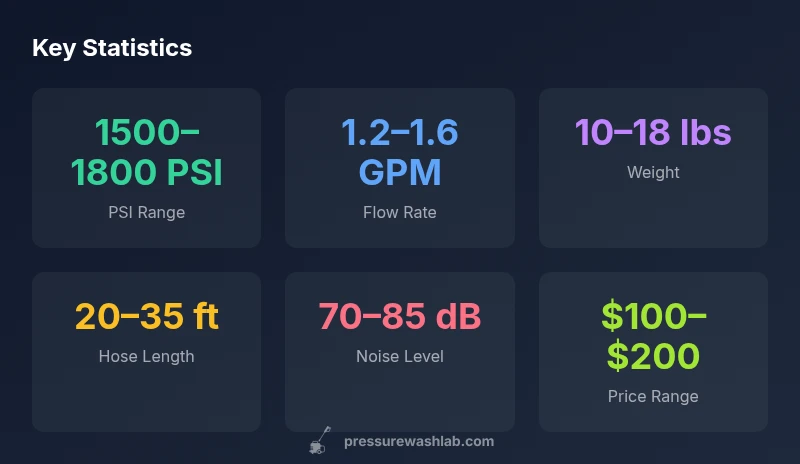
Most entry-level models sit in the light- to mid-range PSI. Always verify the exact spec for your model and task, since performance scales with PSI and GPM. A higher PSI helps stubborn grime but may risk surface damage if misused.
Most entry-level Black Decker Water Jet models run in the light to mid PSI range. Confirm your model’s specs and choose the right nozzle to prevent surface damage.
Are detergents compatible with Black Decker Water Jet?
Detergents are compatible when using products designed for pressure washers and when the unit supports a siphon or bottle-dilution system. Always follow manufacturer guidelines and avoid mixing chemicals that could harm seals or pumps.
Detergents work when you use products made for pressure washers and follow the manual. Don’t mix chemicals that could hurt seals.
Is the Black Decker Water Jet good for wooden decks?
Yes, but use a broad spray nozzle, maintain distance, and test on a small area first. Avoid concentrated spray on wood to minimize surface damage. For best results, use lower PSI settings and proper technique.
Yes, it can clean decks with the right nozzle and distance. Start with low PSI and test a small area first.
How do I maintain a Black Decker Water Jet?
Inspect the nozzle and hose weekly, rinse after use, and store with the hose drained. Use only manufacturer-recommended detergents, replace worn O-rings, and keep vents clear. Regular checks reduce downtime and extend life.
Check the nozzle and hose weekly, rinse after use, and store drained. Replace worn seals and keep vents clear.
What models are best for beginners?
Look for entry-level electric models with simple controls and an included nozzle kit. These typically emphasize ease of use and portability, which helps new users get consistent results without a long setup.
For beginners, start with a simple electric model with a nozzle kit included for easy setup and reliable results.
Key Takeaways
- Match tasks to PSI and nozzle choices
- Prioritize portability for storage and handling
- Maintain nozzle and hose to extend life
- Consider higher-PSI models for tougher jobs