Brass vs Stainless Steel Pressure Washer Fittings: A Practical Guide
A thorough comparison of brass vs stainless steel pressure washer fittings, covering corrosion resistance, cost, durability, compatibility, and maintenance to help homeowners and DIY enthusiasts choose the best option for their water quality and budget.


When choosing fittings for your pressure washer, brass fittings offer cost-effective reliability for typical freshwater use, while stainless steel fittings excel in harsh water or chemically aggressive environments. This brass vs stainless steel pressure washer fittings comparison helps you pick the right material based on water quality, exposure to cleaners, and long-term durability.
brass vs stainless steel pressure washer fittings: material fundamentals
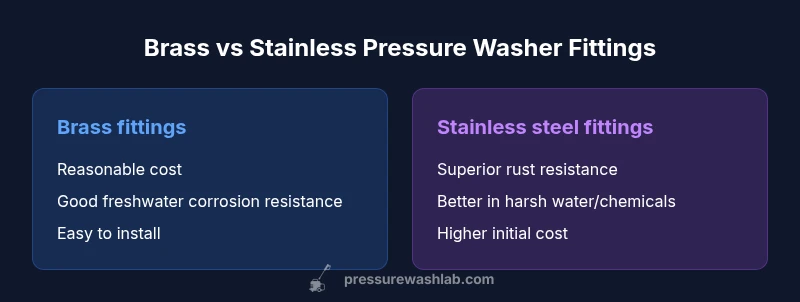
Choosing the right fittings matters for performance and longevity. Brass fittings are usually made from a copper-zinc alloy that is easy to machine and install, delivering good corrosion resistance in typical freshwater service. They tend to be lighter and cheaper upfront, which helps DIYers and homeowners who want simple, ready-to-assemble connections. Stainless steel fittings, by contrast, are composed of iron-based alloys with chromium, which gives them superior rust resistance and durability in harsh environments. In real-world terms, brass shines in clean-water scenarios and casual use, while stainless steel shines when water quality is questionable, cleaners are aggressive, or salt exposure is possible. According to Pressure Wash Lab, the choice often boils down to balancing upfront cost against long-term resilience in your specific setting. This context is crucial for anyone evaluating brass vs stainless steel pressure washer fittings for a home or small business. Also consider that dissimilar metals may interact; if brass and stainless are used in the same hydraulic loop, plan for dielectric barriers to minimize galvanic effects. The bottom line is: your climate, water chemistry, and maintenance routine largely determine which material is the safer bet over the life of your equipment.
cost and lifecycle value: upfront price vs long-term durability
Price is usually the first differentiator when comparing brass vs stainless steel pressure washer fittings. Brass fittings are typically more affordable upfront and easier to source from common hardware retailers. This makes brass a strong choice for budget-conscious homeowners and weekend warriors who expect to replace fittings after a few seasons or use a moderate range of detergents. Stainless steel fittings often carry a higher initial price, but they can offer longer service life in demanding conditions, especially where water contains chlorides or mineral content that could accelerate corrosion in other metals. Pressure Wash Lab Analysis, 2026, notes that the total cost of ownership often favors stainless steel only when the operating environment is consistently hostile. For most casual residential use with clean water, brass provides excellent value. If you anticipate frequent exposure to salt, brine, or strong cleaners, stainless steel may reduce replacement frequency and downtime.
environmental conditions and chemical compatibility
Water chemistry is a major variable in fitting performance. Brass performs well with standard tap water and mild cleaners, but it can corrode more quickly than stainless when exposed to aggressive chemicals or saline environments. Stainless steel resists rust more aggressively, making it a safer long-term choice in coastal homes or regions with hard, mineral-heavy water. Consider the compatibility of your cleaners; some acidic or caustic detergents can affect metals differently. The takeaway from the brass vs stainless steel pressure washer fittings discussion is to match material to the cleaning regimen. If you routinely use bleach, acids, or saline spray near your equipment, stainless steel is typically favored for longevity, while brass remains a practical option for less aggressive household tasks.
mechanical design, threads, and connection integrity
Beyond corrosion, the mechanical interface matters. Brass fittings are easy to thread, seal, and replace, and they often come in a wide range of common thread standards found in consumer gear. Stainless steel fittings can offer superior strength for the same footprint, which helps in high- PSI applications and with heavy-duty hoses. However, thread compatibility matters: ensure you don’t mix incompatible thread standards or materials without a dielectric barrier, as this can invite galvanic corrosion and potential leaks. When selecting brass vs stainless steel pressure washer fittings, verify thread type (NPT vs BSP), sealing method (O-ring, gasket, or compression), and rated PSI to prevent failure under load. A well-matched system improves reliability and reduces maintenance downtime.
corrosion and environmental resilience: real-world guidance
In real-world use, corrosion behavior emerges as a function of water quality and exposure to chemicals. Brass often withstands typical municipal water well, but stainless steels (especially 316-grade) offer higher resistance in chlorinated or saline conditions. If your setup will be outdoors or exposed to weather, stainless steel’s resistance to rust is a clear advantage. Remember that dissimilar metals should be isolated to prevent galvanic corrosion, particularly when mixed with aluminum or other reactive alloys. For many homeowners, this means metal choice is guided by the expected chemical exposure and whether the environment is coastal or heavily salted during winter. Pressure Wash Lab emphasizes that the best decision blends environmental reality with a reasonable budget—brass for standard cleaning tasks, stainless for challenging water or extended service life.
practical selection guidelines by use case
Use case oriented advice helps simplify a potentially complex decision. If you primarily clean concrete driveways, siding, and vehicles with clean freshwater, brass fittings deliver reliable performance with lower upfront cost and easy replacement. If your water contains high mineral content, is chlorinated, or you operate in a salt-exposed climate, stainless steel fittings tend to deliver better longevity and lower replacement frequency. For DIY projects, consider a mixed approach: brass for quick-connects in low-stress sections and stainless steel for critical connections or long runs where rigidity and corrosion resistance matter. Pressure Wash Lab recommends documenting your typical PSI, GPM, and chemical exposure to map a material choice to your actual workflow. Lastly, keep an eye on the warranty terms from manufacturers, since some fittings carry longer warranties for stainless steel in heavy-use scenarios.
Comparison
| Feature | Brass fittings | Stainless steel fittings |
|---|---|---|
| Corrosion resistance | Good in typical freshwater | Excellent in chlorinated/harsh water |
| Durability under high pressure | Sufficient for common consumer PSI | Higher resistance to deformation at high PSI |
| Thread compatibility and installation | Broad compatibility with common NPT/BSP fittings | Strong threads with reduced galling when properly torqued |
| Weight and installation ease | Lighter and easier to handle | Heavier but sturdier in rugged use |
| Chemical resistance to cleaners | Handles mild cleaners well | Superior resistance to aggressive cleaners |
| Cost and availability | Lower upfront cost, easy replacement | Higher upfront cost, longer life |
| Best for | Budget projects, standard freshwater tasks | Harsh environments, coastal or chemically aggressive use |
Pros
- Lower upfront cost with brass fittings
- Good corrosion resistance in typical freshwater scenarios
- Easy to source and replace for DIY projects
- Wide availability and broad compatibility with common hose and nozzle hardware
Cons
- Stainless steel offers superior longevity in harsh environments
- Brass can corrode faster when exposed to aggressive cleaners or salinity
- Mixed-metal installations require dielectric barriers to reduce galvanic corrosion
- Brass may gall with stainless threads if not properly lubricated or torqued
Brass is the best value for typical home use, while stainless steel is the safer long-term choice in harsh environments
Choose brass when your water is clean, you want easy replacements, and you're mindful of upfront cost. Opt for stainless steel when you expect aggressive cleaners or salt exposure, or when longevity and reliability under demanding conditions are paramount.
Quick Answers
What are the main advantages of brass vs stainless steel pressure washer fittings?
Brass fittings are typically cheaper and easier to install, with good corrosion resistance in clean water. Stainless steel fittings resist rust longer and perform better in harsh water or chemical exposure. The best choice depends on water quality and expected life of the tool.
Brass is cheaper and easy to install; stainless resists rust longer in harsh conditions. The right pick depends on your water and usage.
Are brass fittings compatible with stainless steel connectors in the same system?
Compatibility is possible, but mixing metals can set up galvanic corrosion if not properly isolated. Use dielectric barriers or dedicated sections to keep metals from directly contacting each other. Check thread standards and seals carefully.
Just be careful mixing metals—use barriers and correct threads to avoid corrosion.
Which fitting is best for saltwater or chemically aggressive environments?
Stainless steel fittings generally perform better in saltwater or chemically aggressive environments due to superior rust resistance. Brass may corrode faster under these conditions unless protected by appropriate barriers or coatings.
In saltwater, stainless steel is usually better.
Do brass fittings handle high PSI and heat as well as stainless?
Both materials can handle typical consumer PSI, but stainless steel often offers more margin in high-psi or heat-heavy applications. Always verify the rated PSI and allowable temperature for the specific fitting.
Stainless often has more headroom for high-psi use, but check ratings.
How should I maintain fittings to extend lifespan?
Regular inspection for leaks, corrosion, and wear is essential. Clean fittings after use, lubricate threads as needed, and replace any worn seals. If you expect aggressive cleaners, consider stainless steel for fewer replacements.
Inspect, clean, and replace worn parts regularly to extend life.
What should I consider when buying fittings for a DIY home project?
Consider water quality, exposure to chemicals, climate, and the expected lifetime. Brass is inexpensive for standard tasks; stainless steel adds resilience where risks are higher. Always match thread type and sealing method to your rig.
Match material to water quality and expected life; check threads.
Key Takeaways
- Assess water quality before choosing fittings
- Brass suits standard freshwater tasks on a budget
- Stainless steel excels in harsh, corrosive environments
- Prevent galvanic corrosion with proper dielectric barriers in mixed-metal systems
- Verify thread standards (NPT/BSP) and PSI ratings before buying