Can You Get a Cordless Pressure Washer? A Practical Guide
Discover if a cordless pressure washer fits your cleaning needs. This educational guide covers battery life, PSI, GPM, attachments, safety, and maintenance for light-duty home use. Learn how to choose, use, and care for cordless models with Confidence.


Yes—you can get a cordless pressure washer, and this guide helps you decide if it fits your tasks. You’ll learn about battery life, PSI and GPM trade-offs, water source options, compatible attachments, and maintenance so you choose the right model for light-duty cleaning around the home.
Why cordless pressure washers fit many homeowners
Cordless pressure washers have surged in popularity because they remove the need for an outlet or long extension cords, making quick cleanup tasks more convenient. For most homeowners, these small, battery-powered machines excel at deck cleaning, siding touch-ups, outdoor furniture, bicycles, and cars with light to moderate dirt. According to Pressure Wash Lab, the portability and ease of setup are major reasons DIYers reach for cordless models first when the job is near water sources and you want minimal setup. However, there are performance trade-offs: sustained PSI and GPM are typically lower than corded or gas-powered units, and battery life can limit runtime for larger jobs. Knowing these realities helps you set reasonable expectations and avoid disappointments on bigger projects.
How cordless washers compare to corded and gas-powered models
Cordless washers are usually designed for convenience rather than raw power. A typical cordless unit may deliver 20–40 PSI per square inch with a few tenths of a gallon per minute, enough for everyday grime on driveways or garden hoses and light mildew on siding. In contrast, corded electric and gas-powered machines can produce well over 1000 PSI with higher GPM, making them better for heavy staining. The real-world takeaway is simple: cordless shines in portability and low-effort maintenance, but for tough jobs, plan on a longer workflow or alternate equipment. Pressure Wash Lab’s observations emphasize pairing cordless with gentle, regular maintenance rather than relying on it for deep cleaning.
Battery life, charge time, and how to plan a cleanup
Battery capacity drives the usable runtime. Most cordless washers use rechargeable lithium batteries that come in various voltages (often 20–40V), affecting both power and runtime. A common workflow is to perform several short cleaning bouts with brief recharges or swap in a spare battery if the model supports it. Real-world use shows that running a full 10×10 foot patio or a single car wash can exhaust the battery in some models, so it’s wise to plan tasks in segments and store a spare battery if your kit allows. Always use the charger supplied by the manufacturer and avoid charging in extreme temperatures, which can degrade life over time.
Water sources and nozzle choices that maximize cordless usability
Unlike corded units, cordless washers often require you to attach a standard garden hose to supply water. Some models include an integrated water reservoir for portable use, but most perform best with a hose. A wide spray nozzle helps cover larger areas with less effort, while a pinpoint nozzle can speed up stubborn stains. For delicate surfaces (like painted wood or vehicles), start with a wider spray pattern to prevent damage and work toward a narrower stream if needed. Attachments like surface cleaners can dramatically improve efficiency and reduce overspray on flat surfaces.
Attachments, safety, and common setup missteps
Choosing the right nozzle and accessory kit is essential for cordless efficiency. Keep a set of wide-to-medium spray tips handy, and avoid high-pressure exposures near skin or livestock. Safety-wise, never point the spray at people, pets, or windows, and always wear eye protection. Setup mistakes are common: forgetting to fully seat the battery, running the unit without water, or leaving the nozzle too close to surfaces can cause damage and shorten tool life. Following the manufacturer’s guidelines for assembly, battery care, and storage dramatically extends the life of your cordless washer.
Real-world use cases: what cordless shines at and where it falls short
In practical terms, cordless washers excel at quick porch refreshes, wheel wells on cars, patio furniture, and outdoor planters. They’re ideal for a light mildew rinse along siding or for post-paint touchups. They are less suited for deeply embedded oil stains, large concrete driveways, or rough masonry that requires sustained, high-PSI cleaning. If your typical tasks involve short sessions with casual courtyards and vehicles, cordless can be a reliable, low-maintenance tool. For bigger jobs, consider rental options or a higher-powered machine to complement cordless use.
Maintenance, storage, and care tips to maximize life
Keep the battery in a cool, dry place, away from direct sunlight, and store with a partially charged state if the manufacturer recommends it. Rinse out the nozzle after use to prevent mineral deposits, and inspect hoses for wear during routine maintenance. Clean air vents to avoid overheating, and periodically check seals for leaks. A well-maintained cordless washer will perform consistently across seasons and remain ready for quick cleans when you need them. Pressure Wash Lab suggests developing a simple maintenance checklist and sticking to it after every use to protect your investment.
A practical buying guide: what to look for in a cordless model
When choosing a cordless pressure washer, prioritize battery capacity, PSI range, GPM, charging time, and compatibility with common attachments. Look for warranty coverage and a readily available replacement battery ecosystem. Read user reviews to understand how the unit performs in real-world settings, not just in marketing materials. For people balancing space, budget, and cleaning needs, a compact 20–30V model with a modular battery system often provides the best balance of power, price, and convenience.
Tools & Materials
- Cordless pressure washer unit(Integrated water inlet and nozzle compatibility; verify battery and charger included or separately purchased)
- Rechargeable battery pack(Match voltage to the unit; have a spare if you anticipate longer sessions)
- Battery charger(Use the manufacturer charger; avoid third-party chargers)
- High-pressure hose(Ensure hose length suits cleaning area)
- Nozzle tips kit(Include wide fan and a few targeted jets (e.g., 25°, 15°))
- Garden hose or onboard water source(If using a hose, ensure a steady supply; consider a filter if your water is hard)
- Surface cleaner attachment (optional)(Great for flat surfaces; reduces overspray and improves efficiency)
Steps
Estimated time: 25-35 minutes
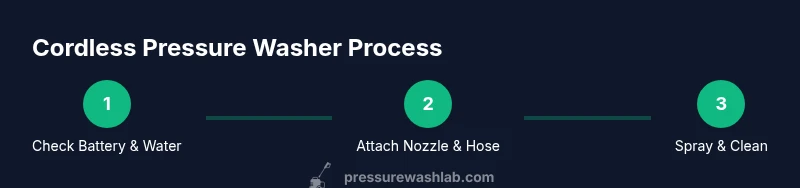
- 1
Inspect battery and water supply
Check the battery is charged and seated properly. Attach a garden hose and ensure water flows before powering the unit. This prevents running dry during cleaning.
Tip: Always test the water flow with the nozzle off to avoid splatter. - 2
Attach correct nozzle
Choose a wide spray tip for initial cleaning and switch to a narrower tip for stubborn spots. Securely snap the nozzle into place to prevent it from dislodging during use.
Tip: Start with the widest pattern to cover more area with less pressure. - 3
Connect water source and power
Connect the hose to the washer’s water inlet and insert the battery. Avoid using the unit without water; dry operation can damage seals and pump.
Tip: Ensure the battery is fully seated before powering on. - 4
Power on in a safe area
Turn on the unit and verify a smooth spray. Keep the nozzle at a safe distance from the surface and from your body to avoid kickback or damage.
Tip: Keep a hand on the wand grip to control spray direction precisely. - 5
Move methodically and don’t rush
Clean in steady, overlapping passes; don’t linger in one spot, which can etch surfaces. Apply light to moderate pressure and brush away heavy dirt gradually.
Tip: Work from bottom to top to prevent streaking or runoff. - 6
Shut down, store properly
Turn off, release residual pressure, disconnect the water source, and remove the battery. Rinse the nozzle and store in a cool, dry place.
Tip: Wipe the nozzle tip to prevent mineral buildup before storage.
Quick Answers
Are cordless pressure washers as powerful as corded models for tough cleaning jobs?
Cordless washers generally offer lower PSI and GPM than corded machines, making them suitable for light-duty tasks. For heavy-duty cleaning, corded or gas-powered units perform better. Use cordless for quick cleans and small areas, and consider a corded option for larger jobs.
Cordless washers are great for light chores, but for heavy-duty cleaning you’ll want a corded or gas-powered model.
What maintenance does a cordless pressure washer require?
Regularly inspect hoses and seals for wear, rinse the nozzle after use, and store with the battery at the recommended charge state. Periodically service the pump per the manufacturer’s schedule to extend life.
Routine checks of hoses, nozzle rinsing, and proper storage keep cordless washers reliable longer.
Can I use a cordless pressure washer for my car wash?
Yes, for light duty car cleaning a cordless washer can work, especially with a broad spray nozzle. Avoid high-pressure jets directly on sensitive areas or old paint finishes. For detailed car washing, a gentler approach or alternative tools may be preferable.
A cordless washer works for light car cleaning, using a broad spray and careful technique.
Do cordless washers require a special water tank or reservoir?
Most cordless models connect to a standard garden hose. Some portable variants include a small reservoir, but they offer shorter runtimes. Always ensure a steady water supply to prevent pump damage.
Most work with a garden hose; some portable ones have a reservoir, but watch runtime.
What should I look for when buying a cordless pressure washer?
Look for battery voltage/capacity, maximum PSI and GPM, weight, build quality, warranty, and accessory compatibility. Favor models with replaceable batteries and a robust nozzle set for versatility.
Check battery capacity, PSI, GPM, warranty, and accessory options when buying.
How long does a typical cordless battery last per cleanup session?
Runtime varies by model, battery size, and task intensity. Expect shorter sessions for tough stains and plan for brief recharges or a spare battery for extended cleaning.
Runtime depends on the battery and task; expect shorter bursts and plan for recharges.
Watch Video
Key Takeaways
- Assess cordless power for your scale of jobs.
- Battery life and nozzle selection drive efficiency.
- Plan tasks in segments to manage runtime effectively.
- Water source and safe operation are critical for surface care.
- Cordless tools excel in convenience but may struggle with heavy stains.