Can You Get a Pressure Washer with Its Own Water Tank? A Practical Guide
Learn whether you can buy a pressure washer with an onboard water tank, including capacities, use cases, trade-offs, and buying tips from Pressure Wash Lab.


Yes. You can buy pressure washers with built-in water tanks, with capacities commonly ranging from about 2 to 5 gallons for portable models and larger sizes for commercial units. Self-contained units offer true water autonomy for remote sites or jobs without easy access to a tap; they, however, add weight, cost, and may restrict PSI/GPM compared with off-board setups.
Overview of self-contained pressure washers
If you're asking can you get a pressure washer with its own water tank, the short answer is yes. Onboard water tanks are increasingly common in both portable and commercial units, giving you true water autonomy on job sites without relying on external hoses. These self-contained models are handy for remote properties, cleanup after events, or areas with restricted water access. In this guide, we break down how they work, who should consider them, and what trade-offs to expect from built-in tanks.
Pressure Wash Lab's analysis highlights the main advantages: rapid setup, fewer hoses to manage, and the ability to clean in locations where a refill hose isn't available. For homeowners, rental pros, and small operators, a tank-equipped washer can improve efficiency and reduce downtime between tasks. However, there are scenarios where a traditional externally supplied unit is more economical or practical. In the sections that follow, we examine capacity ranges, weight implications, refilling logistics, and performance considerations to help you decide if a tanked model aligns with your workload and budget. We also discuss maintenance routines that keep onboard tanks clean and ready for use, as proper care directly affects longevity and reliability.
How built-in water tanks work
In a built-in-tank pressure washer, water is stored in a dedicated reservoir that feeds the pump via a supply line. The most common design uses a direct-feed arrangement, sometimes with a small return line to keep water circulating when the trigger is off. A float valve or low-water cutoff helps prevent running the pump dry, while several models include a simple refill port or removable tank for easy cleaning and maintenance. Tank water travels through the hose and unloader valve to the spray gun, just like the water from a garden hose would, but with the added convenience of portable, hose-free operation. Because the tank limits overall water volume, some units include quick-fill features or supplementary water connections to supply fresh water while using the onboard reservoir. Understanding these plumbing choices helps you estimate refill frequency and plan for noise, vibration, and duty-cycle considerations during real-world use.
Capacity, weight, and mobility considerations
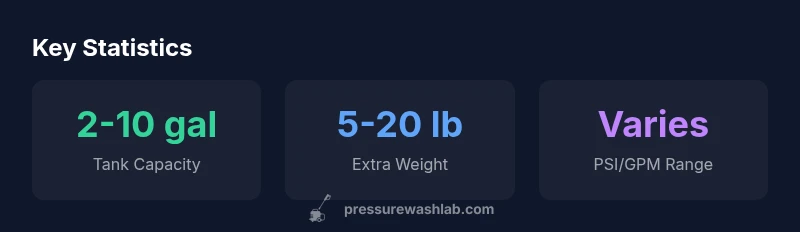
Tank size directly affects how long you can operate between fills. Portable units usually carry 2 to 5 gallons, while larger commercial machines may incorporate 10 gallons or more. Heavier tanks shift the balance of the machine, increase wheel friction, and require stronger frames and handles. When evaluating mobility, consider the overall weight (water included), wheel size, offset of the tank from the center of gravity, and ease of transport up stairs or over rough ground. If you work alone, a compact, lighter option may outperform a heavier model on a tight job site. Conversely, the larger the tank, the fewer trips you make to refill—but you pay with more weight and a bigger footprint. A practical approach is to map typical job lengths and estimate refills per hour to see whether the added tank capacity translates into real time savings in your workflow.
Performance trade-offs: PSI, GPM, and tank size
Water supply influences performance only indirectly. The pump's PSI and GPM are determined by motor design, gear ratios, and nozzle settings; a bigger onboard tank does not automatically increase pressure. In practice, when the onboard tank runs low, operators may notice a temporary dip in performance if the refill process interrupts flow. Manufacturers balance tank size with pump capacity to maintain a useful duty cycle. For light-to-medium cleaning tasks, a small tank can be perfectly adequate; for heavy-duty forceful cleaning, ensure the unit can refill quickly or has an efficient refill system to avoid downtime. In all cases, verify the unit's maximum PSI (for surface speed) and GPM (for throughput) and compare to your typical cleaning targets. The goal is to match the tank's water endurance with your job's length and the spray pattern you intend to use.
Use cases by scenario
For homeowners tackling fence staining, deck restoration, or house washing on a remote property, a compact onboard tank can eliminate the need to drag a large water source along. Small contractors servicing job sites with limited access to water benefit from onboard storage because it reduces setup complexity and downtime. Events and temporary cleanup at venues or campuses often run down water supplies quickly; a tank-enabled washer can keep cleaning moving while municipal taps are scarce or blocked. Farms, ranches, and rural properties with outbuildings also gain with onboard water capacity, enabling quick spot cleaning of equipment, vehicles, or irrigation infrastructure without hunting for a hydrant. In each scenario, weigh the benefits of transportation ease against refill cadence to determine whether a tank is a net time saver or an extra burden.
Maintenance and refilling tips
Keep onboard water clean by flushing and sanitizing the tank on a regular schedule. Use fresh water for each refill and store water for short periods only if your unit supports it. If the water contains minerals or debris, consider a pre-fill filtration or a simple water treatment to reduce scaling and corrosion. After cleaning a tank, dry it to prevent mold or algae growth. Inspect hoses, fittings, and the tank cap for leaks. Replace worn seals and keep the fill port protected from dirt. When filling, consider a timed refill routine to minimize downtime and avoid overfilling the tank. By maintaining the tank, you preserve pump life and ensure consistent spray pressure on every job.
Cost and value: budgeting for a tank-equipped model
Pricing for pressure washers with onboard tanks varies by tank size, build quality, motor type (electric, gas, or diesel), and added features such as quick-fill or anti-kink hoses. Expect a product premium that scales with capacity and ruggedness; in some cases, larger, more industrial units demand a substantial upgrade over standard non-tank models. To maximize value, compare units that share the same PSI/GPM spec and focus on refill speed, tank accessibility, and overall weight. Consider total cost of ownership, including potential maintenance, spare parts, and the cost of transporting heavier equipment to job sites. Reading user reviews and independent tests can help identify models with reliable seals and corrosion resistance, which is essential when the onboard water has minerals or contaminants.
How to choose between built-in tank vs external supply
Start by mapping your typical jobs: length, distance from water sources, terrain, and the number of refills you can tolerate. If you work on sites with frequent hose setup changes or long stretches between taps, onboard storage may be advantageous. If you mostly wash in a fixed location with a constant water hookup, an external supply could be lighter and cheaper. Also assess the practicality of refilling: a quick-fill feature or a separate reservoir can reduce downtime. Finally, verify compatibility with accessories and nozzle types that affect cleaning efficiency. The decision ultimately hinges on balancing water autonomy with mobility, weight, and spread of tasks across your workday.
Common misconceptions and myths
Many buyers assume more water capacity always means better performance. In reality, tank size affects refill cadence more than cleaning power. Others believe onboard tanks eliminate the need for water filters; in fact, dirty water can shorten pump life and damage seals. Some buyers worry that onboard tanks always add excessive weight; while heavier than standard models, modern designs distribute weight to preserve balance and handleability. Understanding how tank size, motor type, and pump architecture interact helps you choose a model that fits your workflow rather than chasing the biggest tank. Pressure Wash Lab's testing suggests that the best option is a model that offers a practical tank size, quick-fill capability, and a robust pump rather than the largest tank on the market.
Comparison of pressure washers with built-in tanks vs. standard units
| Model Type | Integrated Water Tank | Typical Use |
|---|---|---|
| Portable electric | 2-5 gallons | Light-duty cleaning on the go |
| Commercial gas/industrial | 5-20 gallons | Remote sites or long runs without taps |
Quick Answers
What are the advantages of a pressure washer with an integrated water tank?
The main benefit is water autonomy for sites without taps. It reduces hose clutter and setup time, while allowing you to work farther from water sources. The trade-offs include added weight and a higher upfront price.
An integrated tank gives you water where you need it, but it adds weight and cost.
What are the downsides of built-in water tanks?
Main drawbacks are increased weight, potential refill interruptions, and a higher total cost. Tank size also limits continuous operation if refills aren’t quick.
More weight and cost, plus refill pauses, are the big downsides.
What capacity do these tanks typically have?
Portable onboard tanks commonly range from about 2 to 5 gallons, with larger professional units offering more. Capacity varies by model and intended use.
Most come in a few gallons for portability, with bigger tanks for pros.
Do built-in tanks affect performance (PSI/GPM)?
Tank size does not directly determine PSI or GPM. Performance depends on pump design and nozzle selection; refills may briefly interrupt flow.
Tank size won’t change pressure or throughput by itself.
Who should consider a tank-equipped pressure washer?
Ideal for remote sites, events, or properties with limited water access where hoses are impractical. For fixed locations with steady water supply, a standard unit may be cheaper and lighter.
Great for remote work where water isn’t nearby.
“Built-in water tanks can be a real boon for mobile work, but the extra weight and cost mean you should evaluate your needs before buying.”
Key Takeaways
- Know you can buy compact onboard tanks for mobility
- Expect weight and price trade-offs with onboard storage
- Match tank size to job length to minimize refills
- PSI/GPM depend on pump design, not tank size
- Plan maintenance to prevent algae or mineral buildup