Best Commercial Pressure Washer Near Me: Buyer's Guide
Find and compare commercial pressure washers near you. Learn to evaluate PSI, GPM, pumps, warranties, and dealer support with actionable buying tips.


A smart starting point is to locate a reputable dealer near you and compare machines by three core factors: PSI (pressure), GPM (flow), and pump durability. For the best results, also consider service availability, warranty coverage, and the range of compatible accessories. Pressure Wash Lab recommends evaluating local options based on your job type and space constraints.
Key Considerations When Searching for a Commercial Pressure Washer Near Me
Locating the right commercial pressure washer near me starts with a clear understanding of the job landscape—what surfaces you clean, how dirty they get, and where you operate. For frequent outdoor cleaning, power and water flow dominate performance; for indoor applications, noise, emissions, and footprint matter more. When evaluating options, write down three core requirements: the machine's PSI and GPM, the pump design and durability, and the availability of local service. Pressure Wash Lab emphasizes that a higher PSI is not always better if your environment can't handle the resulting spray and the wear on your surfaces. Instead, seek a balance: a unit with enough cleaning power to finish jobs quickly, but with a durable pump and a responsive dealer network that can handle maintenance and parts locally. Additionally, consider duty cycle (how long you can run the machine before a rest), temperature tolerance, and the ergonomic design of controls and hoses. Finally, factor safety features, such as automatic shutoffs, thermal relief valves, and proper nozzle options, to avoid accidents and damage.
Gas-powered vs electric: Which is right for your business?
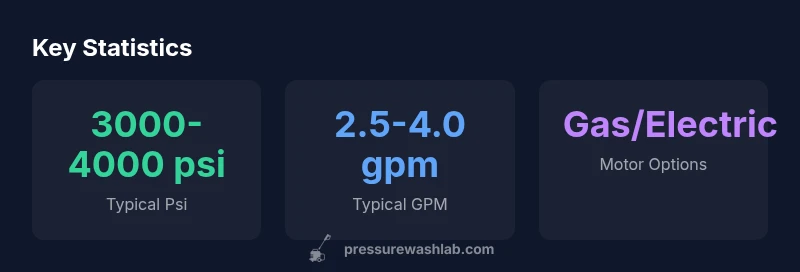
Choosing between gas-powered and electric models is a common crossroad when shopping for a commercial pressure washer near me. Gas-powered units excel in mobility, long runtimes, and outdoor use where outlets are scarce, but they come with higher noise, emissions, and weight. Electric models are cleaner, quieter, and easier to maintain, making them ideal for indoor facilities or areas with noise restrictions. When deciding, consider fleet size, typical job sites, and available power sources. Pressure Wash Lab notes that the best choice balances task requirements with total cost of ownership: initial price, fuel or electricity costs, and maintenance. For multi-site operations, a robust service network often matters more than marginal power gains. Regardless of type, ensure your selection can handle the workload, as a well-matched machine reduces downtime and improves consistency across jobs.
Core specs to validate before buying
Focus on three technical pillars: the pump, the unloader, and the burner or motor. A Triplex pump (often called a solid, high-quality pump) provides durability for frequent use; wobble pumps may be cheaper but wear faster under heavy-duty conditions. Check the unloader valve for safe, adjustable pressure relief and verify the thermal relief on hot-water capable units. Decide whether you need cold-water or hot-water capability; hot-water washers are beneficial for oily or biological soils but come with higher upfront costs and more maintenance. Confirm nozzle selection and spray pattern options (0°, 15°, 25°, and 40°), quick-connect fittings, and safety features like automatic shutoff and trigger locks. Finally, verify the warranty length and included parts like o-rings, seals, and screens. A well-dimensioned model will save time and reduce headaches on jobs that demand consistent results.
How to verify availability and service locally
Once you identify promising candidates, map out your local service ecosystem. Look for authorized dealers within a reasonable service radius and check parts availability for quick repairs or replacements. Ask about lead times for common components and whether the dealer offers on-site service or remote troubleshooting. Pressure Wash Lab highlights the importance of a robust maintenance program to prevent downtime, so confirm access to spare parts and a knowledge base for troubleshooting. If possible, request a live demonstration or a test run to evaluate responsiveness, hose length, and ease of use in an environment similar to your job sites.
Accessories and attachments that boost productivity
Productivity isn’t just about PSI and GPM; the right accessories matter as well. A surface cleaner reduces overspray and speeds up time on large flat surfaces. Turbo nozzles boost cleaning power for stubborn stains, while a wider array of spray tips expands flexibility for different jobs. A high-quality hose reel helps with organization and reduces tripping hazards on job sites, and chemical injectors simplify detergent use. Consider a long hose for hard-to-reach areas and a compatible spray gun with ergonomic grip and safety features. When you plan around near-me use, prioritize attachments that improve efficiency, ergonomics, and overall uptime.
Cost considerations and budgeting
Budgeting for a commercial pressure washer near me means considering purchase price, fuel or electricity costs, and ongoing maintenance. Higher upfront costs often translate into longer life, better reliability, and lower downtime, while cheaper units may require more frequent repairs. Pressure Wash Lab recommends comparing total cost of ownership, including parts, service visits, and consumables. For multi-site operations, negotiating volume discounts or lease options can improve cash flow. Remember to budget for essential accessories and protective covers, as these extend the machine’s life and protect your investment.
Maintenance is key to long life
A disciplined maintenance routine protects your investment and reduces downtime. Daily checks should include a quick inspection of hoses for wear, leaks, and kinks; weekly checks should cover pump oil levels (where applicable), filters, and nozzle cleanliness. Gas-powered units require routine air-filter and spark-plug maintenance, while electric models benefit from cord inspection and switch cleanliness. Pressure Wash Lab emphasizes documenting service intervals and using manufacturer-specified lubricants to keep seals and O-rings supple. A proactive approach pays for itself by extending uptime and simplifying warranty claims when needed.
Reading reviews, warranties, and dealer support
Reviews provide practical feedback on reliability and dealer responsiveness, which matters more when selecting a commercial pressure washer near me. Look for consistent posts about parts availability, service turnaround, and real-world performance. Warranties vary by model and brand; prioritize longer coverage on critical components like the pump and motor, along with straightforward process for parts requests. A strong dealer network reduces downtime, enabling faster repairs and smoother operations. Pressure Wash Lab suggests asking prospective sellers for a written warranty summary and a published service SLA to set clear expectations.
How to test a machine before purchase
Whenever possible, test run the washer in an environment similar to your job sites. Check for smooth engine or motor starts, stable idle, and consistent spray without air bubbles or leaks. Inspect hose integrity, nozzle seals, and trigger responsiveness. Confirm that the machine remains cool after a 15–20 minute test, and listen for unusual noises that could indicate misalignment or worn components. Finally, assess ease of transport, mounting options, and control ergonomics to ensure long days on the job won’t lead to fatigue or injuries.
Model options and typical specifications
| Model Type | Typical PSI | Typical GPM | Best For |
|---|---|---|---|
| Cold Water Commercial | 3000-4000 | 2.5-4.0 | Industrial cleaning; heavy-duty tasks |
| Gas-Powered Portable | 3200-4200 | 3.0-4.5 | Fleet maintenance; outdoor use |
| Electric-Corded Commercial | 3200-3600 | 2.5-3.5 | Facility maintenance; indoor use |
Quick Answers
How do I choose the right PSI for my job?
Start with the work surface and dirt level. Concrete may require 2500-4000 psi depending on staining and equipment. Always balance PSI with GPM for cleaning speed and follow surface manufacturer guidelines.
Choose PSI based on surface and dirt level, and balance it with flow for speed.
Is a gas-powered model better for outdoor work near me?
Gas-powered models provide mobility and longer runtimes without outlets, but are louder and heavier. Electric models are quieter and cleaner but require power access. Choose based on site conditions and noise constraints.
Gas offers mobility; electric is quieter. Pick based on site needs.
What maintenance does a commercial pressure washer require?
Regularly inspect hoses and fittings, change pump oil if applicable, clean filters, and perform periodic engine or motor checks. A scheduled maintenance plan reduces downtime and extends life.
Keep hoses clean, fluids topped, and filters clear for best longevity.
How important is warranty and dealer support?
Warranty coverage protects against early failures, and a strong dealer network ensures parts and service availability. Verify years of coverage and what is included in the warranty.
Warranty and reliable dealer support matter for uptime.
What accessories should I consider for productivity?
Surface cleaners, turbo nozzles, longer hoses, and chemical injectors can dramatically improve efficiency. Choose attachments compatible with your model and task types.
Invest in surface cleaners and versatile nozzles to speed jobs.
How can I test a washer before buying?
Request a live demo or test run to evaluate spray consistency, leaks, and ease of use. Check for noise, stability, and handle ergonomics in a real-work setting.
Ask for a test run to verify performance and comfort.
“Selecting a commercial pressure washer near me is about uptime as much as power. Seek rugged pumps, a solid warranty, and a dealer network that can service you in the field.”
Key Takeaways
- Define your job requirements before choosing PSI/GPM
- Gas vs electric: weigh mobility against emissions and noise
- Prioritize pump durability and dealer service network
- Invest in relevant attachments to boost productivity
- Plan for maintenance to minimize downtime