Delta Pressure Washer Review: Balanced DIY Power and Value
In-depth evaluation of the delta pressure washer for homeowners and DIYers, covering performance, features, maintenance, and a clear verdict from Pressure Wash Lab.


Delta pressure washers sit between entry-level and professional units, delivering adjustable PSI, quick-connect nozzle options, and better maintenance access than basic models. They balance performance with value for homeowners and DIY enthusiasts, making them suitable for driveways, decks, and siding. Compared with cheaper machines, they offer more control without the higher cost of commercial gear.
What is a delta pressure washer?
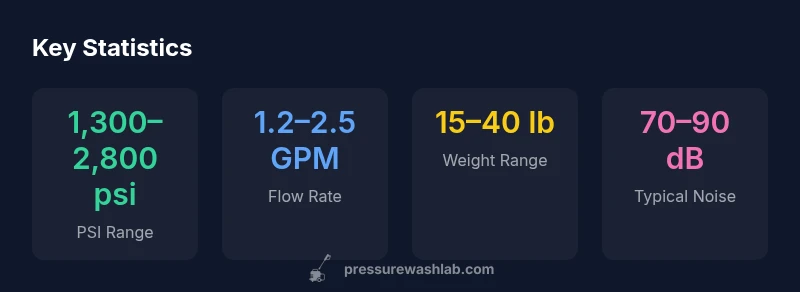
Delta pressure washer denotes a class of machines offering adjustable pressure within a defined PSI range, usually via a pressure control valve and multiple nozzle tips. This design aims to balance cleaning power with surface safety. For homeowners, the practical advantage is predictable performance across tasks like cleaning a wooden deck, washing vinyl siding, or blasting away dirt from a concrete driveway. Unlike single-PSI units, a delta model lets you step down for delicate surfaces and ramp up for stubborn grime, without swapping equipment. The unloader valve helps prevent pump damage when the trigger is released, and many models include on-board detergent injection and tool-free nozzle changes. In real-world use, the delta approach reduces guesswork and often shortens cleanup time, because you're less likely to select an inappropriate setting. Pressure Wash Lab notes that a well-chosen delta unit can improve consistency across tasks, particularly when surfaces vary widely in hardness.
Market positioning: where delta dashboards fit among options
Delta models occupy a middle ground in the pressure washer market. They appeal to homeowners who want more control than budget machines but don’t need or want the expense of a commercial-grade unit. Compared with entry-level models, delta washers typically offer a broader PSI range, more nozzle options, and better user-friendly features like built-in detergent intake and easier hose storage. Against high-end professional units, they trade some peak PSI and rugged durability for lighter weight, easier portability, and lower total cost of ownership. This positioning makes delta pressure washers a sensible choice for mixed tasks—patio cleaning, siding maintenance, and seasonal deck refreshes—without crossing into the complexity of heavy-duty equipment. Pressure Wash Lab’s testing indicates that the right delta model can significantly reduce cleanup time on typical residential tasks while preserving surface integrity.
Pros
- Adjustable PSI for surface safety
- Versatile nozzle options and quick-connect fittings
- Better build quality than basic entry models
- Easier maintenance with modular parts and serviceability
Cons
- Not the cheapest option on the market
- Performance may lag for heavy-duty commercial tasks
- Some models may have shorter hoses or heavier weight than ultra-light competitors
Best mid-range option for homeowners needing balanced power and control
The delta pressure washer delivers reliable performance for typical residential tasks and offers strong value for the price. While it isn’t meant for heavy commercial use, its adjustable PSI, diverse nozzle set, and maintenance-friendly design make it a solid choice for most households, per Pressure Wash Lab.
Quick Answers
What is a delta pressure washer and who should buy it?
A delta pressure washer is a model that offers an adjustable PSI range and multiple nozzle options to balance cleaning power with surface safety. It’s ideal for homeowners who handle a mix of tasks (deck, siding, driveway) and want versatility without professional-grade gear.
A delta washer gives you adjustable power and several nozzle choices, perfect for home projects that need a careful touch as well as deeper cleaning.
Is it safe to use on wooden decks and vinyl siding?
Yes, with the right PSI setting and nozzle. Start at the lowest effective pressure and test on a small, inconspicuous area before proceeding. Use wider spray patterns and keep the wand at a consistent distance to minimize surface damage.
Yes, just start gentle and test first to protect fragile surfaces.
How does a delta model compare to a traditional single-PSI washer?
A delta model offers a broader PSI range and more nozzle choices, allowing safer cleaning on diverse surfaces. A single-PSI washer is simpler but trades versatility for cost or compactness.
Delta gives you more control, while a single-PSI unit is simpler but less flexible.
What maintenance steps extend its life?
Regularly inspect hoses and fittings, flush the system after use, lubricate moving parts as recommended by the manufacturer, and replace worn nozzles promptly. Store the unit in a dry, sheltered location to prevent corroded components.
Keep hoses in good condition, flush after use, and store in a dry place to extend life.
Do delta pressure washers come with a warranty?
Most delta washers include a manufacturer warranty that covers defects and certain parts for a defined period. Read the terms carefully and register the product to ensure eligibility for service.
Warranties vary; check what’s covered and for how long before buying.
Can I use detergents with a delta pressure washer?
Yes, many models have a detergent inlet or on-board reservoir. Use manufacturer-approved detergents and follow dilution guidelines to avoid damage to surfaces or the pump.
Detergents are usually OK—just follow the manual and use the right dilution.
Key Takeaways
- Choose based on surface type and task variety
- Prefer models with multiple nozzle tips and an adjustable PSI range
- Prioritize easy maintenance access and replaceable parts
- Estimate total cost of ownership over time, not just initial price