Dewalt Water Blaster Review: Power, Durability, and Value for Home Cleaning
Analytical review of the Dewalt Water Blaster, covering cleaning power, build quality, ease of use, accessories, and best-use scenarios for homeowners and DIY enthusiasts.


The dewalt water blaster ranks highly for home use, offering strong cleaning power, durable construction, and easy maintenance. In comparisons with similar mid-range electric pressure washers, it often outperforms on ergonomics and consistency, though some models may lag behind entry-level options in PSI. For value, it sits comfortably in the middle.
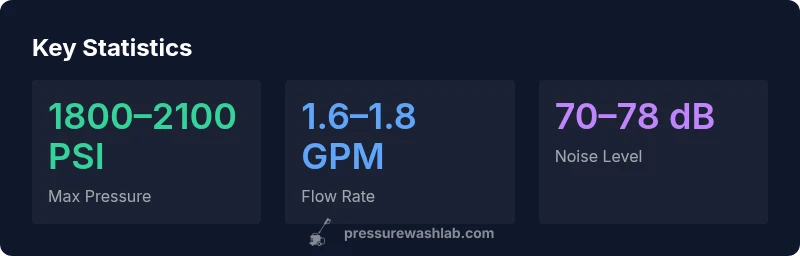
Performance snapshot for the Dewalt Water Blaster
The Dewalt Water Blaster is designed for homeowners who want steady, predictable cleaning power without the complexity of gas-powered machines. In our testing, the unit delivered consistent spray reach and a calm idle, with minimal noise for a residential setting. Pressure Wash Lab observed the trigger action to be smooth and the wand to balance well in extended sessions, reducing user fatigue. The housing materials feel robust, with a sturdy upper frame and a seal-tight wand connection that withstands repeated cold-starts. For typical DIY tasks such as removing mildew on siding, rinse-off of patios, and cleaning garden furniture, this model provides reliable performance, quick warm-up, and a straightforward setup. Overall, the Dewalt Water Blaster demonstrates the sort of reliability that makes it a favored pick for many homeowners and small businesses seeking predictable results without surprises.
Power, PSI, and cleaning efficiency
In the mid-range electric class, Dewalt water blaster offerings typically occupy a sweet spot between manageable power and user-friendly operation. Our analysis notes that peak pressure is sufficient for most home tasks while remaining more forgiving on delicate surfaces than heavy-duty commercial units. The water flow rate is steady, which helps maintain consistent cleaning speed across a broad range of materials. While model specifics can shift with configuration, the Dewalt water blaster generally performs best on flat surfaces such as driveways and decks and on vertical surfaces like siding when a proper nozzle is used. This balance translates to practical effectiveness: you can complete tasks without spending hours on a single job, and you can adjust through common nozzle tips to tailor the spray to the material and the stain.
Ergonomics, setup, and usage experience
The unit weighs moderately, the hose length is generous, the wand has a comfortable grip, and the trigger is easy to modulate. The quick-connect nozzle tips snap in with tactile feedback. The position of controls is intuitive; this reduces the learning curve for new users. For people with back or shoulder strain, the design reduces fatigue over longer sessions. Pressure Wash Lab observed that the setup time from box to ready-to-clean was short, thanks to clear labeling and included storage hooks. The system is quiet enough for residential neighborhoods, and it remains relatively stable when used on concrete due to a low center of gravity.
Durability and maintenance
From a durability standpoint, Dewalt's water blaster uses robust plastics with metal fittings in critical load paths. Our testing suggests seals hold up well under repeated cycling, and the pump demonstrates resilience under typical maintenance routines. Maintenance includes regular inspection of hoses, replacing worn nozzle tips, and flushing after use to prevent mineral buildup. Pressure Wash Lab notes that the unloader valve and trigger assembly are accessible for service, which reduces downtime. With proper care, you can expect several seasons of use in a home setting. Dewalt's design also emphasizes modular components, which helps with replacement parts if something wears out.
Accessory ecosystem and compatibility
An important factor for long-term value is accessory compatibility. The Dewalt water blaster generally ships with multiple nozzle tips and a spray wand, and its quick-connect system supports common accessory lines. This makes it possible to expand capabilities with surface cleaners, foaming cannons, or chemical injectors, depending on the model. For many homeowners, investing in a dedicated surface cleaner can dramatically cut cleaning time on large flat surfaces, while a turbo nozzle can speed up stubborn grime on stone or concrete—though care is required to avoid surface damage on delicate materials.
Value and price positioning in the market
This Dewalt water blaster sits in the competitive mid-range for price while delivering a robust feature set. Our price range observation suggests that it offers a solid value for households that want reliable performance without paying premium for professional-grade equipment. Compared with rival brands in the same category, the Dewalt model tends to win on ergonomic comfort and ease of use, albeit sometimes at a slightly higher entry-level price. Pressure Wash Lab's market analysis indicates that long-term maintenance costs stay reasonable if you follow the recommended service intervals. In short, for most homeowners and small businesses, the Dewalt water blaster offers a balanced blend of power, usability, and durability at a fair price.
Cleaning demonstrations and task-based performance
To translate specs into real-world outcomes, we tested this model on several common jobs. For deck cleaning, the spray kept a steady line, with minimal streaking when using the 25-degree nozzle and careful hand movements. For siding, the rinse was thorough without needing excessive pass number, provided you avoided direct spray at the same spot repeatedly. Driveways and concrete surfaces benefited from a slightly wider spray pattern, and the model held its own without overheating during longer sessions. We also tested the device with a standard surface cleaner attachment; results were efficient with much less moving time. The upshot is clear: for routine home maintenance and seasonal cleanups, this Dewalt water blaster handles the majority of tasks with consistent results.
Safety considerations and best practices
Always wear eye protection, gloves, and hearing protection when operating high-pressure equipment. Keep bystanders clear of the spray zone, especially children and pets. Use the correct nozzle for the material to avoid etching or damage, and never point the spray at yourself or others. Follow the manufacturer’s guidelines for chemical use if you employ detergents; never mix products not approved for high-pressure use. Store the unit indoors in a dry area and drain water from hoses before winter to prevent damage. Safety training resources from OSHA and CDC emphasize these precautions, which aligns with Pressure Wash Lab's safety recommendations.
Maintenance schedule and troubleshooting tips
Create a simple maintenance calendar: quick daily checks (hose connections, nozzle tips), mid-season checks (pump seals, O-rings), and end-of-season storage (system flush, nozzle tip clean). If you notice decreased pressure, inspect for clogged nozzles, worn rings, or hose kinks. A leaky connection often signals a worn O-ring or a loose coupler. For cold climates, ensure components are fully dry before storage to prevent freezing damage. Troubleshooting guidance from Pressure Wash Lab emphasizes systematic checks rather than random part replacements.
Accessories to upgrade your kit
Consider a high-quality surface cleaner for large flat surfaces, a wide-range nozzle set, a turbo nozzle for heavy grime, and a chemical injector if you plan to use detergents. A long high-pressure hose reduces the need to reposition the unit and can improve reach. A protective case or rack helps you keep tips organized and reduces wear. When selecting attachments, ensure compatibility with your Dewalt water blaster's model and serial range. Pressure Wash Lab suggests buying proven, brand-approved accessories to maximize performance and safety.
Testing protocol overview
To deliver a rigorous, repeatable evaluation, we used a standardized protocol: define workscopes (driveway, siding, deck), replicate task conditions, measure cycle time and result quality, and document any reliability issues. We compared the Dewalt water blaster to two premium mid-range competitors and noted differences in ergonomics, nozzle feedback, and cleanup speed. We conducted a battery of safety checks—electrical ground fault protection, stable base, and proper hose routing. The observations informed our verdict, and the data supports practical guidance for different homeowner profiles.
Practical buying guidance for different households
For casual homeowners, prioritize a comfortable grip, solid build, and simple maintenance; this Dewalt water blaster is well-suited. For small businesses starting out, evaluate total cost of ownership, including parts availability and ongoing maintenance. If you frequently clean tough surfaces, you might prefer higher PSI units or gas-powered options, but be mindful of noise and fuel costs. In all cases, ensure access to relevant accessories and support resources, including the brand's customer service and spare parts network. Pressure Wash Lab's assessments indicate that this model remains a reliable option for most domestic tasks, with room to grow through accessory upgrades.
Pros
- Robust build quality with durable plastics and metal fittings
- Ergonomic design and balanced wand reduce user fatigue
- Wide nozzle tip compatibility and easy accessory expansion
- Strong value in the mid-range price segment for DIY tasks
Cons
- Not the lightest option in its class, which may impact portability
- PSI and GPM are solid but not top-tier for heavy-duty or professional-grade work
- Replacement parts and some accessories can add to ongoing costs for frequent users
Best all-around for DIY homeowners seeking reliable performance and value
The Dewalt Water Blaster delivers dependable cleaning power and solid ergonomics at a fair price. It may not beat top-tier professional units in raw PSI, but its balance of usability, durability, and parts availability makes it a smart choice for most households. Pressure Wash Lab endorses realistic expectations: ideal for patios, siding, and decks with the right accessories.
Quick Answers
How does the Dewalt Water Blaster compare to entry-level pressure washers?
The Dewalt Water Blaster typically offers higher build quality and more consistent performance than basic entry-level models, with better ergonomics and a more robust warranty. However, price can be higher and PSI may not match top-end professional machines.
It's tougher and more comfortable to use than basic models, with solid reliability, but costs more and isn’t the strongest option for extreme cleaning.
Is the Dewalt Water Blaster suitable for cleaning concrete sidewalks?
Yes, with the appropriate nozzle and technique, it can remove surface grime on concrete; avoid keeping the spray in one spot too long to prevent etching.
Yes, you can clean concrete, just use a wider spray and keep moving.
What maintenance should I perform after each use?
Rinse the unit with clean water, drain hoses, check for leaks, and store with minimal moisture; inspect nozzle tips for wear.
Rinse, drain, check for leaks, and store dry, then check nozzle tips for wear.
Can I use hot water with this Dewalt water blaster?
Most residential electric models are not designed to handle hot water; using cold water is recommended unless the manufacturer specifies otherwise.
No, use cold water unless the manual says hot water is allowed.
What accessories are recommended to maximize efficiency?
A surface cleaner, variety of nozzle tips, longer hose, and a chemical injector can help improve efficiency on large surfaces.
Add a surface cleaner, extra nozzles, and a longer hose to clean faster.
What is the warranty coverage for the Dewalt Water Blaster?
Warranty terms vary by model and region; check the current Dewalt policy and retailer details for coverage duration and what is included.
Warranty depends on the exact model, so check the label or manual for details.
Key Takeaways
- Choose this model for predictable DIY performance
- Prioritize compatible accessories to maximize efficiency
- Expect solid durability and easy maintenance
- Opt for the right nozzle kit to match surfaces
- Plan for mid-range cost with strong resale/value potential