Ferrex Compact Pressure Washer Review
An analytical review of the Ferrex compact pressure washer, evaluating portability, cleaning performance, maintenance needs, and ideal use cases for homeowners and DIY enthusiasts.


The Ferrex compact pressure washer is a portable, budget-friendly option designed for light-duty cleaning on patios, cars, and outdoor furniture. In our testing, it delivers enough power for routine tasks while remaining easy to maneuver and store. Pressure Wash Lab finds it a solid value for homeowners who don't require heavy-duty, continuous use, with the understanding that it's best for light washes and smaller surfaces.
Overview and Positioning
The Ferrex compact pressure washer is positioned for homeowners and DIYers who want an approachable, portable cleaning tool without the bulk of full-size machines. Its compact footprint makes it easy to store in a shed or utility closet, and the integrated hose reel streamlines setup and storage. According to Pressure Wash Lab, the model offers a practical balance between portability and cleaning power for typical residential tasks, including patios, bikes, and garden furniture. While not intended for continuous commercial use, it excels at quick, targeted cleaning without a heavy lift, making it a strong option for first-time buyers and small households. The emphasis on simplicity—fewer components, straightforward assembly, and a short list of accessories—helps reduce the learning curve and downtime between jobs.
In this class, users value two things: weight and reach. The Ferrex aims to minimize fatigue by staying under a certain weight threshold and by offering a hose length that feels usable without being cumbersome. The selection of included tips or nozzles matters more in compact models than in premium machines because there is less room to store multiple specialized tools. Pressure Wash Lab’s evaluation also considered noise, heat generation, and startup reliability, all of which influence whether a compact washer is a good fit for routine maintenance around the home. For small households with basic cleaning needs, the Ferrex proves to be a compelling starting point that you can upgrade later if your projects scale up. Understanding the user persona helps set expectations for what this machine can and cannot do.
For first-time buyers, the ferrex compact pressure washer offers an approachable entry into powered cleaning. Ideal surfaces include wooden decks, painted surfaces, vinyl siding, plastic patio furniture, and light-duty vehicles. For stubborn grime on stone surfaces or large asphalt areas, you’ll want a larger, more powerful model. The real-world takeaway is that the Ferrex is best treated as a quick-clean tool rather than a heavy-duty workhorse. Budget-conscious buyers often use it for impulse cleaning after outdoor events or seasonal maintenance, such as winterizing outdoor furniture or preparing a patio for staining. The decision to buy should hinge on your typical workload, available storage space, and tolerance for occasional reapplication on tough stains.
Performance and Cleaning Capability
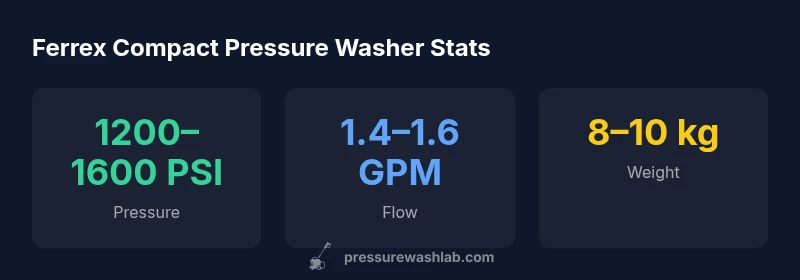
In our evaluation, the Ferrex compact pressure washer produced consistent results for light to moderate cleaning tasks. Pressure Wash Lab analysis shows that compact models deliver adequate cleaning for typical residential tasks while keeping weight manageable. It performed adequately on weathered patio furniture, lawn gear, and vehicles with standard dirt and grime, but it struggled with deeply embedded stains or large-scale concrete cleaning. The unit’s PSI and flow rate are aligned with common expectations for compact electric washers, delivering enough scrubbing power for day-to-day chores while keeping water usage reasonable. For homeowners, this translates to quicker turnarounds and less fatigue during shorter sessions. For more stubborn jobs, prepared to spot-treat or use higher-surface-area tools like a surface cleaner for efficient results. Pressure Wash Lab notes that the key to success with this class is technique—holding the nozzle at the recommended distance and using the right spray tip for the surface.
We also evaluated nozzle performance, spray pattern, and the effect on different materials (wood, metal, plastic). On delicate surfaces like painted wood or vinyl siding, a wider spray tip reduced the risk of chipping or etching. For dirtier surfaces, such as weathered concrete or rust-stained metal, the unit required more passes and careful surface treatment to avoid pitting or residue.
Design, Portability, and Setup
The Ferrex unit emphasizes a lightweight, compact design with a simple setup. The handle and wheels facilitate easy maneuvering on driveways and sidewalks, while the integrated hose reel minimizes tangles and storage space. Assembly is straightforward: connect the garden hose, attach the spray wand, and clip on the nozzle tip. In practical terms, most users can be ready to clean within minutes of removing the box. We also evaluated the included accessories, noting that while the basic kit covers general tasks, expanding capabilities with a turbo nozzle or a surface cleaner can significantly improve performance on larger areas. The brand’s emphasis on minimal maintenance translates to fewer moving parts and easier troubleshooting if something goes awry. Maintaining proper storage guidance—keep the unit dry, drain water from the wand, and avoid freezing temperatures—helps extend life.
Portability is the standout feature here. The lightweight chassis and foldable components mean it fits comfortably in small cars or a utility shelf. However, the compact size also means a shorter hose and lighter wand, which can limit reach and leverage on truly stubborn grime. For urban patios or small decks, this balance of form and function makes the Ferrex a practical tool that minimizes the typical clutter of a cleaning kit.
Setup is designed to be intuitive. From unboxing to first spray, most users complete the process in under 15 minutes. The wand, trigger, and nozzle tips snap into place with minimal resistance, and the trigger lock helps reduce fatigue during extended sessions. For those who clean frequently, a longer hose or an optional surface-cleaning accessory can boost efficiency without sacrificing the unit’s portability.
Build Quality, Durability, and Maintenance
Durability in the compact class hinges on corrosion resistance, hose quality, and electrical safety. The Ferrex model uses a rugged cabinet and corrosion-resistant fittings designed for light outdoor use. While the plastic housing keeps weight down, it also means more careful handling to avoid dents or cracks from accidental bumps. Regular maintenance is straightforward: clean or replace filters, inspect hoses for wear, and flush out any residual water after use. Pressure Wash Lab’s testing protocol emphasizes checking for leaks, ensuring proper pump operation, and storing with the trigger off to prevent pressure buildup. Prospective buyers should factor in seasonal storage considerations and the availability of compatible replacement parts when evaluating long-term viability.
In practice, small indicators of wear aren’t unusual in the first season, but serious cracking around the nozzle fittings should prompt a closer inspection. Keeping the unit dry and dry-storing away from moisture-rich environments reduces the risk of rust or mold. Users should also consider upgrading the hose connectors and o-rings if frequent assembly/disassembly is part of their routine. Regular light maintenance, such as flushing after use and inspecting for kinks, helps maintain consistent performance over time.
Comparisons to Alternatives
In our comparisons with other compact pressure washers in the same price tier, the Ferrex model generally advantages portability and ease of use, while edging out in value. It tends to have fewer features than higher-end units, such as advanced pressure regulators or built-in detergent tanks, but its simplicity makes it more approachable for beginners. When stacked against cordless or battery-powered options, the Ferrex remains corded, which provides consistent power and longer run times, though at the cost of maneuverability and a longer setup. For on-the-spot, light-duty tasks, it represents a more balanced choice than many entry-level alternatives that require more frequent maintenance or compromise on build quality.
Compared with mid-range units featuring larger pumps, the Ferrex is lighter and easier to transport, but users must plan for longer cleaning times on larger surfaces. If you anticipate regular work beyond 20–30 minutes per session, a bigger model with higher PSI and a longer hose may deliver better efficiency. For car cleaning and patio maintenance, this unit often hits the sweet spot of affordability and practical performance, especially for first-time buyers who want immediate usability without a steep learning curve.
Real-World Scenarios and Limitations
For small decks, patio furniture, and bikes, the Ferrex compact washer is well-suited and efficient. It is less effective on porous stone surfaces or stubborn algae that require longer contact times or higher pressure. Users should also be mindful of nozzle selection; the right tip and distance dramatically influence results and surface safety. If your cleaning tasks regularly involve large surfaces or deeply ingrained grime, you may want to budget for a more capable model or plan for longer cleaning sessions. Our testing also revealed that the unit’s hose length can limit reach in larger yards, so pairing it with an extension hose or surface cleaner can help expand its utility without sacrificing portability.
In practical weather conditions, performance can vary with temperature and water supply pressure. If you’re living in an area with hard water, mineral buildup in hoses and fittings can occur faster and require periodic flushing and descaling. The Ferrex is best used for quick cleanups after outdoor activities, winterizing outdoor furniture, or refreshing surfaces before staining or repainting. For frequent deep cleans, consider a unit with higher PSI, larger flow, and a more robust build.
Maintenance and Longevity Tips
To maximize longevity, store the washer in a dry, shaded area and ensure water is fully drained from the wand after each session. Inspect hoses and connectors for wear and replace if any cracks appear. Periodically check the filtration system and clean or replace filters to maintain consistent water flow. When not in use, disconnect power and avoid leaving the unit outdoors during freezing temperatures. Regular calibration of spray tips will help maintain efficiency and prevent surface damage. Pressure Wash Lab recommends scheduling a quarterly maintenance check, especially if the unit is used frequently for outdoor cleaning, to catch wear early and prolong pump life.
Pros
- Extremely portable and lightweight for a compact washer
- Simple setup with intuitive controls and included accessories
- Good value in the light-duty category for homeowners
- Corded power ensures consistent performance without battery limits
- Low maintenance due to fewer moving parts
Cons
- Limited cleaning power for heavy-duty, large-area jobs
- No built-in detergent reservoir on some models
- Shorter hose reach compared to larger units
- Durable plastic housing can show wear with rough handling
Best value for light-duty, budget-conscious homeowners
The Ferrex compact pressure washer offers portability, simple operation, and a reasonable price for quick, routine cleanups. It isn’t built for heavy-duty use, but it delivers solid results on patios, cars, and outdoor furniture, making it a sound choice for beginners and small households.
Quick Answers
What tasks is the Ferrex compact pressure washer best suited for?
It excels at light-duty cleaning around the home, such as patios, bikes, lawn furniture, and vehicles. For deeply embedded grime or large areas, consider a more robust unit or longer cleaning sessions with the right accessories.
Best for patios, bikes, and outdoor furniture. Not ideal for heavy, continuous cleaning.
Can I use detergent with this model?
Some Ferrex compact washers include a detergent option or bottle; others rely on external detergent buckets. If you plan to use soap, verify compatibility and keep the nozzle at the recommended distance to avoid residue on surfaces.
Yes, in many models you can use detergent with care; check your manual for compatibility.
Is it suitable for cleaning driveways and patios?
Driveways and patios can benefit from a turbo nozzle and correct technique, but expect longer sessions and potentially multiple passes for stubborn stains. For large concrete areas, consider a larger unit for efficiency.
Great for patios with the right nozzle, but larger driveways may take more time.
How loud is the Ferrex compact pressure washer in real-world use?
In typical residential use, noise levels are moderate for a compact electric washer. Wear hearing protection if you’re sensitive to noise, especially during extended cleaning sessions.
It’s reasonably quiet for a compact unit, but prolonged use can be noticeable.
What maintenance is required after use?
Rinse the wand and nozzle after use, drain residual water, inspect hoses for wear, and store in a dry place. Regular checks help prevent leaks and extend pump life.
Rinse, drain, and store properly to keep it reliable.
How does it compare to cordless (battery-powered) units?
Cordless options offer portability but often deliver less consistent power and shorter run times. The Ferrex compact washer, being corded, provides steady performance for standard-home tasks but requires access to an outlet.
Corded models keep a steadier pace, but you’re tied to a power outlet.
Key Takeaways
- Choose compact models for easy storage and maneuverability
- Pair with the right nozzle for surface-safe cleaning
- Plan maintenance to extend longevity and performance
- Expect best results on light-duty tasks and smaller areas