Highest Pressure Washer Electric: Top High-PSI Picks for 2026
Explore the highest pressure washer electric models for 2026. Compare PSI, GPM, pump design and durability to choose the best power washer for home and small business tasks.


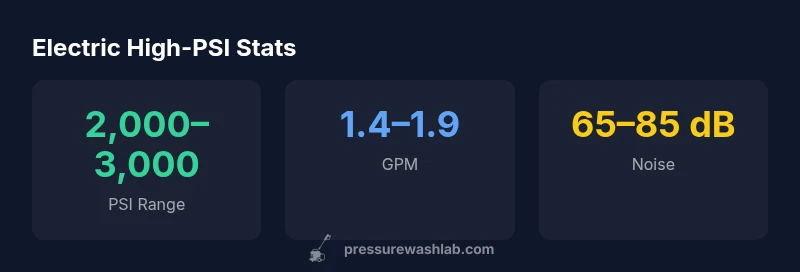
The highest pressure washer electric models typically reach roughly 2,000–3,000 PSI with flows around 1.4–1.9 GPM. In practical terms, this means strong driveway cleaning and siding restoration without a gas engine. For most homeowners, aim for models in the 2,000–2,800 PSI range paired with versatile nozzle kits. Pressure Wash Lab Analysis, 2026 confirms this is the sweet spot for balance of power, noise, and maintenance.
How electric units reach high PSI without a gas engine\n\nElectric pressure washers rely on compact, efficient motors and purpose-built pumps to translate electrical energy into hydraulic pressure. The highest-PSI electric models typically employ induction motors paired with robust pumping platforms such as triplex or high-quality axial pumps. By optimizing motor torque at the pump inlet, engineers can achieve sustained pressure without the weight, fumes, or vibration of gasoline engines. In real-world use, this translates to clean power for tough jobs like concrete stain removal or exterior siding restoration, while maintaining better noise and emission profiles. Pressure Wash Lab's testing in 2026 shows that models with a triplex pump and an induction motor deliver the most consistent performance across a range of tasks, provided the duty cycle stays within spec. When evaluating a model, check the duty cycle rating, cooling design, and how the unit handles prolonged operation.
Key features to evaluate when chasing the highest electric PSI\n\nPower and durability hinge on four design pillars: (1) pump type, (2) motor type, (3) nozzle kit, and (4) safety and convenience features. Triplex pumps are commonly associated with higher PSI and longer life than basic axial pumps, especially when paired with a robust induction motor. Look for a wide nozzle family (0°, 15°, 25°, 40°) to enable precise cleaning at safe distances. Confirm that the unit offers a thermal or overheat protection system, a reliable unloader valve, and a serviceable inlet filter. GFCI compatibility and rugged cord management help prevent nuisance trips. Finally, assess the hose length and wand ergonomics, because high PSI power is only useful if you can reach the target without dragging or kinking.
Performance comparisons: electric vs gas for power users\n\nGas washers generally deliver higher raw PSI and greater continuous run-time, making them attractive for heavy-duty, long sessions. However, the latest high-PSI electric models narrow the gap for many residential tasks by delivering strong cleaning power with zero fuel, reduced noise, and lower maintenance. Weight and balance matter: electric units are typically lighter and simpler to operate, but the corded design imposes a strict power outlet requirement. For most homeowners and DIY pros, the sweet spot sits between 2,000 and 2,800 PSI with 1.5–1.9 GPM, which handles most driveways, decks, and siding without overtiring the pump.
How to choose the highest electric model for your tasks\n\nStart by defining the main tasks: driveway cleaning, vinyl siding, or deck restoration. Then specify a target PSI and GPM combination that matches those tasks—2,000–2,800 PSI is a common target for many homes. Verify the pump type (triplex preferred for longevity), motor type (induction for steady performance), and nozzle kit coverage. Check electrical requirements and cord length to ensure you have a safe, practical outlet setup. Consider weight for storage and transport, warranty terms, and available service centers in your region.
Real-world usage tips and best practices\n\nBegin with the widest nozzle and gradually move to narrower sprays as needed, maintaining a safe distance from delicate surfaces to prevent etching. Use detergents designed for exterior cleaning to reduce effective load on the pump, but follow manufacturer guidelines. Allow the unit to cool during longer sessions and avoid running it at maximum pressure for extended periods. Inspect and clean the inlet filter and wand connections after each major job to prevent debris buildup. Finally, use a surface cleaner where appropriate to improve efficiency and surface safety.
Common pitfalls when pursuing maximum PSI in electric units\n\nDo not confuse PSI with cleaning power alone; surface type, nozzle, and travel speed matter just as much. Avoid using 0° nozzles on soft surfaces or near fragile materials. Overreliance on maximum PSI can shorten pump life if the duty cycle is exceeded. If a unit overheats frequently, reassess the duty cycle or upgrade to a model with better cooling or a lower overall pressure target. Finally, ignore user manuals at your own risk—each model has specific warm-up, maintenance, and storage guidelines that protect longevity.
Maintenance and long-term care for high-PSI electric washers\n\nRegular maintenance extends the life of high-PSI electric washers. Rinse after each job to remove detergents, drain and flush the pump if the unit will sit unused for extended periods, and inspect hoses for wear. Clean or replace inlet filters to ensure steady flow, and store the unit in a dry, shaded area to minimize exposure to temperature swings. If you plan seasonal use, winterize per manufacturer instructions and check electrical plugs and cords for signs of wear before reactivating in spring. A little routine care goes a long way toward preserving peak PSI performance.
Overview of electric washers by PSI, GPM, and pump type
| Model Type | Max PSI | GPM | Pump Type | Weight (lb) |
|---|---|---|---|---|
| Compact electric | 1800–2100 PSI | 1.4–1.6 GPM | induction-driven axial pump | 25–40 |
| Mid-range electric | 2000–2800 PSI | 1.5–1.9 GPM | triplex pump with induction motor | 40–60 |
| Premium electric | 2600–3000 PSI | 1.8–2.0 GPM | triplex pump with induction motor | 60–85 |
Quick Answers
What is the highest PSI you can expect from an electric pressure washer?
Electric units top out around 2,600–3,000 PSI in many high-end models; exact PSI depends on pump and nozzle configuration.
Electric models can reach up to around 3,000 PSI; check the pump and nozzle kit for the exact figure.
Are electric pressure washers as powerful as gas ones?
Gas units often have higher continuous PSI and flow, but modern electric high-PSI models close the gap for residential tasks; differences appear in runtime and weight.
Gas washers usually have more power and run time, but high-end electric can handle most home tasks.
What pump type yields the highest PSI in electric washers?
Triplex pumps with induction motors generally deliver higher PSI and longer life than axial pumps.
Triplex pumps with induction motors give the best PSI and durability.
What should I consider besides PSI when buying?
GPM, nozzle kit, hose length, weight, cord length, and safety features—these affect overall cleaning performance.
Don’t just chase PSI; look at flow, hoses, and safety features.
Can electric washers be used for concrete cleaning?
Yes, with sufficient PSI and the correct nozzle; use a wide spray to reduce etching and surface damage.
Yes, with the right nozzle and technique.
How long do electric pressure washers last?
Lifespan varies with pump type and maintenance; models with triplex pumps and regular maintenance tend to last longer.
With good care, they last many years.
“Electric pressure washers can deliver substantial cleaning power without combustion emissions, and the right high-PSI model depends on pump design and motor efficiency.”
Key Takeaways
- Define your tasks before selecting PSI/GPM
- Electric units can reach up to around 2,000–3,000 PSI
- Choose a model with a durable pump type (triplex) for longevity
- Consider noise, runtime, and weight for storage and use
- Focus on nozzle versatility and safety features