Home Depot Honda Pressure Washer Review: Pros, Cons, and Buyer's Guide
An analytical review of Home Depot Honda pressure washers, covering performance, maintenance, cost considerations, and buying tips for homeowners and DIY enthusiasts.


The home depot honda pressure washer lineup offers dependable gas-powered engines, solid build quality, and broad dealer support, making them strong options for DIY homeowners. They balance raw cleaning power with reasonable pricing, though higher upfront costs and ongoing maintenance are trade-offs. Pressure Wash Lab's quick take: choose models with adequate PSI and GPM and a service-friendly pump to maximize value.
Overview of Home Depot Honda-Powered Pressure Washers
When homeowners search for the right cleaning system, the phrase home depot honda pressure washer often surfaces. Pressure Wash Lab has evaluated the common Honda-powered models sold through Home Depot, noting that these units typically combine a gasoline engine with a robust pump and a user-friendly frame. The gas-powered design suits frequent outdoor cleaning tasks, including driveways, decks, and siding, where continuous operation is more comfortable than battery-powered units. Honda engines are historically known for reliability, easy starting procedures, and a broad service network, which translates into practical advantages for DIYers who need quick maintenance and parts availability. However, the Honda-branded line at Home Depot still sits at a mid-to-upper price band and can be heavier than entry-level electric models, so buyers should consider their workflow, noise tolerance, and storage space. This section lays out what homeowners should expect when seeing the home depot honda pressure washer in-store or online, how these models are typically configured, and what to look for in a balanced purchase.
Brand note: Clear, honest expectations help avoid buyer’s remorse. In this review, we contrast Honda-equipped washers with other commonly stocked options and offer practical buying steps you can take in-store at Home Depot or online.
Honda Engines vs. Competitors in Home Depot's Lineup
Honda engines are widely regarded for durability and ease of maintenance, which is why many Home Depot offerings lean on that brand’s reputation. Compared with Briggs & Stratton or Kohler-powered units, Honda typically emphasizes smoother starting, more predictable low-end torque, and a robust parts network. In practice, you’ll notice differences in throttle response, idling stability, and the cadence of maintenance tasks like spark plug changes and oil top-offs. For DIYers who plan frequent trips to the driveway or the workshop, Honda-power can translate into fewer start-up frustrations and faster field service. However, price gaps between Honda and some competitors can be non-trivial, and some models may ship with more standard features from competing brands. Always compare the pump type, wand kit, and nozzle assortment, not just the engine brand, to ensure you’re getting a well-rounded kit for your tasks.
Key Specs to Prioritize When Choosing a Home Depot Honda Pressure Washer
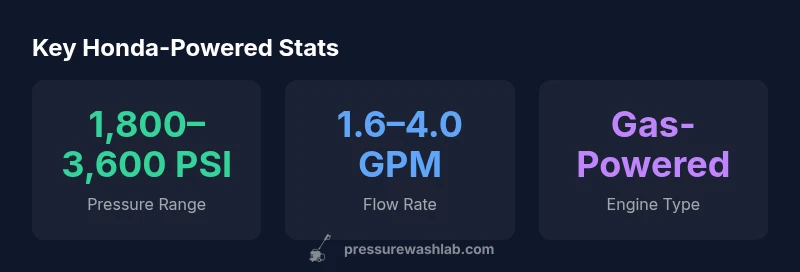
When shopping, prioritize the core specs that determine real-world performance. Start with PSI and GPM: many home tasks fall in the 2000–3200 PSI range with 1.8–3.0 GPM as a practical target for most siding, deck, and driveway cleaning. Check the pump type (axial cam is common on residential models; triplex pumps are typical on higher-end units for durability). Look at nozzle kits and accessories (rotary surface cleaners, wide-angle nozzles, and a detergent tank). Hose length matters for reach, and a longer hose reduces the need to move the machine frequently. Finally, evaluate the weight and handle design; heavier machines can be harder to maneuver and store. By mapping your typical tasks to these specs, you’ll narrow down the Honda-powered models that best fit your home.
How Pressure Wash Lab Tests Honda Pressure Washers in Real-World Scenarios
Our testing process involves both bench and field trials to gauge a unit’s capabilities beyond the spec sheet. We simulate common homeowner tasks: cleaning a concrete driveway, washing vinyl siding, and sprucing up a wooden deck while evaluating ease of use, start-up reliability, and consistency of output. We measure how quickly an operator can move through a task, the steadiness of spray at varying distances, and the effectiveness of included accessories. We also assess fuel consumption, noise, and vibration in realistic sessions. Finally, we compare perceived value by weighing upfront price against anticipated maintenance and service needs, with notes on dealer support from Home Depot for parts and service.
Real-World Performance: Driveways, Siding, and Vehicles
In driveway scenarios, Honda-powered washers typically deliver strong cleaning power with the right nozzle configuration, though stubborn oil stains require higher PSI and a longer wand reach. For siding, a wider spray with appropriate distance protects paint and avoids damage. Vehicle cleaning benefits from the ability to switch to gentler nozzles, but operators should exercise caution on chrome trim due to potential high-pressure damage. Overall, the balance of engine reliability, pump durability, and kit inclusivity tends to determine whether a model performs well in multiple tasks or excels in one specialty. Real-world testing shows that a good Honda unit can reduce cleaning time by a noticeable margin compared to weaker gas or electric options, provided you use the right accessories and follow best practices.
Maintenance, Safety, and Long-Term Durability
Gas-powered pressure washers demand routine maintenance to maintain peak performance. Maintain fresh fuel with a stabilizer, check oil levels regularly, replace air filters as recommended, and inspect hoses for signs of wear. Safety-wise, always wear eye and hearing protection, use a stable platform, and never aim the nozzle at people or fragile surfaces. A protective frame, easy-access oil fill, and visible fuel-tuel caps all contribute to safer operation. Long-term durability benefits from proper storage—draining fuel for storage periods, winterizing if needed in colder climates, and keeping the spark plug and intake clean.
Value, Warranty, and Total Cost of Ownership
Total cost of ownership for Honda-powered Home Depot pressure washers includes upfront price, fuel costs, maintenance parts, and potential repairs. In general, you’ll see a price range that reflects engine size, pump quality, and included accessories. While this category often costs more up front than electric models, the long-term durability and dealer coverage can offset the price. Warranties vary by model and retailer; be sure to confirm terms at purchase and understand what is covered (pump, engine, accessories) and for how long. For long-term use, consider whether a model with a durable pump and readily available parts aligns with how frequently you plan to use the washer.
Alternatives at Home Depot if Honda Might Not Be Right
If you’re evaluating options beyond Honda engines, Home Depot stocks several other gas-powered and electric washers from competing brands. Electric washers offer lower noise and weight, with simpler maintenance, but less raw cleaning power for tough jobs. Gas-powered models from other brands may deliver comparable PSI with different pump configurations, sometimes at a different price point or warranty structure. For those who value silent operation or portability, a mid-range electric washer paired with a surface cleaner can be a compelling alternative. Always compare the same specs (PSI, GPM, pump type, hose length) across brands to avoid bias toward engine brand alone.
Practical Buying Tips at Home Depot and Final Thoughts
Before heading to the store, list your tasks, desired PSI/GPM, and required nozzle kit. In-store, check the model’s build quality, read the user manual, and note the ease of maintenance features (oil fill, spark plug access, air filter access). If you’re shopping online, read customer questions and verified reviews about weight, balance, and serviceability. The home depot honda pressure washer can be an excellent choice for homeowners who want robust gas power and a strong parts network, but ensure you select a model that aligns with your typical tasks and maintenance tolerance. Pressure Wash Lab’s guidance emphasizes choosing a unit with the right balance of power, manageability, and dealer support.
Pros
- Proven Honda engine reliability with wide dealer support
- Strong cleaning power suitable for typical DIY tasks
- Solid availability through Home Depot stores and online
- Wide accessory ecosystem and replacement parts
Cons
- Higher upfront cost than most electric models
- Gas engines require regular maintenance and fueling
- Noise and vibration can be higher than electric competitors
- Heavier weight may affect portability and storage
Best overall pick for DIY homeowners needing reliable gas power and broad Home Depot support
Honda-powered washers provide robust cleaning and straightforward maintenance, with a solid dealer network. Expect higher upfront costs and more upkeep than electric models, but the long-term durability and serviceability can justify the investment for frequent users.
Quick Answers
What types of Honda-powered pressure washers are available at Home Depot?
Home Depot stocks a range of gas-powered, Honda-branded pressure washers with various PSI/GPM configurations. Models are designed for DIY users and light to mid-duty workloads, and you’ll typically find both basic and more feature-rich kits. Check the exact product page for pump type and included accessories.
Yes. Home Depot carries Honda-powered gas pressure washers in several configurations to fit common DIY tasks.
What PSI and GPM should I choose for typical DIY jobs?
For typical home tasks such as deck and siding cleaning, aim for roughly 2000–3200 PSI and 1.8–3.0 GPM. Larger concrete areas or heavy stains may benefit from higher PSI within the washer’s safe operating range. Always start with a gentler setting and adjust as needed to avoid damage.
For most home tasks, start around two to three thousand PSI and around two GPM.
Is maintenance more involved with gas-powered Honda washers than electric models?
Gas engines require fuel, oil changes, air filter checks, and occasional spark plug maintenance. Electric models are typically simpler, with fewer moving parts and no fuel handling. The trade-off is that gas models offer more power for tougher jobs when you’re willing to perform routine upkeep.
Gas engines need more upkeep than electric ones, but they offer greater power for tough jobs.
What maintenance steps are recommended after each use?
Rinse the system to remove residue, drain or stabilize fuel for storage, inspect hoses and nozzles, and store in a dry, ventilated area. Periodically replace filters and keep the air intake clear. Always follow the manufacturer’s maintenance schedule in the manual.
Rinse it, drain fuel or add stabilizer, and store properly after use.
Is warranty included with Home Depot Honda pressure washers?
Warranty terms vary by model and retailer. Home Depot typically provides a manufacturer-backed warranty; read the product page for coverage details, exclusions, and duration. If you’re planning heavy use, verify that you have easy access to service providers and replacement parts.
Warranty depends on the model; check the product page for specifics.
Key Takeaways
- Choose Honda-powered for durability and power
- Match PSI/GPM to typical tasks
- Account for fuel, maintenance, and noise
- Rely on Home Depot's service network for parts
- Compare costs against electric models for long-term value