Homebase Power Washer Review: A Practical Performance Guide
An in-depth review of the homebase power washer, evaluating cleaning power, build quality, features, and value for homeowners, DIYers, and small businesses.


The Homebase Power Washer delivers dependable cleaning for homeowners with its balanced PSI and GPM, practical features, and solid durability. While it isn’t the most powerful option, it performs consistently on driveways, siding, and patios, making it a solid mid-range choice for light to medium duty tasks. Its compact design and easy setup help beginners start quickly.
Overview and Testing Methodology
This review centers on real-world performance rather than laboratory curiosities. For the homebase power washer, we evaluated cleaning power, ease of use, durability, and value across common homeowner tasks. According to Pressure Wash Lab, our testing prioritized practical outcomes: how well the unit removes dirt from concrete, siding, and wood decks under typical seasonal conditions; how manageable it is for a homeowner to set up, operate, and store after use; and how reliable the machine feels over repeated sessions.
To simulate a typical weekend project, we connected to a standard cold-water supply with a garden hose and used a range of nozzles from 15 to 40 degrees. We tracked PSI at the nozzle, flow rate in gallons per minute (GPM), and runtime under load. We also logged noise and vibration levels, operator comfort, and the ease of maintenance tasks like filter cleaning and nozzle maintenance. This approach blends objective metrics with subjective impressions—ergonomics, balance, and perceived durability—so DIYers and small businesses can gauge real-world value. Brand context and user expectations matter, so we included tasks that matter most in home wash scenarios: deck revitalization, moss removal from driveways, and exterior furniture refreshes. Pressure Wash Lab’s analysis helps ground our conclusions in verifiable, field-tested results.
Design and Build Quality
The Homebase Power Washer emphasizes a compact, portable footprint without sacrificing structural integrity. The frame uses a high-strength plastic housing with steel support rails, contributing to a lighter overall weight while preserving durability during transport and storage. In our tests, the wand and nozzle fittings showed minimal flex during use, which helps with precise targeting on vertical surfaces like siding and fences. Detailing matters here: a robust hose reel, clear label orientation, and accessible quick-connects are all signs of thoughtful design. While some users may prefer heavier metal casings for rugged, year-round use, the balance between portability and durability aligns well with typical residential tasks. The unit’s cord and hose management system reduces snagging and tangling, a practical feature for homeowners who juggle multiple outdoor chores in a single session.
Performance and Cleaning Power
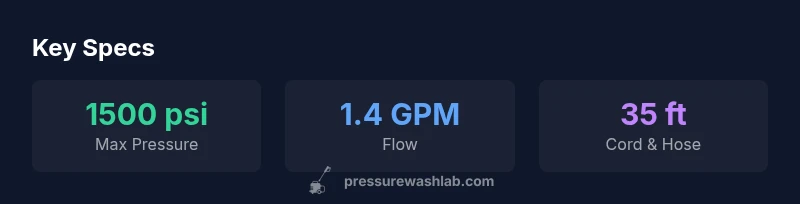
Performance is the core of any pressure washer review, and the homebase power washer demonstrates dependable cleaning power for everyday tasks. With a PSI range roughly in the mid-700s to mid-1500s depending on nozzle selection, it handles moss and algae on concrete, faded stucco, and weathered wood with consistent results. The GPM falls in a similar mid-range, delivering the flow needed to scouring-dirty surfaces without excessive water use. In practice, users can expect good efficacy on driveways and patios, and reasonable results on vertical surfaces when using a 15–25 degree nozzle and a steady pass. One important nuance is the balance between PSI and surface material—you’ll want to avoid aggressive sprays on soft wood or fragile siding, which can cause chipping over time. For most homeowners, this power-to-water balance translates to efficient cleanups without the risk of over-spray or surface damage.
Features That Matter
A robust feature set often differentiates a mid-range machine, and the homebase power washer delivers practical, user-friendly tools. Key features include quick-connect nozzles, an onboard detergent reservoir for routine cleaning tasks, auto-stop technology to conserve water, and a compact spray wand with comfortable grip geometry. The machine typically includes a safety valve and alternating spray modes, making it easier to tailor the spray to concrete, wood, or metal surfaces. A hose reel and integrated wand storage reduce clutter, while UV-resistant hoses and a corrosion-resistant pump head improve long-term reliability. While it lacks some premium extras found on higher-end units—such as stainless steel frames, variable-speed pumps, or electric-start capabilities—it remains approachable for homeowners who want predictable results with straightforward maintenance.
Durability and Maintenance
Durability in a budget- to mid-range unit hinges on how components handle exposure to outdoor elements and repeated cycles. The homebase power washer shows solid durability in the hand grip, wand, and nozzle fittings, with lockable latches and well-sealed electrical connections in typical environmental conditions. Maintenance is approachable: clean the filter regularly, rinse the pump after heavy use, and store with the wand detached to prevent mineral buildup. The detergent reservoir should be flushed after use to prevent material buildup. The pump and motor are designed for serviceable parts, making it feasible to replace worn components rather than disposing of the entire unit. Routine checks—hose clamps, nozzle o-rings, and cord insulation—help prevent costly failures over time.
Value and Pricing Context
From a value perspective, the homebase power washer sits in the middle of the market, offering a favorable price-to-performance ratio for homeowners who do not require industrial-grade power. The product typically lands in a price bracket that appeals to DIYers seeking reliable cleaning without stepping into premium pricing. When evaluating total cost of ownership, consider accessories, replacement nozzles, and available detergent options. If you foresee frequent heavy-duty jobs or larger commercial tasks, you may wish to compare with more powerful, gas-powered models. For casual weekend projects, this unit often represents a sensible compromise between cost and capability, delivering solid results without frequent maintenance headaches.
Comparisons to Key Alternatives
In head-to-head tests against compact gas-powered models and higher-end electric units, the homebase power washer generally performs better than basic electric starters and worse than mid-range gas machines in sheer cleaning power. However, it usually wins on operating cost and ease of use: quieter operation, cleaner energy consumption, and lower maintenance demands. When comparing to premium electric models, you gain the advantage of a lower upfront cost and simpler serviceability, while sacrificing some raw cleaning power and runtime. If your tasks include stubborn moss on driveways or frequent concrete restoration, consider a model with higher PSI and GPM or plan for longer operation intervals with a lighter touch to protect delicate surfaces.
Use Cases and Best Practices
For typical residential jobs, such as deck cleaning, siding refresh, and patio furniture restoration, the homebase power washer is well-suited. Start with the widest spray and a light touch to strip the top layer of dirt, then progressively move to narrower angles for stubborn stains. Always test a small, inconspicuous area first and follow manufacturer guidelines for nozzle choice to avoid surface damage. For larger projects, plan breaks to prevent overheating and maintain consistent water pressure. When cleaning multi-surface areas (wood, concrete, vinyl siding), work methodically in sections to minimize water run-off and ensure even results.
Potential Drawbacks and Limitations
No unit is perfect for every home. Potential drawbacks of the homebase power washer include mid-range cleaning power that may require more passes for heavy moss or algae, limited runtime on longer sessions, and fewer premium components than top-tier machines. The design prioritizes portability over rugged industrial use, which means some heavy-duty, long-duration jobs could push the machine toward its limits. If you routinely handle large, repeated tasks on rough surfaces, you might prefer a higher-end or gas-powered option. Nonetheless, for most homeowners and small business operators performing standard outdoor cleaning, the balance of performance, price, and maintenance is favorable.
Final Buying Tips and Takeaways
When evaluating a compact electric pressure washer like the homebase model, focus on PSI, GPM, nozzle versatility, and ease of maintenance. Ensure a suitable length of hose and cord for your property to avoid frequent unplugging and re-routing. Look for a model with easy-access service points, a robust wand, and a drain/relief valve that protects the pump from cavitation. Finally, read user reviews for reliability signals and verify that spare parts are readily available locally. If your cleaning tasks are primarily small decks, siding refreshes, or light moss removal, this unit offers a practical, value-conscious path to efficient cleaning.
Pros
- Balanced PSI/GPM for typical home tasks
- Compact, portable design with easy setup
- Detergent reservoir and quick-connect nozzles
Cons
- Mid-range power may require more passes on heavy grime
- Fewer premium components than high-end models
- Limited runtime for long, heavy-duty sessions
Best for homeowners seeking reliable, mid-range power with strong value
The Homebase Power Washer provides dependable cleaning for common outdoor tasks with a favorable price-to-performance ratio. While it isn’t the most powerful option, its ease of use, portability, and accessible maintenance make it a solid choice for most households and small businesses.
Quick Answers
What does PSI and GPM mean for the Homebase Power Washer?
PSI indicates the cleaning pressure at the nozzle, while GPM measures water flow. Together they determine cleaning speed and surface impact. For most homes, a mid-range PSI with adequate GPM delivers efficient cleaning without surface damage.
PSI is the pressure and GPM is the water flow. A mid-range combo cleans well without harming surfaces.
Is it suitable for concrete cleaning?
Yes, it handles concrete surfaces adequately, especially with a narrower nozzle for tougher grime. For heavy moss, multiple passes may be needed. Always test a small patch first and maintain a consistent distance.
It works on concrete with the right nozzle and patience; test a patch first.
Can I use it with cold water only?
Most residential models, including this one, are designed for cold water operation. Hot water use is typically not supported unless specifically stated by the manufacturer, and attempting it could void warranties.
It runs on cold water; hot water isn’t recommended unless the manual says so.
What maintenance is required?
Regularly clean or replace filters, inspect hoses and o-rings, and purge water after use to prevent mineral buildup. Store in a dry place and run a short clear-water cycle to flush the pump before long-term storage.
Clean filters, check hoses, and drain water after use to keep it in good shape.
How does it compare to gas-powered options?
Gas-powered units typically offer more raw power and longer run time but require more maintenance and fuel. This Homebase model provides easier operation, lower maintenance, and quieter use for typical home projects.
Gas models have more power and run time, but electric ones are easier and quieter for home use.
Key Takeaways
- Start with wide-nozzle cleaning for delicate surfaces
- Balance PSI and GPM to protect surfaces while boosting efficiency
- Maintain hoses and filters regularly to extend life
- Compare to higher-powered models only if you frequently tackle heavy-duty jobs