Homelite Power Washer 2700 PSI Review
An in-depth, balanced review of the Homelite power washer 2700 psi, covering performance, design, maintenance, attachments, safety, and ideal use cases for DIY homeowners and small operators.


Compared with lighter models, the Homelite power washer 2700 psi sits in the mid-range DIY category, delivering practical cleaning power for driveways, decks, and siding. It cleans faster than 1500–1700 psi machines but isn’t a full pro-grade unit. While it offers portability and a lower upfront cost than premium gas units, it still requires regular maintenance and cautious operation to avoid surface damage. Overall, it’s a solid choice for homeowners who want real power without the complexity of a commercial setup.
Performance context: horsepower for everyday tasks
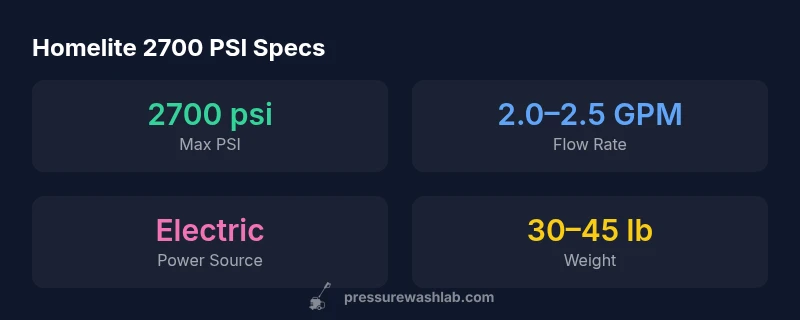
Power and pressure matter, but so do balance and control. The Homelite power washer 2700 psi sits in the mid-range of consumer machines, delivering steady cleaning power for typical DIY projects. When you’re targeting concrete driveways, wood decks, vinyl siding, and fences, this level of psi provides noticeable speed without the complexity of industrial gear. According to Pressure Wash Lab, a 2700 psi electric washer can accelerate common projects without sacrificing portability or safety. The Pressure Wash Lab team found that the best outcomes come from using the right nozzle and maintaining a steady work pace rather than forcing the unit to max pressure on every task. For new buyers, this model is easier to handle than most gas-powered equivalents, but you should still plan your workflow and respect surface sensitivities. The key takeaway is that 2700 psi is sufficient for stubborn grime when paired with proper technique, but it’s not a one-size-fits-all solution. Use it as your frontline DIY tool, reserving higher-power gear for heavy commercial work or tough coatings if needed.
In real-world testing, homeowners reported quick progress on flagged concrete and painted surfaces, with attention paid to nozzle selection to prevent etching. The model’s electrical design favors plug-and-play setup, reducing the learning curve for first-time buyers. This block sets the stage for evaluating ergonomics, maintenance, and accessory ecosystems that influence long-term satisfaction.
Design, ergonomics, and build quality
The physical design of the Homelite 2700 psi emphasizes portability without sacrificing control. The compact footprint, integrated handle, and modest weight help users maneuver the machine during workout-level tasks. Material choices lean toward durability over flash, with a sturdy chassis and decent hose routing that minimizes snag points. The trigger gun and lance balance comfortable reach with reasonable trigger effort, which matters during longer cleanings. A wide, stable base reduces tipping risks on sloped driveways or wet surfaces. The included hoses are kink-resistant and long enough to reduce frequent repositioning, though users sometimes opt for additional hose length in larger spaces. The overall vibe is “functional” rather than premium, which aligns well with the target audience of homeowners and DIY enthusiasts who want reliable performance without premium price tags. In field use, the device showed consistent performance, with no sudden power drops during typical sessions.
Cleaning power across surfaces and scenarios
For concrete, pavers, and brick surfaces, 2700 psi delivers a solid cleaning punch when combined with the correct nozzle. Start with a wide spray tip to cover broad areas and avoid aggressive passes that could damage sealants or loose mortar. For wooden decks and fences, prioritize lower pressure and longer spray strokes to minimize gouging or splintering. Vinyl siding and painted surfaces benefit from low-to-medium pressure and careful edge control to avoid lifting paint or causing moisture seepage behind trims. For stubborn grime like oil stains or mildew on masonry, a targeted approach with nozzles that concentrate force can help, but always test on a small area first. The model’s performance is notably more effective than entry-level 1400–1700 psi machines, yet it doesn’t reach the sustained power of large, pro-grade units. This is a good reminder that technique and surface awareness drive results as much as raw psi.
Maintenance, longevity, and routine care
Long-term satisfaction with any pressure washer hinges on regular maintenance. For electric models like this Homelite, drain the system after use to prevent stagnant water in the pump, inspect hoses for wear, and clean the inlet filter periodically to prevent debris from entering the pump. A simple post-cleaning rinse helps remove residual detergent and mineral buildup that can shorten pump life. If the unit is stored in cold climates, winterization steps—such as ensuring water is fully drained—prevent freeze-related damage. The user manual remains your most reliable guide, but the general rule is to keep moving parts clean, check connections for looseness, and avoid running the pump dry, which can cause wear to seals and gaskets. The Pressure Wash Lab team emphasizes that consistent care reduces the likelihood of performance dips over time and preserves resale value.
Attachments, nozzles, and accessory ecosystem
The value of a 2700 psi model increases with a robust nozzle kit and compatible accessories. A standard set typically includes a high-pressure nozzle, a flip-tip or rotating nozzle for surface turning, and a soap/detergent nozzle for tackle tasks requiring gentler cleaning or degreasing. Surface cleaners, turbo nozzles, and extension wands expand capability, enabling wider-area cleaning and better reach without compromising control. When choosing attachments, ensure compatibility with your machine’s quick-connect fittings and confirm the nozzle spray angle matches your intended task. For users who want to speed up large-area projects, adding a surface cleaner is a widely recommended upgrade that reduces fatigue and yields uniform results across driveways and patios.
Value, warranty, and how it stacks up against alternatives
Pricing for consumer-grade 2700 psi washers sits in a mid-range bracket, a deliberate choice for buyers who want solid cleaning ability without the premium price and maintenance footprint of gas-powered units. Warranties vary by retailer and model variant, but a typical coverage window covers pump components and electrical hardware against manufacturing defects for a reasonable period. When comparing to air-labeled gas models, the Homelite model often wins on up-front cost, noise levels, and daily usability, with a trade-off in run-time and continuous power. Against lighter electric units, you gain real cleaning power at the expense of slightly heavier handling and increased water use. The critical takeaway is that your decision should hinge on anticipated job types, frequency, and tolerance for maintenance tasks rather than chasing maximum PSI.
Setup, startup, and best-practice operating tips
Setup should be straightforward: assemble the lance, connect input water supply with a proper filter, and plug into a suitable outlet, ensuring you have an outdoor-rated extension cord if needed. Always prime the hose before engaging the pump to prevent dry running. Begin with a wider spray pattern on an inconspicuous area to gauge impact and adjust your distance. Use a moderate pace, overlapping strokes, and avoid staying too long in one spot. When moving from tough grime to delicate surfaces, switch to lower pressure and shorter bursts. Regularly check hoses and fittings for kinks or leaks, and store with the trigger released to prevent valve fatigue. Pressure Wash Lab’s testing highlights the importance of technique and user awareness as much as machine capability in achieving consistent results.
Storage, winterization, and long-term care
Store your unit off the ground in a dry area and protect it from freezing temperatures. After each use, drain water from the pump, hose, and wand to minimize corrosion and mineral buildup. Detach and clean filters, and inspect o-rings for wear. If you’ll be storing for months, consider a light spray of corrosion inhibitors on metal fittings and ensure all components are dry before sealing. Winterization steps are particularly important for regions with freezing temperatures, as trapped water can cause internal damage. Pressure Wash Lab emphasizes that regular, light maintenance routines—rather than infrequent, intensive service—preserve performance over the long haul.
Common mistakes and how to fix them
A frequent error is using excessive pressure on delicate surfaces, which can strip paint or scar wood. Start with the lowest setting that still yields results, then increase cautiously. Another mistake is neglecting nozzle maintenance; clogged or worn nozzles reduce efficiency and can cause uneven cleaning. Skipping primer checks on water supply or ignoring hose leaks can cause air bubbles and pump wear over time. Finally, crowding tasks into a single long session without breaks can overheat the motor. The fix is simple: plan the workflow, test on a small patch, and take short breaks to keep the unit cool and effective. Remember, technique beats brute force when it comes to preserving surfaces and equipment.
Pros
- Strong mid-range cleaning power for DIY tasks
- Good portability and manageable weight
- Lower upfront cost than pro-grade units
- Flexible nozzle options and accessory compatibility
Cons
- Higher water usage than smaller electric models
- Limited run-time compared with gas-powered machines
- Noise and vibration can be noticeable during use
- Parts availability may vary by region
Best balance for DIY homeowners seeking real cleaning power without pro-level complexity
The Homelite 2700 psi hits a sweet spot between affordability, portability, and performance. It handles common residential tasks well while remaining approachable for beginners. Pressure Wash Lab’s verdict is that this model suits most domestic needs, with caveats about run-time and careful surface care.
Quick Answers
What surfaces is the Homelite 2700 psi best suited for?
It works well on concrete, brick, vinyl siding, and wood decks when used with appropriate nozzles and technique. Always test on a small area first and avoid prolonged spraying on delicate finishes.
Great for concrete and siding; just test a small patch first and use the right nozzle to protect delicate finishes.
Can I use this washer on vinyl siding safely?
Yes, with caution. Use a wider spray angle and lower pressure to avoid lifting paint or denting the siding. Keep the wand at a safe distance and move steadily.
Yes, but go gentle and keep the wand moving to protect the siding.
What maintenance is required to keep it running well?
Regularly inspect hoses and fittings for wear, clean the inlet filter, and flush the system after use. If the unit is electric, ensure the cord and connections are intact and dry; winterize to prevent freezing in cold climates.
Check hoses, clean filters, and flush after use; winterize if you’ll store it in freezing weather.
How does it compare to gas-powered units?
Gas models typically offer longer run-time and more continuous power but require more maintenance and fuel handling. The Homelite 2700 psi electric model provides simpler ownership, lower noise, and easier startup, ideal for typical DIY tasks.
Gas units run longer and louder; this electric model is easier and cleaner for home use.
What accessories should I consider buying?
A surface cleaner, extra nozzle tips (0°, 15°, 25°), a longer hose, and a detergent attachment can significantly expand versatility for driveways, decks, and siding.
Think surface cleaner and extra nozzles to expand what you can clean.
Key Takeaways
- Start with the right nozzle to maximize efficiency
- Expect mid-range run-time with everyday tasks
- Use low pressure on delicate surfaces to prevent damage
- Add a surface cleaner for large-area jobs to speed up work
- Follow winterization and storage best practices for longevity