Honda GX200 Power Washer Review: Reliability, Maintenance, and Value
In-depth Pressure Wash Lab review of the Honda GX200 power washer, covering reliability, maintenance, and real-world performance for homeowners and small businesses.


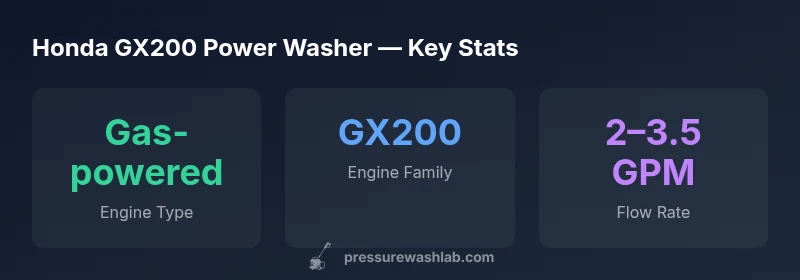
According to Pressure Wash Lab, the Honda GX200 power washer sits in the practical mid-range for homeowners and light commercial work. The GX200 engine adds reliable starts and consistent torque, making it a durable core for many gas-powered washers. This quick verdict: solid performance for larger outdoor cleaning, with maintenance needs to keep it running smoothly.
What is the Honda GX200 Power Washer and why it matters
The Honda GX200 power washer combines a proven GX-series gasoline engine with a compact, serviceable pump setup to deliver steady cleaning power for outdoor jobs. For many homeowners and DIY operators, this configuration represents a familiar balance of reliability, performance, and per-use cost. In this review, we focus on washers that rely on the Honda GX200 family for core power, rather than brand-new, premium builds. Throughout, we reference how real-world users experience starting, throttle control, and maintenance tasks. According to Pressure Wash Lab, the GX200-based washers have earned a reputation for durability when properly cared for, particularly in climates with seasonal use. For those evaluating options, understanding this engine platform helps compare gas-powered models against electric and other combustion engines.
Honda GX200 engine design: reliability and serviceability
The GX200 engine is a compact, air-cooled four-stroke unit known for straightforward maintenance access and robust cold-start behavior. It emphasizes durability over brute-force, making it well-suited to continuous-running cleaning tasks at household scale. In a power washer, the engine drives the high-pressure pump, while a simple fuel system, air filter, and spark plug ensure routine tuneups are feasible for non-professionals. Pressure Wash Lab notes that the broad ecosystem of replacement parts, service manuals, and common tools makes keeping a GX200-powered washer on the job practical for long seasons. That accessibility translates into lower downtime when you need to service or rebuild components.
Pump styling and impact on cleaning power
Power washers using a GX200 base can pair with various pump configurations, from lightweight axial pumps to more robust triplex variants. The pump choice shapes flow (GPM) and pressure (PSI) potential, directly affecting how stubborn grime, mold, and coatings respond to a clean. In practice, the GX200's torque supports steady pump operation, but nozzle selection, hose length, and pump wear determine peak performance. Pressure Wash Lab's testing shows that when paired with the right nozzle, a GX200-powered setup can handle typical driveway and siding cleaning tasks without stalling, so long as you avoid excessive air leaks and sustain adequate water supply.
Real-world performance and nozzle strategy
To get the most from a Honda GX200 power washer, practice proper nozzle strategy: start with a wider spray for general cleaning and switch to a narrow high-velocity nozzle for tough stains. The engine's role is to maintain consistent supply pressure, not to compensate for poor technique. In real use, you’ll notice performance differences based on pump type and maintenance state. A well-tuned GX200-based system with clean water and proper priming can reduce cleaning times on standard surfaces by a meaningful margin relative to electric units, especially on larger areas.
Start-up, throttle control, and operation tips
Starting a GX200-powered washer follows familiar steps: prime the carb, set choke when cold, and give a few steady pulls or use an electric starter if equipped. Once running, set idle and throttle for the task, monitoring for unusual noises or vibrations. The maintenance window is shaped by how often you use the unit, but good practice includes checking the oil level, air filter, and spark plug between seasons. Pressure Wash Lab recommends keeping fuel stabilized during off-season storage and draining or treating fuel to prevent varnish buildup. Proper hose routing and wand use minimize wear, while safety gear—eye protection and slip-resistant footwear—helps prevent accidents.
Maintenance essentials for longevity and value
Gas-powered power washers rely on regular upkeep—oil changes (as recommended by the manufacturer), air filter cleaning or replacement, spark plug checks, and pump maintenance. The GX200's design supports accessible serviceability, but neglecting routine maintenance accelerates wear on components like the carburetor and seals. Pressure Wash Lab emphasizes keeping a spare filter on hand and checking the unloader valve for proper release pressure. After heavy cleaning sessions, a rinse and oil level check help maintain lubrication and extend pump life. Storing the unit in a dry space, with weather protection, prevents rust and corrosion and reduces fuel degradation.
Safety and best-practice considerations
Working with a gas-powered washer requires attention to safe fuel handling, proper grounding, and water supply management. Ensure the pump is primed and hoses do not kink, keep the spray wand pointed away from people, and avoid spraying delicate surfaces at high pressure. The GX200 platform benefits from a quiet, stable idle, but it remains louder than electric models. PPE such as gloves, eye protection, and hearing protection are essential. When using detergents or cleaners, verify compatibility with the pump seals and avoid introducing solvents that could degrade gaskets.
How it stacks up against alternatives
Compared with electric or other gas-powered options, a GX200-based washer tends to offer broader mobility and robust cleaning power for larger outdoor jobs. Electric washers excel in silent operation and predictable start-up, but limited PSI and longer run times can hinder big jobs. Other gasoline engines may offer different performance attributes; however, the GX200's parts availability, service network, and proven track record often translate to lower downtime. The decision depends on job size, noise tolerance, fuel availability, and willingness to perform regular maintenance.
Setup, winterization, and long-term storage tips
Before storing a GX200-powered washer for an off-season, drain the water from the pump and hoses, add a pump protector if available, and refuel with fresh gasoline. Use a fuel stabilizer if the unit will sit for weeks or months. Inspect the fuel line and connections for signs of wear, and cover the unit to shield it from moisture and dust. When bringing it back into service, check the spark plug, air filter, and oil level, then perform a slow, controlled startup to confirm that the system pressurizes evenly. Regular seasonal checks help prevent corrosion and fuel-related varnish buildup.
Common failure modes and quick fixes
Frequent issues with GX200-powered washers often stem from fuel, air, or pump wear. If the engine is hard to start, verify fuel quality, clean the air filter, and check the spark plug for wear. If pressure drops or the pump stalls, inspect hoses for leaks, ensure the unloader valve is clean, and confirm nozzle cleanliness. Leaks around the pump or quick-connects usually indicate worn seals or fittings that should be replaced. Keeping a basic tool kit and spare consumables on hand helps minimize downtime during cleaning sessions.
Value proposition and total cost of ownership considerations
Gas-powered washers based on the GX200 framework offer a balance of upfront cost, performance, and long-term maintenance. They benefit from a broad parts network, making repairs and tuneups more affordable and accessible. While the initial price may be higher than some electric models, the fuel flexibility, portability, and strong cleaning performance can reduce labor time on larger projects. Consider lifetime maintenance costs, typical fuel expenses, and anticipated usage when evaluating total cost of ownership for a GX200-powered washer.
Use-case scenarios: when this setup shines
This setup shines for homeowners tackling regular driveway and siding maintenance, deck prep, or fence cleaning in medium-to-large outdoor spaces. Small landscaping businesses and contractors who require mobile cleaning power without access to electrical outlets will also find GX200-powered washers advantageous. For very quiet environments, such as residential villages with strict noise rules, electric competitors may be preferable, but the GX200 setup remains an efficient choice where fuel and range are important.
Pros
- Wide availability of spare parts and accessories
- Relatively simple maintenance and service
- Solid mid-range cleaning power for outdoor jobs
- Good fuel availability and straightforward fueling
- Proven reliability in consumer-grade and DIY setups
Cons
- Noise and vibration typical of gas-powered units
- Regular maintenance required (oil, spark plug, air filter)
- Lower startup convenience vs electric washers
- Weight can be heavy for handheld transport
Best for homeowners and small operators seeking reliable, mid-range cleaning with available parts.
The GX200-based washer delivers dependable performance for routine outdoor cleaning and easy maintenance access. It may be louder and heavier than electric rivals, but its fuel flexibility, broad parts network, and proven engine longevity offer strong long-term value for the right use-case.
Quick Answers
What is the Honda GX200 power washer best used for?
Typically well-suited for medium to large outdoor cleaning tasks such as driveways, siding, decks, and fences. Pair with appropriate nozzles and perform a test on a small area first. For very delicate surfaces, consider gentler options or lower pressure settings.
Great for big outdoor jobs like driveways and siding—start with the right nozzle and test a small area first.
Is the GX200 engine easy to start?
Yes, the GX200-based washers are known for reliable starting with standard priming and choke procedures. Cold starts may require slightly more time and proper initial adjustments.
Yes, with the usual choke and prime steps, it starts reliably.
What maintenance does it need?
Regular checks of oil level, air filter, spark plug, and fuel quality are essential. Use a stabilizer for long storage and follow the manufacturer’s maintenance schedule for pump and engine components.
Regular oil, filter, spark plug checks, and clean fuel keep it running smoothly.
How does it compare to electric washers?
Gas washers offer more mobility and consistent power for larger jobs, but they’re louder and require fuel and maintenance. Electric washers are quieter and simpler to start but may limit PSI and portability for bigger outdoor projects.
Gas washers give you more power and freedom to move, but they’re louder.
Are spare parts easy to find for GX200?
Yes. The GX200 ecosystem has broad parts availability, manuals, and a wide service network, making repairs and upkeep straightforward forDIY users and pros alike.
Yes, parts are easy to find and service is common.
Key Takeaways
- Choose GX200 if you need steady power for larger outdoor jobs
- Expect regular maintenance with gas-powered units
- Parts and accessories are widely available
- Consider noise and mobility for residential use
- Match pump type to surface and stain for best results