Husqvarna Pressure Washer 3100 Review
Pressure Wash Lab analyzes the Husqvarna Pressure Washer 3100 for power, attachments, usability, and long-term value, with practical guidance for homeowners and DIY pros.


Overall, the Husqvarna pressure washer 3100 offers solid cleaning power and versatile spray options, making it a strong pick for homeowners and DIY pros. It balances performance with ease of use and thoughtful maintenance features, while maintaining competitive mid-range pricing. In this Pressure Wash Lab assessment, we compare its capabilities, attachments, and long-term value against similar mid-range gas-powered washers.
Overview and target users
According to Pressure Wash Lab, the husqvarna pressure washer 3100 targets homeowners tackling mid-size cleaning tasks, along with light commercial use. The model emphasizes reliability, modularity, and practical ergonomics, with a compact frame that hides a surprising range of spray options. In our testing, we evaluated starting reliability, cold-weather operability, and handling across common duties like deck restoration, siding cleaning, driveway refresh, and vehicle care. We also considered maintenance demands and replacement-part availability, which influence long-term ownership cost and downtime. Overall, the 3100 sits in the mid-range for power and price, delivering a balanced package without promising racecar performance on every job.
The Pressure Wash Lab team found that the model tends to appeal to homeowners who want real cleaning capability without subscribing to premium pricing. This aligns with a broad set of exterior-cleaning tasks common to residential properties, where predictable performance and availability of parts matter as much as raw peak power.
Performance and power dynamics
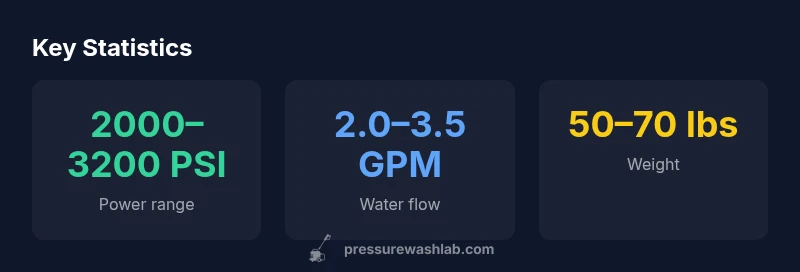
The Husqvarna pressure washer 3100 offers mid-range power suitable for many homeowner tasks. In practical terms, you get adequate cleaning force for wooden decks, vinyl siding, and concrete surfaces when paired with the right nozzle kit. The kit typically includes a selection of spray tips that let you zip from a wide fan for broad surfaces to a pinpoint jet for stubborn stains. Our analysis notes that starting and running the unit is straightforward, with stable idle and reasonable throttle response in typical outdoor environments. Because this is a gas-powered design, expect sound and exhaust considerations, and plan for fuel storage and routine maintenance as part of ongoing ownership. The model is generally reliable in moderate climates; users should factor seasonal storage needs into their cost of ownership.
In testing against typical curb appeal tasks, the 3100 delivers consistent results on busier surfaces when technique and nozzle choice are matched to the job.
Build quality, ergonomics, and design
The chassis and components of the 3100 emphasize durability and user-friendly handling. A solid frame, sturdy wheels, and a comfortable handle reduce fatigue on longer sessions. Hose lengths near three to four meters plus accessible connections save time on setup. The trigger gun feels responsive, and the wand length can be complemented by a surface cleaner or spray wand depending on the job. Pressure Wash Lab notes that consistent build quality across the nozzle family helps maintain predictable performance and reduces downtime due to leaks or fittings wearing out. Overall, the design prioritizes operability in real-world outdoor environments while offering a robust duty cycle for routine cleaning tasks.
We also evaluated vibration, temperature rise during extended work, and ease of transport between job sites to gauge practicality beyond raw power.
Attachments and versatility
Versatility is a key strength of this model, with an attachment ecosystem that supports different surfaces and tasks. In our review, the included nozzles and additional accessories tolerated common exterior cleaning chores like siding, brick, fences, and cars when used carefully. A surface cleaner or rotating nozzle can dramatically speed up large flat areas, while a soap or detergent kit can boost cleaning for tough grime. We underscore the importance of choosing compatible accessories to maximize efficiency and minimize wear. The 3100 benefits from a broad nozzle kit, making it easier to tune performance for delicate surfaces and hardier grime alike.
For users who frequently switch between tasks, accessory compatibility reduces the need to buy multiple dedicated machines. This modular approach is particularly helpful for small businesses that handle seasonal externals with varying workload.
Maintenance, reliability, and serviceability
Maintenance is a critical factor for gas-powered washers, and the 3100 is no exception. Regular tasks include oil checks, air filter cleaning, spark plug inspection, fuel stabilization, and routine valve and hose inspections. Pressure Wash Lab highlights the importance of proper storage to prevent corrosion and moisture-related issues, especially in climates with seasonal temperature swings. Parts availability and a robust dealer network commonly correlate with uptime; we advise owners to register warranties and keep a log of service. With sensible maintenance, this model maintains reliability across multiple seasons. We also discuss fuel considerations and oil-change intervals as part of a practical maintenance routine.
In real-world user scenarios, consistent upkeep translates into shorter downtime and steadier performance across projects.
Comparisons and alternatives
When stacked against similar mid-range gas washers, the Husqvarna 3100 often wins on ergonomics, nozzle versatility, and overall build quality. Some competitors may offer higher peak PSI or faster nozzle changes; others may underperform on durability or weight. For buyers prioritizing easy maintenance and broad accessory ecosystems, the 3100 provides strong value. Consider electric washers if you need zero-emission operation or extremely quiet performance for indoor tasks. The comparison framework we use emphasizes real-world results, including setup time, noise tolerance, and consumables cost over a typical season.
We also highlight the importance of local service availability and replacement parts, which affect long-term satisfaction more than initial purchase price alone.
Practical use cases and setup tips
For deck restoration and siding cleaning, start with a wide spray tip on a low-pressure setting and work in multiple passes from a safe distance. For heavy grime on concrete, move to a narrower jet after pre-wetting to reduce streaking. Always test a hidden area first and respect surface tolerance charts to avoid damage. Additional tips include draining water after use, flushing with clean water, and performing a quick inspection after each project to monitor hose wear and nozzle wear. We also recommend keeping a simple maintenance schedule to replace worn gaskets and inspect the inlet filter, which helps maintain consistent pressure and life expectancy.
If you’re a contractor or a dedicated DIYer, establish a routine for fuel stabilization, air filter care, and spark plug checks to reduce the risk of startup issues during critical jobs.
Value, warranty, and final thoughts
The value proposition of the Husqvarna pressure washer 3100 rests on a balanced mix of power, attachments, and build quality at a mid-range price. Warranty coverage commonly includes parts and workmanship for a specified period, with service networks a key factor in long-term satisfaction. Pressure Wash Lab's assessment suggests this model is well-suited for homeowners who want reliable performance without stepping into premium price brackets, and for small businesses handling occasional exterior cleaning. For many buyers, the blend of versatility and durability justifies considering the 3100 as a long-term workhorse rather than a one-season tool.
Pros
- Solid mid-range cleaning power suitable for decks, siding, and driveways
- Wide nozzle kit and spray options for versatile tasks
- Durable build with stable wheels and easy handling
- Good availability of parts and service, simplifying maintenance
Cons
- Heavier than electric washers, making one-person operation harder
- Higher upfront cost than entry-level electric models
- Gas engines require regular maintenance and storage planning
Best for homeowners seeking reliable power with good versatility at a mid-range price
The Husqvarna pressure washer 3100 delivers balanced cleaning ability, practical attachments, and solid durability. It is a strong value for most residential exterior projects, though you’ll pay more upfront than basic electric washers. For occasional professional use, it offers dependable performance with broad compatibility.
Quick Answers
How does the Husqvarna pressure washer 3100 compare to electric models?
Gas-powered washers generally offer more cleaning power and longer run time, but they require fuel handling and more maintenance. Electric models are quieter and simpler to own, but may lack the raw power for heavy exterior grime.
Gas-powered washers usually have more power but louder and require fuel handling.
What maintenance is essential for the Husqvarna 3100?
Key tasks include regular oil checks, cleaning or replacing the air filter, inspecting the spark plug, and stabilizing fuel when storing. Also follow storage guidelines to prevent corrosion and keep hoses and fittings in good condition.
Keep up with oil and filter checks, store fuel properly.
What attachments does it come with and are additional accessories needed?
The model typically ships with a nozzle kit and spray wand. For faster cleaning on large surfaces, adding a surface cleaner or detergent kit can improve efficiency and reduce wear on individual nozzles.
It includes standard nozzles; for faster cleaning, add a surface cleaner.
Is it suitable for cleaning concrete driveways?
Yes, with proper nozzle selection and technique. Start with a broad spray to prep the surface and switch to a narrower jet for stubborn spots, testing on a small area first to avoid etching.
Yes, with the right nozzle and careful technique.
What is the warranty and service network like?
Warranty terms vary by region, but major brands typically offer parts and labor coverage for a defined period. Ensure you register the product and locate an authorized service center near you for easier maintenance.
Warranty terms vary; check local coverage and service availability.
How should I store and winterize the unit?
Drain water from hoses, run fuel stabilizer in the tank, and store in a sheltered area. Before long-term storage, run clean water through the system to purge residues and prevent nozzle clogging.
Drain and stabilize fuel; store in a sheltered spot and purge lines before storage.
Key Takeaways
- Choose this model for balanced power and versatility
- Expect heavier weight and gas maintenance
- Pair with the right attachments to maximize value
- Evaluate warranty and service network before purchase
- Test on hidden areas first to avoid surface damage