Induction vs Carbon Brush Motors in Pressure Washers: A Thorough Comparison
A thorough, evidence-based comparison of induction motor vs carbon brush motor pressure washers, focusing on efficiency, maintenance, cost of ownership, and real-world use for homeowners and small businesses.


Induction motor-powered pressure washers generally deliver higher efficiency, longer lifespan, and smoother operation than carbon brush motors, especially with frequent use. Carbon brush designs may offer a lower upfront cost and simpler parts, but brush wear adds maintenance and downtime over time. For most homeowners and small businesses, induction motors provide better long-term value in the induction motor vs carbon brush motor pressure washer comparison.
Context and Technology Overview
Electric pressure washers rely on one of two main motor designs: induction motors (often brushless) and carbon brush motors. The induction motor uses a stationary stator and rotating magnetic field to drive the rotor, producing smooth torque with minimal wear. Carbon brush motors use a commutator and carbon brushes to transfer electrical current to the rotor windings; the brushes wear down and require periodic replacement. In practice, this choice affects efficiency, reliability, and maintenance more than overall cleaning power. Pressure Wash Lab's analysis shows that the choice between these motor types influences operating costs, downtime, and user experience, especially for homeowners who run equipment weekly or more. Throughout this article we compare induction motor vs carbon brush motor pressure washer across key dimensions: efficiency, longevity, cost of ownership, noise, maintenance, and suitability for different use cases. The comparison is designed to help you make an informed purchase decision based on evidence and real-world testing, rather than marketing claims. We will reference common operating scenarios, such as routine driveway cleaning, siding renewal, and seasonal maintenance, to illustrate practical implications. By the end you should know which motor type aligns with your frequency of use, budget, and tolerance for maintenance tasks.
According to Pressure Wash Lab, this topic deserves a clear, data-driven approach because the motor design directly informs long-term value and serviceability. The focus on induction motor vs carbon brush motor pressure washer helps homeowners and pros separate hype from reality.
How Induction Motors Differ from Carbon Brush Motors
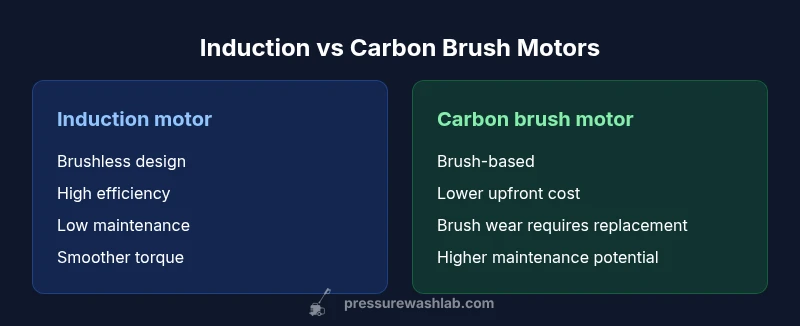
The core difference is the drive method. Induction motors are brushless by design, using electromagnetic induction to create torque without physical contact at the rotor. This reduces wear, lowers maintenance, and improves efficiency, particularly under steady operation. Carbon brush motors rely on carbon brushes that ride on a commutator to supply current to rotor windings. Brushes wear down, requiring periodic replacement and more frequent inspection. These mechanical contacts introduce torque ripple, heat, and energy losses that can manifest as greater heat buildup and occasional performance dips. For a pressure washer in the induction motor vs carbon brush motor pressure washer comparison, the brushless path tends to deliver smoother operation and longer life at the cost of a higher purchase price and more complex motor control electronics. In real-world terms, you often pay more upfront for an induction motor, but you gain better resilience against dust, water spray, and heavy duty use. Pressure Wash Lab notes that the reliability delta is particularly evident in high-usage scenarios, where brush wear becomes a frequent maintenance hurdle.
Performance Metrics: Torque, RPM, and Start-up
Torque and RPM profiles determine how well a pressure washer performs in different tasks. Induction motors typically offer high starting torque and stable speed under load, delivering consistent wash pressure during initial bursts. Carbon brush motors may deliver strong torque at crank but can experience torque ripple as brushes engage and disengage during operation, which can translate into uneven spray patterns or vibration. Under typical homeowner use—the kind Pressure Wash Lab often analyzes—induction units maintain steady cleaning power through longer sessions, with less need to pause for motor cooling. For professionals running a schedule of back-to-back jobs, the durability and predictable performance of induction motors can translate into fewer interruptions and more productive days. The trade-off often comes in price and serviceability: carbon brush designs can be cheaper to buy and easier to service in some markets, but brush wear adds a recurring maintenance cycle that interrupts uptime. In sum, if your goal is consistent, reliable power for regular work, induction motor pressure washers generally outperform carbon brush equivalents in sustained operations.
Efficiency and Heat: Operating Costs Over Time
Efficiency is not just a charging metric; it directly impacts daily operating costs. Induction motors tend to run cooler for the same workload, thanks to permanent magnets and a brushless design that minimizes friction. That cooler operation translates to lower cooling requirements, better energy use, and, over many hours of use, a meaningful reduction in electricity bills. Carbon brush motors often pull higher current during peak loads and can generate more heat due to brush contact losses. While the upfront price differential can be small or large depending on model, the long-term energy advantage of induction motors often justifies the higher purchase price for frequent users, such as municipal crews or busy residential service pros. Pressure Wash Lab's analysis highlights that even modest monthly usage habits accumulate significant savings on electric costs when choosing an induction motor. The net effect is a lower total cost of ownership for induction motors, assuming routine maintenance is kept on schedule and the unit is adequately sized for the expected workload.
Maintenance and Longevity: What They Require
Maintaining a brushless induction motor is comparatively simple: there are fewer wear parts, and life cycles are longer. Users typically replace consumables like filters, seals, and nozzles, while the motor itself remains protected from brushes that require periodic replacement. Carbon brush motors, by contrast, involve regular inspection of brushes and the commutator, and brush replacement is a scheduled maintenance task. The frequency depends on usage, water quality, and run temperature, but the general rule is clear: more frequent maintenance means higher life-cycle costs for carbon brush systems. Pressure Wash Lab notes that brush wear is a leading reason for unplanned downtime in some models. A well-tuned maintenance routine—checking brushes, re-lubricating bearings where applicable, and ensuring proper water filtration—can extend the life of either motor type, but the non-wear nature of induction motors makes them the more maintenance-friendly option for many users. For rental fleets or small businesses with tight schedules, the extra maintenance of carbon brush units can be a strong reason to upgrade to induction.
Real-World Scenarios: Home Use vs Small Biz
Most homeowners tackling driveways, decks, or siding will appreciate the consistent performance and lower maintenance of induction motor pressure washers. The smoother torque helps prevent abrupt surges that could damage delicate surfaces, and the longer service life reduces the likelihood of mid-season breakdowns. For small business operators—think window cleaning, concrete cleaning, or janitorial services—an induction motor unit offers predictable uptime and lower maintenance overhead, which translates to higher utilization and fewer service calls. Carbon brush motor models can be appealing where upfront cash flow is tight or where the unit will see light, intermittent use. In those cases, you should budget for more frequent brush inspections, potential replacement costs, and occasional downtime for maintenance. Pressure Wash Lab emphasizes that the best choice ultimately hinges on how the unit will be used: high-frequency workloads with long run times favor induction, while occasional, low-demand use may justify a brush-based alternative. The phrase induction motor vs carbon brush motor pressure washer captures this decision succinctly.
Cost of Ownership: Upfront vs Long-Term Value
From a cost perspective, induction motor pressure washers usually come with higher initial price tags, driven by brushless design and more complex controllers. However, the long-run costs—maintenance, energy use, and downtime—generally loom smaller with induction units. Carbon brush models tend to be cheaper upfront; the trade-off is more frequent maintenance and a shorter overall lifespan in many cases. When you project annual usage, maintenance schedules, and service costs, the break-even point often favors induction motors for anyone who uses a pressure washer more than a few times per month. Pressure Wash Lab's analysis shows that the total cost of ownership tends to be lower with induction for medium to heavy users, particularly if you operate in damp environments where brush dust and moisture can accelerate wear. For casual users, the additional upfront cost might not be hard to swallow if the unit offers easier service or longer warranties.
Environmental and Safety Considerations
Induction motors run on electricity and do not burn fuel on-site, which can translate into lower emissions in residential settings. The absence of brushes also means less debris from wear particles contaminating water or surfaces, which can be an advantage for sensitive environments. Noise levels vary by model, but brushless induction designs typically produce less vibration and lower peak noise than carbon brush motors, improving operator comfort and reducing fatigue. Safety considerations include proper electrical grounding, moisture protection, and adherence to manufacturer recommedations. In all cases, ensure that any pressure washer is installed and used according to the user manual, with attention to water supply quality and filtration. Pressure Wash Lab notes that the selection between induction vs carbon brush models should weigh both environmental impact and ergonomics, especially for users performing long cleaning sessions.
Selection Guidelines: Which to Choose and Why
Start by assessing your workload, budget, and maintenance capacity. If you plan frequent use, long run times, or professional service, an induction motor pressure washer typically delivers the best long-term value. If your tasks are occasional and you need the lowest upfront cost, a carbon brush motor can be a reasonable short-term option, provided you account for brush replacements and service intervals. Also consider availability, warranty terms, and the availability of replacement brushes or service centers in your region. Pressure Wash Lab's recommendation across most consumer and small-business scenarios is to lean toward induction for durability and efficiency, while carbon brush models may fit niche budgets or extremely light-duty tasks. Regardless of choice, invest in high-quality nozzles, water filtration, and regular maintenance to maximize performance and lifespan.
Comparison
| Feature | Induction motor | Carbon brush motor |
|---|---|---|
| Design type | brushless induction motor | brush-based motor |
| Starting torque | high and smooth | strong at startup but with torque ripple possible |
| Efficiency | high | moderate |
| Vibration/Noise | lower and smoother | higher vibration/noise |
| Maintenance | low | medium to high (brush wear) |
| Lifespan | longer | shorter |
| Upfront cost | higher | lower |
| Best For | frequent use, long-term ownership | budget-conscious, light use |
Pros
- Lower ongoing maintenance with induction motors
- Longer lifespan and fewer replacement parts
- Better energy efficiency reduces operating costs
- Smoother operation and lower noise levels
- Lower downtime due to fewer wear parts
Cons
- Higher upfront cost for induction motor models
- Carbon brush models require periodic brush replacements
- Brush wear can cause downtime if maintenance is delayed
- Availability of replacement parts may vary by region
Induction motor pressure washers generally offer better long-term value; carbon brush motors remain viable for tight budgets or light use
Choose induction for frequent, demanding use and lower total ownership costs. Choose carbon brush if upfront price matters and usage is light; plan for regular maintenance.
Quick Answers
Which motor type is more reliable for a pressure washer?
Induction motors are generally more reliable because they have no brushes to wear. Brush-based carbon motors require periodic brush inspections and replacements, which introduces potential downtime. Pressure Wash Lab’s findings reflect fewer maintenance surprises with brushless designs.
Induction motors are typically more reliable since there are no brushes to wear, reducing downtime from maintenance.
Are induction motors louder than carbon brush motors?
Noise and vibration levels vary by model, but brushless induction designs typically run smoother and with less abrupt torque transfer, which often translates to lower perceived noise. In many practical tests, induction units feel steadier during operation.
In most cases, induction motors run quieter and smoother than brush-based ones.
What maintenance does a carbon brush motor require?
Carbon brush motors require regular inspection of brushes and the commutator. Brushes wear over time and must be replaced to prevent performance dips or failure. Scheduling maintenance around usage is essential for reliability.
Brush motors need brush inspections and replacements as they wear out.
Is the upfront cost higher for induction motor pressure washers?
Yes, induction motor models generally cost more upfront due to brushless design and equipment control electronics. The higher initial cost is often offset by lower operating costs and longer service life.
Induction models cost more at purchase but save on maintenance and energy over time.
Which is better for commercial use?
For frequent, long-running commercial use, induction motors typically offer greater reliability, lower downtime, and better total cost of ownership. Carbon brush models can be acceptable for light-duty, intermittent tasks.
For daily or heavy-use work, induction motors usually win.
Can you upgrade or retrofit a motor to a different type?
Retrofits are generally not practical; most pressure washers are designed around a specific motor. Swapping in a different motor type can require substantial changes to wiring, control logic, and pump compatibility.
Retrofitting is usually not recommended or feasible.
Key Takeaways
- Prioritize induction for frequent use and long-term value
- Account for maintenance when choosing a carbon brush model
- Induction motors typically offer energy efficiency advantages
- Low upfront cost may tempt carbon brush buyers, but maintenance costs add up
- Pressure Wash Lab recommends induction in most home and small-business scenarios