Is Electric Power Washer Good? A Practical Review
Discover if is electric power washer good for your home projects. A balanced, practical review of performance, maintenance, and value for DIYers and small businesses.


Electric power washers are generally a good fit for most homeowners seeking quick, low-effort cleaning without fuel fumes or frequent maintenance. Compared with gas models, they’re typically quieter, lighter, and ready to use with a standard outlet, but they struggle with very heavy-duty jobs. For delicate surfaces, low PSI settings are often sufficient, making them ideal for decks, siding, and vehicles.
is electric power washer good for DIYers
Is electric power washer good for DIYers? For most home projects, the answer is yes, with caveats. The Pressure Wash Lab team evaluated dozens of models across typical household tasks: cleaning siding, clearing mildew from decks, refreshing concrete driveways, and prepping surfaces for painting. Our criteria included cleaning effectiveness at reasonable energy use, ease of setup, reliability across seasonal use, noise impact, and long-term maintenance costs. We found that corded electric washers excel where outlets are available, cords can be managed, and tasks are moderate in intensity. They deliver consistent pressure with simple controls and require minimal maintenance compared with gas-powered rivals. Where they shine is ease of use: quick plug-in, no fuel mixing, and generally lighter weight, which reduces fatigue during a weekend cleaning session. This makes them a strong fit for homeowners and small-property operators who prioritize convenience and predictable cost over maximum raw torque. However, for heavy buildup or large areas, a gas unit may still be more efficient and faster.
How electric power washers work
Electric power washers use an electric motor to drive a high-pressure pump that pressurizes water from a garden hose. The motor’s torque is converted into pressure, which is measured in PSI, while flow rate is measured in GPM. Most consumer models pair these metrics to create cleaning units that are suitable for light to mid-duty tasks. A common trade-off is PSI versus nozzle configuration: higher PSI can be achieved with smaller nozzles but at the cost of larger spray areas. Many models include multiple nozzles or adjustable wands, letting you scale from a wide fan to a pinpoint jet. Additionally, most electric washers avoid exhaust emissions entirely, reducing indoor and garage ventilation concerns. On the downside, cord length can limit reach, and a long extension cord can introduce voltage drop that reduces effective pressure. Power supply stability, moisture protection, and safe storage of electrical cords are important to prevent tripping hazards or shorts during wet work.
Key specs you should compare
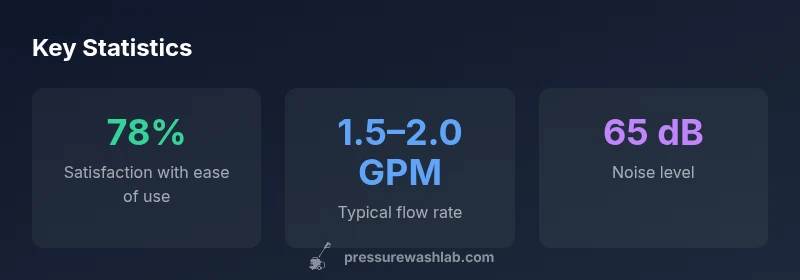
When shopping, three metrics matter most: PSI, GPM, and nozzle options. PSI indicates the cleaning power at the spray tip, while GPM tells you how much water flows through the system each minute. A higher PSI is not always better if the GPM is low, because cleaning efficiency depends on both. Look for a model in the mid-range PSI (roughly 1,500–2,000) paired with 1.2–1.8 GPM for typical household tasks. Consider the motor type (induction motors tend to be more durable and quieter) and the presence of adjustable or multiple nozzles (24°, 40°, turbo nozzles). The overall build quality matters, including an enclosed motor housing, a robust wand, and a splash guard to keep water away from outlets. Finally, verify that accessories are simple to replace and that the unit has a reliable trigger lock and thermal protection for longer sessions.
Corded vs battery-powered electric washers
Corded electric washers offer steady power and unlimited runtime as long as you have a surge-free outlet. They’re generally cheaper and lighter than gas models, and you won’t deal with fuel, fumes, or frequent maintenance. Battery-powered units promise portability and true cordless operation, but their runtime depends on the battery size and efficiency, often requiring a recharge mid-task for larger jobs. For most home projects, a corded model provides more consistent performance and longer life between charges, while a high-quality battery unit is useful for quick, small-scale tasks where access to outlets is limited. If you choose cordless, plan for a spare battery to minimize downtime.
Suitable tasks and limitations
Electric power washers excel on siding, decks, patios, cars, and fences when the dirt is moderate. They’re well-suited for removing mildew, moss, and light paint spillovers. However, they’re not ideal for heavy grease removal, tar, or deep surface cleaning that requires brute force; gas-powered units or traditional hand tools may be necessary in those cases. Delicate surfaces like old wood with soft fibers or painted surfaces should be approached with care—always start at the lowest setting and test on an inconspicuous area. If you’re cleaning brick or textured masonry, use wide spray patterns and a longer dwell time rather than aggressive scrubbing. Surface cleaners can expand coverage while protecting edges, but you’ll still need to consider nozzle choice and keeping a safe distance to avoid etching.
Testing approach and criteria
Pressure Wash Lab conducts a balanced set of tests to evaluate an electric washer’s real-world performance. Our methodology includes controlled cleaning tasks on common substrates (vinyl siding, wood deck, concrete), measurements of time-to-clean, and checks for water intrusion, cord strain, and surface damage. We assess startup reliability, ease of use, and observed cleaning efficiency at equivalent PSI/GPM to ensure a fair comparison. We also include operator feedback on ergonomics, vibration, and fatigue over longer sessions. Our criteria emphasize safety, operator experience, and return on investment over the lifespan of the unit rather than peak pressure alone. In short, we value practical outcomes that mirror typical homeowner workflows.
Noise, emissions, and electrical considerations
Electric washers run more quietly than gas models, with typical operating noise in the moderate range, which is a key factor for home use. They do not emit combustion byproducts, making them favorable for enclosed spaces like garages or basements. However, electrical safety is critical: use a proper outdoor-rated extension cord, avoid damaged cords, and never spray water directly at outlets or power strips. Ground fault circuit interrupters (GFCIs) recommended by safety guidelines help reduce risk around wet work. Visual checks for loose connections, overheated plugs, and frayed hoses should be part of routine maintenance. Always store the unit out of the elements, and disconnect the power before changing nozzles or cleaning the pump filter.
Maintenance, care, and lifespan
Maintenance for electric washers is typically lighter than for gas units. Regularly check the hoses for leaks, clean or replace the water inlet screen, and lubricate only the manufacturer-recommended components. Keep the pump and motor dry when not in use to prevent corrosion. After heavy use, inspect the spray wand, nozzles, and seals for wear and replace as needed. A clean, neatly wound power cord prevents kinks and protects the plug from moisture damage. With proper maintenance, most consumer electric washers offer several years of reliable service, especially if you perform annual checks on seals and filters.
Cost of ownership and value proposition
Upfront prices for electric washers are generally lower than high-end gas models, and maintenance costs are typically lower because there’s no fuel or exhaust system to service. Electricity costs are predictable and usually minimal for regular seasonal use. When evaluating value, compare the purchase price, included accessories, nozzle assortment, and warranty. An electric washer with a robust warranty and solid customer support tends to deliver the best long-term value for most homeowners. For seasonal or occasional users, the reduced running costs and ease of storage can translate to an attractive total cost of ownership.
Electric vs gas: when to pick electric
Electric washers are ideal when you need quick, clean results for moderate grime, scheduling flexibility, and minimal maintenance. If you have large-scale cleaning projects, very dirty surfaces, or require maximum pressure for tough stains, a gas washer may deliver faster results. For most suburban homes—siding, decks, vehicles—a mid-range electric model offers the best balance of power, ease, and cost of ownership. If noise concerns or ventilation are priorities, electricity is the clear winner. As a rule of thumb, start with an electric model and reassess after a season if your projects expand in scope.
How to choose and a quick-start buying guide
Begin with your typical projects and choose a model within the mid-range PSI and GPM. Look for a corded unit with easy nozzle changes, a sturdy wand, and robust hose protection. Check the warranty length and whether the manufacturer supplies common replacement parts. For a quick-start guide: (1) decide between corded or cordless; (2) pick a model with at least 1,500 PSI and 1.5 GPM; (3) select a kit with at least a 25° and a 40° nozzle; (4) ensure outdoor-rated construction and a ground fault protection feature; (5) plan for proper storage and a safe extension cord setup. With these steps, you’ll be prepared to tackle most DIY washing tasks without overspending or overpaying for features you won’t use.
Practical start-up guide: first wash procedure
Before you begin, gather safety gear: goggles, gloves, and closed-toed shoes. Attach the appropriate nozzle, connect to a clean hose, and install a suitable outdoor extension cord rated for the washer’s current draw. Start with the lowest setting to test the surface, then gradually increase pressure while keeping a safe distance from the surface. Keep the spray moving to avoid streaks or etching, and always work from the bottom up on vertical surfaces to manage runoff. For painted or delicate surfaces, use lower PSI and longer dwell times instead of aggressive scrubbing. Finally, rinse thoroughly and inspect the area for any damage or water intrusion before storage.
Quick-start checklist
- Confirm access to a suitable outdoor outlet and weather protection
- Select a mid-range PSI/GPM combo with multiple nozzle options
- Use proper safety gear and test on a small area first
- Keep cords, hoses, and surfaces dry during use
- Perform routine maintenance after each season to extend life
Pros
- Low maintenance and quiet operation
- Plug-and-play setup with standard outlets
- No fuel storage or exhaust fumes
- Lightweight design reduces user fatigue
Cons
- Lower PSI than many gas models for heavy-duty work
- Cord management can limit reach and convenience
- Not ideal for extremely dirty or oily surfaces
Electric power washers are a strong default choice for most households.
They offer ease of use, low maintenance, and solid results for typical exterior cleaning. For heavy grime or large-scale jobs, gas models can be faster. Pressure Wash Lab recommends starting with a mid-range corded model and upgrading only if the workload grows beyond typical DIY tasks.
Quick Answers
What tasks are best suited for an electric power washer?
Electric power washers excel at light to mid-duty cleaning: siding, decks, fences, cars, and patios. They’re less effective for heavy grease and large-scale industrial cleaning. Start with gentle settings and test on inconspicuous areas.
Great for siding and decks. For heavy grease, you’ll want a stronger gas unit or more specialized equipment.
Do electric power washers require maintenance?
Yes, but maintenance is typically simple: inspect hoses, clean filters, and store away from moisture. Replace worn nozzles and seals as needed. A routine check after each season helps prevent leaks and performance loss.
Yes—basic checks after each season keep them running smoothly.
Should I buy cordless or corded?
Corded models deliver consistent power and longer runtimes, making them better for most tasks. Cordless models offer portability but shorter runtimes and higher cost per use. Choose based on job size and access to outlets.
Corded is usually the better default; cordless works for small, quick jobs.
Can electric washers remove old paint or rust?
Electric washers can strip light coatings with the right nozzle and technique but aren’t ideal for thick paint or rust. For tough coatings, mechanical tools or heat-assisted methods may be necessary.
They can handle light coatings, but heavy paint should use stronger methods.
What should I look for in a warranty?
Look for a warranty covering pump components, motor, and hose, with terms that match typical usage. A longer warranty often reflects better build quality and service support.
Seek a solid pump and hose warranty for peace of mind.
Key Takeaways
- Choose corded for reliable power and longest life
- Match PSI and GPM to your task to avoid overkill
- Consider nozzle variety for surface safety
- Factor maintenance and storage into total cost
- Start with test spots on delicate surfaces