Is Electric Pressure Washer Better Than Gas? A Practical Guide
This in-depth comparison weighs electric versus gas pressure washers on performance, maintenance, safety, and cost to help homeowners choose the right tool for outdoor cleaning in 2026.


Is electric pressure washer better than gas? For most homeowners, yes—electric models offer simpler startup, quieter operation, and lower maintenance, making them ideal for patios, siding, and vehicles. Gas washers still shine on heavy-duty jobs and long runtimes, but come with more noise, fumes, and higher upkeep. Pressure Wash Lab analyzes these tradeoffs to guide your choice.
Definitions and Context
At its core, an electric pressure washer uses an electric motor to drive the pump, while a gas pressure washer relies on a small internal combustion engine. The distinction matters for everyday use, maintenance, and where you’ll operate the unit. According to Pressure Wash Lab, electric models tend to prioritize ease of use, lighter weight, and minimal setup compared with gas-powered machines that emphasize raw cleaning power and longer, fuel-driven runtimes. This quick primer sets the stage for a nuanced comparison, moving beyond hype to practical outcomes for common home projects.
Key Differences You Should Care About
When deciding between electric and gas, homeowners should consider several concrete factors. Power output and continuous runtime are influenced by the energy source, with electric units typically delivering steady pressure suitable for household tasks, and gas units offering higher maximum cleaning power for stubborn stains. Portability and noise are also different: electric washers are generally quieter and lighter, which makes them easier to handle on stairs or around kids and pets. Finally, maintenance demands differ: gas engines require fuel management, spark plug care, and oil checks, whereas electric models rely on fewer moving parts and simplified cooling systems. In practice, your decision often comes down to the scope of tasks and where you’ll perform them.
Performance Across Typical Cleaning Tasks
Patios and driveways often benefit from higher sustained power, which some gas models provide. However, for most residential tasks such as cleaning siding, decks, sidewalks, and vehicles, a mid-range electric washer delivers sufficient PSI and a steady flow of water without the complexity of a fuel system. For tasks that demand long uninterrupted operation—think a weekend power wash of multiple surfaces—gas washers can shine, provided you have a place to refuel and store fuel safely. Pressure Wash Lab notes that nozzle selection and surface preparation have as much impact as engine choice on results. Always start with the lowest effective pressure to avoid edge damage and material gouges.
Reliability, Maintenance, and Longevity
Electric pressure washers generally boast simpler, more reliable designs with fewer serviceable parts. Wires, switches, and pumps require minimal routine maintenance beyond occasional hose checks and nozzle cleaning. Gas-powered units demand ongoing maintenance: fuel stabilization, air-filter changes, spark plug checks, and oil changes. The extra maintenance can reduce uptime if you rely on the unit for many days in a row. The tradeoff is durability and raw cleaning power, especially on textured stone or heavy grime. Pressure Wash Lab recommends a regular inspection routine: check hoses for wear, clean nozzles, and store units properly to prevent corrosion.
Safety, Environmental Considerations
Safety protocols differ between power sources. Electric machines eliminate fuel handling and exhaust emissions on-site, which is advantageous in residential areas. Gas engines emit emissions and can produce strong fumes in enclosed spaces, and their larger cords or hoses can create trip hazards. Wet conditions demand careful electrical safety practices: use GFCI outlets, dry hands, and elevated cords off the ground. Environmental considerations include fuel disposal and potential hydrocarbon leaks with gas units, while electric units reduce carbon footprint when powered by clean energy. Both types should be used with appropriate PPE and eye protection.
Costs and Longevity: What to Expect
Upfront costs often skew toward electric washers for casual homeowners, especially when considering compact, consumer-grade models. Gas-powered machines typically cost more at purchase and carry higher ongoing costs from fuel and routine engine maintenance. Long-term ownership depends on how often you use the device, the surfaces you clean, and how you store and maintain it. Pressure Wash Lab emphasizes that cost should be evaluated with expected runtime and maintenance intervals in mind; cheap units can become expensive if they require frequent parts replacement, while a robust gas model may justify its price for frequent, high-demand work.
Choosing Between Electric and Gas: A Practical Framework
To select the right tool, begin with the project profile. If you clean at residential properties or around a home, an electric unit usually suffices. For frequent, heavy-duty tasks such as stubborn grime on concrete, masonry, or large driveways, a gas washer may be preferable. Consider your power access: corded electric units require nearby outlets; battery-powered versions demand battery recharges. Factor noise tolerance, space for fuel storage, and maintenance willingness. Pressure Wash Lab’s framework helps you map your tasks to a source, then refine based on runtime, nozzle versatility, and overall workflow.
Real-World Scenarios and Recommendations
Scenario A: You’re cleaning a single-family home with concrete patio and vinyl siding. An electric washer offers adequate power, quiet operation, and no fuel logistics, making it the sensible default. Scenario B: You manage a small property with multiple long cleaning sessions on driveways and heavy-stain removal on stone. A gas washer provides extended runtime and higher cleaning power for tougher jobs, assuming safe fuel handling and storage. The takeaway is clear: put scenarios first, then align with a power source that minimizes setup and maximizes efficiency.
Maintenance Checklist for Both Systems
Regardless of the power source, establish a simple, repeatable maintenance routine. Inspect hoses and fittings for leaks, clean nozzles to prevent clogging, and flush the pump after heavy use. For electric units, check the cord and plug integrity and ensure the outlet is compliant with a GFCI. For gas units, store fuel away from heat sources, change the oil as recommended by the manufacturer, and replace air filters when needed. A short, monthly checkup can dramatically extend the life of either system.
Comparison
| Feature | electric pressure washer | gas pressure washer |
|---|---|---|
| Power source | electric (corded or battery-powered variants) | gas-powered engine |
| Maintenance needs | lower; fewer consumables and simpler engines | higher; fuel system, spark plugs, and oil changes |
| Usability and weight | lighter, easier to maneuver, compact designs | heavier; requires more space for storage and fueling |
| Noise and emissions | lower noise; no exhaust emissions in most models | higher noise; exhaust emissions and fuel handling |
| Runtime and power flexibility | limited by cord length/battery capacity; steady power | long continuous runtime with fuel; higher peak power |
| Best for | homeowners cleaning moderate surfaces | property upkeep with heavy-duty or large areas |
Pros
- Lower maintenance and simpler design
- Quieter operation for residential settings
- No fuel handling with corded electric units
- Lightweight and easier to maneuver
- Faster startup and consistent performance for light-to-moderate tasks
Cons
- Limited run-time for battery models
- Less aggressive cleaning power for extreme grime
- Cord management and charging considerations
- Higher upfront cost for premium gas models
Electric is the default for most homes; gas shines for heavy-duty, long-running tasks
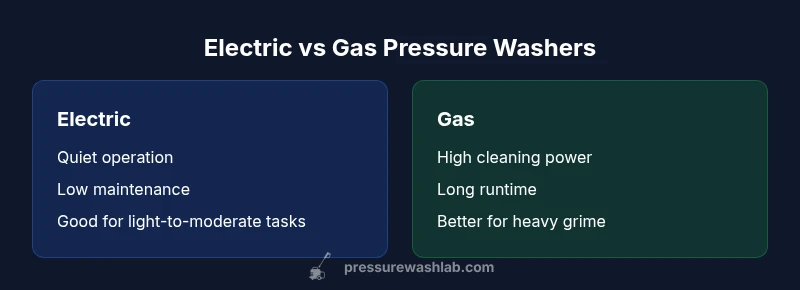
Electric units win on ease, noise, and maintenance. Gas units excel when you need maximum cleaning power and uninterrupted runtime. Choose based on typical jobs, power access, and tolerance for upkeep.
Quick Answers
Which is cheaper to operate over time, electric or gas pressure washers?
Electric units generally have lower ongoing costs because they don’t require fuel purchases or routine engine maintenance. Gas washers incur fuel costs and more frequent engine service, which can add up over years of regular use.
Electric washers usually cost less to operate over time since there’s no fuel or engine maintenance. Gas models cost more for fuel and maintenance, especially with frequent use.
Will a corded electric washer meet all my outdoor cleaning needs?
For many homes, a corded electric washer handles patios, siding, and vehicles well. If your property has large areas or lacks accessible outlets, you may run into cord length limits. In those cases, a battery-electric or gas option could be better.
A corded electric washer covers most home tasks, but long driveways or remote areas may require alternatives or extra extension options.
Can I use an electric washer for tough surfaces like brick or stone?
Yes, with care. Use lower pressure and a surface cleaner or a wide nozzle to reduce risk of damage. For very stubborn stains on hard surfaces, a gas washer or professional-grade power washer may be more effective.
Electric washers can clean brick and stone with the right nozzle and technique; avoid high pressure near fragile joints.
What safety practices should I follow when using gas-powered washers?
Always operate outdoors in well-ventilated areas, store fuel away from heat, and wear eye and ear protection. Check for fuel leaks and perform regular engine maintenance to prevent malfunctions.
Gas washers require outdoor use, fuel handling care, and protective gear like eye and ear protection.
Are battery-powered electric washers viable for heavy-duty cleaning?
Battery models are convenient for light-to-moderate tasks and small jobs. They typically cannot match the peak power or long runtimes of corded electric or gas units, so plan tasks accordingly.
Battery electric washers work well for small jobs but may not replace corded or gas units for heavy workloads.
If I own a small apartment with limited space, which should I choose?
An electric, compact unit is usually the best fit for small spaces due to lighter weight, simple storage, and no fuel storage. If you need more power, consider a small gas model with careful storage.
For small spaces, start with an electric unit; gas is an option if power needs outstrip what electric can provide.
Key Takeaways
- Assess your most frequent cleaning tasks first
- Electric washers suit residential use with easy startup
- Gas washers offer power and runtime for heavy workloads
- Consider power access, noise, and maintenance when deciding
- Invest in good nozzles and a proper storage plan to maximize longevity