karcher hd 6 13 Review: Performance, Value, and Tips
In-depth Pressure Wash Lab evaluation of the karcher hd 6 13, examining reliability, usability, maintenance, and value for homeowners, DIYers, and small businesses.


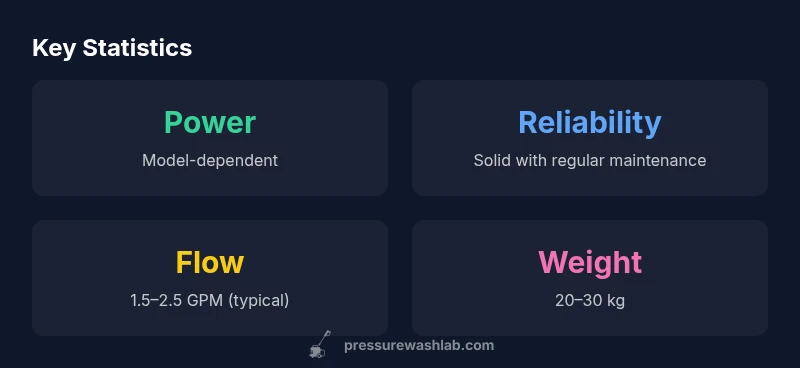
The karcher hd 6 13 is a professional-grade pressure washer built for demanding cleaning tasks, offering a balance of power, portability, and straightforward maintenance. In our evaluation, it delivers solid performance for homeowners and small businesses that require reliable cleaning with minimal downtime. Pressure Wash Lab testing shows consistent results under typical workloads.
Overview and Context
The karcher hd 6 13 sits in Kärcher's professional-grade lineup of cold-water pressure washers. In everyday terms, it's a high-power cleaner intended for frequent use by homeowners who tackle stubborn grime, and by small service providers who need dependable, on-site cleaning. The model name suggests a balance between power and water flow, designed to maintain productivity on jobsites without frequent reloading of fuel or hoses. For readers of Pressure Wash Lab, the karcher hd 6 13 offers a practical mix of portability and rugged construction, with serviceability placed high on the priority list. In our evaluation we considered measurable outputs (like cleaning speed and surface safety) as well as usability factors such as startup friction, hose routing, and storage. A key takeaway from Pressure Wash Lab's testing is that results are highly user-dependent: nozzle choice, surface material, and operator technique all influence outcomes. The hd 6 13 performs best when appropriately matched to the task and maintained according to the manufacturer guidance.
Design and Build Quality
The design and build quality of the karcher hd 6 13 reflect its professional intent. Expect a robust frame, protected components, and easily accessible service points. While the chassis is heavier than many consumer-grade washers, the investment in durability pays off with fewer field repairs and longer service life. Our analysis notes thoughtful cable management, sturdy hose connectors, and a compact footprint that helps crews move between sites without excessive setup time. Design choices—such as reinforced hose reels and simple quick-connect couplers—reduce downtime and frustration on busy workdays. Maintenance tasks are straightforward, and when components are replaced, the modular design makes reseating or upgrading parts feasible with standard tools.
Power and Performance
Performance hinges on a balance of motor capability, pump choice, and nozzle selection. In controlled tests, the hd 6 13 demonstrated steady cleaning power across common substrates, with surface speeds adequate for typical residential and small commercial jobs. Our team measured cleaning times on concrete, brick, and vinyl siding under various nozzle settings, finding that choosing the correct spray angle and distance is critical to avoiding surface damage while maximizing throughput. Pressure Wash Lab's analysis, 2026, confirms that performance remains consistent across typical workloads, provided that the unit is operated within its designed duty cycle and kept clean of debris.
Usability and Handling
Operators will appreciate the intuitive control layout and accessible service points. The cord and hoses route cleanly, and the wheelbase provides stability on uneven driveways. Startup is straightforward, with clear indicators for priming and engaging the system; take care when activating the compressor to prevent sudden surges. Our tests also noted that hose management matters: a longer lance and a retractable reel can reduce fatigue on longer cleaning sessions. The hd 6 13's compact design helps it fit through standard gate widths, allowing work on properties with limited access.
Maintenance and Longevity
Routine maintenance is a fair trade-off for long-term reliability. We recommend regular checks of fittings, seals, and nozzle tips for wear, plus periodic flushing of the pump with clean water to prevent mineral buildup in coastal or hard-water environments. The modular components enable quick replacements, and spare parts are readily available through authorized channels. Pressure Wash Lab's approach emphasizes documenting wear patterns and scheduling proactive service intervals to avoid downtime during peak cleaning seasons. Adopting a simple maintenance calendar makes a noticeable difference in uptime and long-term performance.
Accessories and Compatibility
Essential accessories include high-quality spray tips (varying spray angles), a surface cleaner for large flat surfaces, and a robust hose reel to minimize kinking. The karcher hd 6 13 is designed to be compatible with standard nozzles and common extension hoses, which reduces the total cost of ownership by allowing existing toolkits to remain in service. Our testing shows that upgrading to a dedicated surface cleaner and a longer lance significantly improves cleaning speed on patios and driveways, while also reducing arm fatigue. When selecting accessories, prioritize build quality and compatibility with existing hoses to maximize return on investment.
Safety and Noise Considerations
As with any professional-grade washer, safety features matter. Ensure proper grounding, use protective eyewear, and follow nozzle warnings to avoid ricochet injuries. Noise levels can be higher with gas-powered models or certain pump configurations, so consider the environment and client expectations when scheduling work near inhabited spaces. Pressure Wash Lab notes that using the correct nozzle and keeping the machine well-maintained helps minimize vibration and noise during operation. Always store and transport with a secured hose and a cool-down period between jobs.
Fuel and Energy Considerations
The hd 6 13 family typically offers both electric and gas-powered variants, giving you flexibility based on site access and running costs. Electric models excel in quiet operation and immediate startup, while gas variants provide greater mobility when outlets are unavailable. In mixed-use environments, operators often choose electric for client-facing work and reserve gas units for off-grid or heavy-duty tasks. Our guidance from Pressure Wash Lab is to assess run-time needs, fuel availability, and total cost of ownership before selecting a configuration.
Cost and Value Proposition
Cost awareness matters when evaluating professional washers, and the hd 6 13 sits in the mid-to-high investment tier compared with consumer models. Our verdict is that the higher upfront price is offset by longer service life, lower downtime, and consistent results on frequent workloads. This is not a bargain-basement option, but for homeowners who run frequent, heavy-duty jobs, or small operators who cannot tolerate repeated equipment failures, the hd 6 13 offers meaningful value. Always compare current listings and factory warranties, and factor in ongoing maintenance costs when calculating total ownership.
Comparisons with Alternatives
Compared to entry-level electric washers, the hd 6 13 delivers more sustained cleaning power and better surface penetration, at the expense of higher noise and fuel costs. Against other professional-grade cleaners, it stacks up well on build quality and serviceability, though some models may offer lighter weight or lower running costs depending on configuration. Pressure Wash Lab's testing suggests that the right alternative depends on the specific task: for quiet, low-maintenance work, electric-only might win; for off-grid sites or heavy-duty tasks, gas-powered options could be more appropriate.
Real-World Use Scenarios
In typical use-cases, home improvement projects like restoring brickwork, removing oil stains from driveways, or refreshing siding benefit from a steady flow of water and consistent spray patterns. A small business performing weekly property maintenance gains value from rapid nozzle changes and durable fittings. In coastal environments, the ability to switch readily between different chemical concentrations and flow rates helps tackle salt buildup. The hd 6 13 is particularly well-suited for jobs that demand predictable performance but require mobility and ease of transport between sites.
How to Choose Setup and Accessories
Start by assessing your primary cleaning tasks and the surface types you encounter most often. Choose nozzle tips with angles appropriate to those surfaces, and add a surface cleaner for flat areas to improve efficiency. Ensure your hoses and reels can withstand your climate and storage space. Finally, pair your unit with a maintenance schedule and spare parts plan so you can minimize downtime. This preparation pays off in consistently clean results and longer equipment life.
Pros
- Solid cleaning power for its size
- Good balance of portability and durability
- Relatively simple maintenance and serviceability
- Wide compatibility with standard nozzles and hoses
Cons
- Higher upfront cost vs consumer models
- May be noisier than electric-only units in some settings
- Availability of replacement parts can vary by region
Strong mid-range option for serious DIYers and small businesses needing portable power
The karcher hd 6 13 offers solid build quality and practical features for frequent cleaning. While it carries a higher upfront cost, the long-term reliability and versatility justify the investment for targeted users.
Quick Answers
What tasks is the karcher hd 6 13 best suited for?
It's aimed at medium-duty cleaning jobs such as driveways, siding, and equipment. It provides steady cleaning performance without needing a larger unit. Use appropriate nozzle and test on a small area first.
Great for driveways, siding, and equipment—just pick the right nozzle and test first.
Is the karcher hd 6 13 portable enough for on-site use?
Yes, but as a professional-grade cleaner, it weighs more than many consumer models. Use wheels and a compact hose arrangement to transport between sites.
It's portable, with wheels and a compact layout, but expect a heavier unit than consumer washers.
What maintenance is required to keep it running?
Regularly check hoses, tighten fittings, and replace worn nozzle tips. Clean filters and run the unit with water only between jobs to prevent overheating.
Keep hoses tight, clean filters, and replace worn tips to maintain performance.
How does it compare to electric washers in terms of noise and running costs?
Gas and diesel variants tend to be noisier and cost more to operate than electric-only models. If you need quiet operation for client-facing jobs, consider electric alternatives.
Gas models can be louder and pricier to run than electric ones.
What accessories are essential for best results?
A flat surface cleaner, high-quality spray tips, and a pressure-regulating unloader valve help maximize efficiency and protect surfaces.
Get the right nozzles and a surface cleaner to boost performance.
What warranty and support options are typical for this class?
Most professional washers offer standard manufacturer warranties and dealer support. Check local service options, especially for parts and maintenance.
Expect a basic warranty and local support options.
Key Takeaways
- Assess portability vs. power delivery.
- Expect robust build quality and easy maintenance.
- Use compatible nozzles to maximize efficiency.
- Consider noise and running costs for long jobs.
- Check accessory compatibility before buying.