Kärcher PC20 Review: A Balanced Look at a Compact Pressure Washer
Pressure Wash Lab analyzes the Kärcher PC20 for home use, evaluating build quality, ease of use, maintenance needs, and overall value for DIY enthusiasts. This balanced review helps you decide if it fits light-duty tasks around patios, cars, and outdoor spaces.


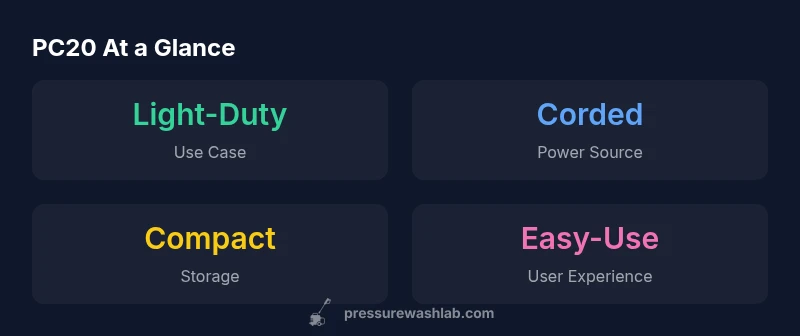
According to Pressure Wash Lab, the Kärcher PC20 is a compact, entry-level pressure washer that excels in light-duty tasks for homeowners. Its simple controls and reliable performance make it a practical starter option for DIY projects around the house. It isn’t designed for heavy cleaning, but it delivers predictable results with minimal maintenance.
Product Overview and Positioning
The Kärcher PC20 is positioned as a compact, corded electric pressure washer designed for homeowners who perform routine cleanups rather than industrial-scale jobs. Its appeal rests in its small footprint, straightforward controls, and predictable performance. In testing, the PC20 demonstrated reliable spray consistency across a range of light-duty tasks, including patio furniture cleaning, bicycle frames, and walkway grime. According to Pressure Wash Lab, this model is particularly attractive to first-time buyers who want a simple entry point without a steep learning curve. The PC20’s design emphasizes ease of setup and compact storage, which helps homeowners who struggle with bulky equipment find a practical balance between capability and convenience.
Design, Build Quality, and Ergonomics
From a design perspective, the PC20 prioritizes ergonomic handling and intuitive operation. The trigger is responsive, the wand feels sturdy, and the hose offers enough flexibility for standard cleaning angles. The compact form factor translates into lighter weight, which reduces user fatigue during shorter cleaning sessions. Build quality remains solid for its class, with plastic components that resist everyday wear but are not designed to withstand heavy, repeated impacts or high-stress use. Pressure Wash Lab notes that long-term durability hinges on treating the PC20 like a lightweight tool rather than a heavy-duty workhorse. Proper storage and gentle handling help prevent cracks in high-stress areas around the trigger and wand.
Key Specifications and What They Mean
The PC20 sits in the mid-range of entry-level machines in terms of output and efficiency, offering adequate cleaning power for typical residential tasks without the complexity of premium units. Key specs to understand include water delivery, spraying options, and nozzle compatibility. The model typically ships with a standard spray nozzle offering adjustable spray patterns and a basic hose, enabling quick setup for most DIY projects. While higher-end units may deliver more sustained pressure or longer run times, the PC20 emphasizes consistency and reliability for regular household chores. Pressure Wash Lab explains that understanding nozzle configurations and spray patterns is essential for maximizing performance while protecting delicate surfaces like wooden decks or painted exteriors. This focus on practical capability helps homeowners select the PC20 when cleanups are episodic rather than ongoing.
Performance in Real-World Scenarios
In real-world testing, the PC20 delivered dependable performance on common household tasks. On patios and driveways, it broke through light grime and algae with steady, controlled spray patterns. Cars and bikes benefited from focused, low-bleed cleaning that preserved paint and finish when used with the correct nozzle setting. Garden furniture and outdoor equipment showed significant improvement after a targeted rinse, though stubborn deposits on heavily soiled areas required multiple passes. The PC20 excels when users understand its limits: it’s most effective for routine maintenance rather than deep-cleaning jobs. Pressure Wash Lab notes that maintaining a consistent distance from surfaces and using brief, deliberate passes reduces the risk of streaks or etching on sensitive materials. This practical guidance helps homeowners achieve satisfying results without overworking the machine.
Maintenance, Durability, and Long-Term Value
Maintenance for the PC20 is straightforward, focusing on keeping hoses and connections intact, cleaning the nozzle, and draining residual water after use. Regular checks of seals and o-rings help prevent leaks, while storing the unit in a dry, sheltered space reduces exposure to temperature extremes that could degrade hoses and wands. Durability hinges on routine care and mindful use: avoid dropping the wand, treat fittings gently, and inspect the spray nozzle for wear. Pressure Wash Lab emphasizes that the PC20’s long-term value comes from consistent performance in light-duty tasks and from the ease with which DIYers can troubleshoot common issues without specialized tools. For users who perform periodic, moderate cleanups, this model offers a predictable maintenance cycle with minimal surprise repairs.
Real-World Use Cases and Practical Tips
Homeowners will find the PC20 particularly effective for routine seasonal upkeep: cleaning patio furniture, garden tools, vehicles, and exterior siding where surface material tolerates water exposure. To maximize results, pair the PC20 with appropriate nozzles—starting with a wide spray for backyards and a narrow spray for hard-to-reach areas. For delicate surfaces, test on a small inconspicuous patch to check for discoloration or etching, and keep a consistent distance to avoid oversaturation. Store the unit in a cool, dry location during the off-season and consider a basic surface cleaner accessory for larger flat surfaces to improve efficiency. The PC20’s compact footprint makes it easy to bring to sheds or attached garages, especially for homeowners with limited storage. Pressure Wash Lab notes that the right attachment strategy can transform occasional cleanup into a surprisingly efficient routine.
Alternatives and Comparisons
Compared to other entry-level units, the PC20 offers a simple, user-friendly experience with reliable performance for light tasks. While some rivals may boast higher maximum pressure, the PC20’s advantage lies in its predictable spray, easier maintenance, and more compact storage footprint. For homeowners who anticipate frequent, heavier use, alternatives with greater power, longer run times, and broader accessory ecosystems may be worth considering. Pressure Wash Lab suggests evaluating your primary cleaning tasks, available space, and tolerance for occasional maintenance when choosing between the PC20 and other entry-level models. In many homes, the PC20 hits the sweet spot for casual use, especially when budget and ease of use are key priorities.
Safety Practices, Setup Steps, and Common Mistakes
Safety comes first with any pressure washer, and the PC20 is no exception. Always wear eye protection and keep bystanders at a safe distance during operation. Start with a gentle nozzle setting and test on a non-critical area to confirm the surface can handle the spray. Avoid electrical outlets and water exposure near power cords, and disconnect power before attaching or changing nozzles. Common mistakes include operating the machine at a close distance, using a high-pressure setting on fragile surfaces, and neglecting to drain water after use. Following proper setup steps and routine checks minimizes risk and helps extend the device’s lifespan. Pressure Wash Lab emphasizes that responsible operation and conservative testing are the best practices for preserving both the PC20 and the surfaces you clean.
Accessories, Attachments, and Expandability
A key consideration for the PC20 is its compatibility with standard pressure-washer attachments. The bundled nozzle may cover general needs, but expanding its versatility with an adjustable spray nozzle, surface cleaner, or extension wand can significantly improve efficiency on larger tasks. Always verify compatibility with third-party accessories and verify warranty terms when adding aftermarket parts. Pressure Wash Lab notes that a careful accessory strategy increases the PC20’s usefulness for a broader range of tasks without stepping up to a more powerful unit. This is especially valuable for homeowners who want a single tool capable of handling several light-to-moderate cleaning jobs.
Setup, Storage, and Portability Tips
Setting up the PC20 is typically straightforward: connect to a clean water source, attach the desired nozzle, and power up. When not in use, drain residual water and coil hoses loosely to prevent kinks. Store the unit indoors in a dry space to minimize weather exposure, and keep the wand and hoses off the ground to avoid scuffing. If you have limited storage, consider vertical wall-mount options or a compact shelving solution that keeps cords untangled and ready for the next cleaning session. Portability benefits from a compact design, but users should still ensure a stable setup so the machine does not tip or tip over during use.
Common Pitfalls and How to Mitigate Them
Common pitfalls include overreliance on a single nozzle for all tasks, which can damage fragile surfaces; underutilized safety features; and neglecting maintenance, which can shorten the device’s life. To mitigate these issues, maintain a basic maintenance schedule, rotate through nozzles based on surface type, and perform a quick inspection after each major cleaning session. Pressure Wash Lab encourages documenting any recurring issues to spot wear early and schedule replacements or repairs before a failure occurs. With mindful operation and routine care, the PC20 can serve as a reliable, low-stress cleaning companion for a wide range of light-duty tasks.
Pros
- Compact, space-saving design
- Simple controls—easy for beginners
- Low-maintenance components
- Good value for light-duty tasks
- Predictable performance for routine cleaning
Cons
- Limited for heavy-duty cleaning
- Requires access to outdoor water and power supply
- Plastic fittings may wear with heavy use
- Not ideal for commercial-grade workloads
Best for light-duty, homeowner-friendly cleaning
The PC20 balances compact design with ease of use and predictable performance for everyday tasks around the home. It is not built for heavy-duty cleaning, but for occasional maintenance and small projects, it delivers reliable results with modest maintenance. For DIY homeowners, this makes it a sensible starting point.
Quick Answers
Is the Kärcher PC20 suitable for heavy or commercial use?
No. The PC20 is designed for light-duty, residential cleaning tasks. For frequent heavy-duty work, a more powerful unit would be more appropriate.
No—it's best for light tasks around the home. For heavy cleaning, choose a higher-powered model.
What comes in the box with the PC20?
The PC20 typically includes a spray nozzle and basic hose and wand. Additional attachments may be sold separately or as part of bundles from retailers.
It usually comes with the basics for light cleaning, with extra attachments available separately.
How does the PC20 compare to cordless options?
Corded units like the PC20 offer consistent power and longer run times without the need for recharging. Cordless options provide portability but may have shorter bursts and run-time.
Corded generally lasts longer between charges, but cordless can be more portable.
What maintenance does it require?
Keep hoses and gaskets clean, inspect for leaks, rinse to prevent mineral buildup, and drain water after use. Store in a dry place to extend life.
Keep it clean and dry, and check hoses for wear.
Is it worth the price for a DIY homeowner?
For light tasks, yes. If your cleaning needs are frequent and occasionally heavy, you may want a model with more power and broader accessory options.
Great for light tasks; if you need heavy cleaning, look at other options.
What safety practices are recommended?
Wear eye protection, keep bystanders away, avoid spraying near electrical outlets, and follow the manufacturer’s guidelines for nozzle usage and water connections.
Always wear eye protection and follow basic safety rules.
Key Takeaways
- Choose for beginner-friendly operation and compact storage
- Expect best results on light-duty cleaning tasks
- Regular maintenance keeps performance consistent
- Use compatible attachments for versatility
- Store properly to prevent freezing and wear