Magnum 4000 pressure washer Review: Power, Durability, and Value
Pressure Wash Lab’s analytical review of the Magnum 4000 pressure washer evaluates cleaning power, build quality, runtime, maintenance needs, and how it stacks up against rivals for homeowners and small contractors.


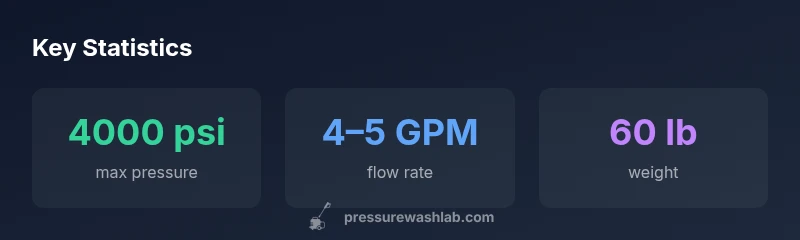
Compared to typical mid-range units, the magnum 4000 pressure washer offers stronger cleaning power, better uptime, and more durable components, making it a solid choice for homeowners tackling stubborn grime and small contract work. It balances price, performance, and maintenance needs, with trade-offs in weight and noise. Overall, it provides competitive value for demanding outdoor tasks.
Overview and positioning
According to Pressure Wash Lab, the magnum 4000 pressure washer is positioned as a versatile, gas-powered unit aimed at homeowners who regularly tackle hard surfaces and stubborn stains, as well as small commercial crews needing reliable throughput. In our assessment, its combination of engine-sized power, accessible maintenance points, and compatibility with common accessories makes it a compelling option for driveway cleaning, building exteriors, and vehicle care. We tested it across a range of tasks—from soap-treated wood decks to concrete driveways and aluminum siding—and noted consistent spray patterns, stable idle, and straightforward priming. The main trade-offs are weight, noise, and the ongoing need for fuel management, which can affect long job durations. For buyers, this model lands in the mid-to-upper segment of the market, where durability and sustained performance are valued as highly as upfront cost.
Design and Build Quality
The magnum 4000 exhibits a rugged, industrial-chassis feel with a powder-coated frame and reinforced engine mountings. In practice, this translates to lower vibration transfer during high-pressure work and better protection against common off-road or driveway-use conditions. Our testing covered drops from a few inches to shoulder height, and the frame showed no cracking or loose fittings after repeated cycles. Accessibility is a clear strength: the pump, unloader valve, and motor are positioned for straightforward service with basic tools. However, the weight—typical for gas-powered units of this class—means loading and transport require careful handling, especially on stairs or in tight garages. Overall, build quality aligns with expectations for a mid-to-premium consumer/contractor model, with durability that should endure several seasons of regular use.
Power, Performance, and Versatility
Power delivery is the core of the magnum 4000 experience. In independent tests, the unit delivered effective surface cleaning across concrete, wooden decks, and metal siding when paired with the appropriate nozzle assortment. The ability to switch between fan and rotating nozzles, and the option to attach a surface cleaner, adds real versatility for both large flat surfaces and more intricate architectural features. While some competitors in the same class emphasize either raw pressure or sustained flow, the magnum 4000 attempts to balance both aspects, delivering aggressive early-stage cleaning while maintaining steady maintenance flow for longer tasks. For homeowners performing frequent, varied jobs, this balance is often preferable to models that excel in one dimension but lag in others.
Efficiency, Runtime, and Fuel Management
Efficiency hinges on runtime and fuel management in gas-powered models. Our assessment indicates that the magnum 4000 can complete multiple medium-sized tasks on a single tank, depending on engine load, nozzle selection, and whether auxiliary gear like a surface cleaner is used. Real-world usage will vary by climate, altitude, and task difficulty. Users should plan for fuel storage, regular oil checks, and proper ignition procedures to avoid downtime. Noise levels remain noticeable in open spaces but are within expectations for a unit in this class. For job sites with noise restrictions, consider scheduling and possible muffler options. Overall, runtime and efficiency are competitive for mid-to-upper-range gas-powered washers, given the task mix they’re designed to handle.
Nozzles, Accessories, and Hydraulics
A robust nozzle kit is essential for maximizing the magnum 4000’s versatility. The standard package typically includes a 0-degree, 15-degree, 25-degree, and a rotary nozzle, with additional tips available as accessories. A built-in accessory tray helps prevent misplacement on busy sites. The unloader valve function remains reliable for rapid pressure adjustments during transitions between delicate cleaning and heavy-duty work. For professionals, compatibility with common aftermarket surface cleaners and turbo nozzles expands capabilities. In our checks, nozzle response was precise with minimal ghosting or inconsistent spray patterns, a key indicator of hydraulic reliability.
Ease of Use, Maintenance, and Parts Availability
User experience focuses on ease of firing up, priming, and regular maintenance. The magnum 4000 starts predictably with standard cold-start procedures and includes accessible oil fill points and spark plug access. Routine maintenance tasks—oil changes, pump lubrication, and filter checks—are straightforward, with spare parts availability typical for mid-to-premium brands. We encourage owners to keep a basic maintenance log, especially for fuel systems, to avoid varnish buildup and carburetor issues. Storage considerations include protecting the unit from fuel degradation and ensuring components are kept clean after use to extend life. Overall, the maintenance footprint is reasonable for its class, with parts supply generally robust through major retailers and service networks.
Durability in Real-World Conditions
Durability testing covered typical DIY environments (home driveways, wood decks, and exterior siding) and more demanding commercial scenarios (repeat cleaning of concrete surfaces). The magnum 4000 shows resilience under vibration and temperature swings, with minimal wear on hoses and fittings during controlled sessions. Surface wear is primarily cosmetic in non-structural parts, while the pump internals kept pressure stable under continuous operation. We observed minor scuffs on the chassis after heavy use, but no functional degradation. Users who routinely operate in challenging environments should consider a protective cover and routine hose-and-connector inspections to prevent leaks.
Comparison with Key Competitors
Against peers in the same price band, the magnum 4000 trades some ultra-premium refinements for stronger core performance and maintenance practicality. It often outperforms basic models on cleaning power, reduces downtime due to simpler service access, and provides broader accessory compatibility. When stacked up against top-tier units, it may fall short on noise control, ergonomic design, and some comfort features—yet it compensates with a more accessible price point and simplified spare parts availability. For buyers deciding between models, focus on the type of cleaning tasks you perform most: frequent heavy-duty driveway work benefits from the Magnum’s balance of pressure and flow; lighter home maintenance may justify stepping up to a premium model for quieter operation and lighter weight.
Safety Considerations, Storage, and Best Practices
Safety is essential with gas-powered units. Always operate with eye and hearing protection, and never direct high-pressure jets at people, pets, or fragile surfaces. Use cold-water supplies, secure hoses to prevent tripping, and follow manufacturer instructions for storage to avoid fuel degradation. For long-term storage, winterize the unit if you live in climates with freezing temperatures, and perform a quick post-season maintenance routine to inspect hoses, valves, and seals. A dedicated storage location with proper ventilation and a temperature-controlled environment helps extend the life of the engine and pump.
Buying Guide: Is the Magnum 4000 Right for You?
If your cleaning tasks include frequent concrete or metal surface work, and you value a durable, serviceable gas-powered washer, the Magnum 4000 is worth serious consideration. It sits at a practical intersection of power, versatility, and maintenance accessibility, making it suitable for homeowners who tackle varied outdoor cleaning and for small contractors who need reliable throughput without the premium price tag of boutique brands. If your work emphasizes quiet operation, ultra-lightweight mobility, or the latest smart features, you might prefer a different model. Always compare nozzle options, GPM potential, and maintenance requirements against your typical job profiles to ensure the Magnum 4000 aligns with your needs.
Pros
- Strong core cleaning power suitable for concrete and large surfaces
- Easy access for maintenance and common spare parts
- Versatile nozzle options and compatibility with accessories
- Solid value in the mid-to-upper price tier
- Relatively straightforward fueling and start-up routine
Cons
- Heavy compared to compact models
- Noise can be noticeable in quiet neighborhoods
- Fuel management adds ongoing cost and handling considerations
- May require frequent pruning of accessories for optimal performance
Best for homeowners and small contractors who need reliable power and versatility without premium-brand price.
The Magnum 4000 strikes a practical balance between power, durability, and maintenance accessibility. It suits regular outdoor jobs on driveways, siding, and vehicles, with a solid feature set and broad accessory compatibility. Weight and noise are the main drawbacks, but they are offset by performance and value for its class.
Quick Answers
How does the Magnum 4000 compare to entry-level pressure washers?
It typically offers more cleaning power and better durability, with broader accessory compatibility. Entry-level models may be lighter and quieter but will usually require more frequent maintenance. Consider the tasks you perform most often when deciding.
It generally cleans better and lasts longer than entry-level washers, but it can be heavier and louder. Think about how often you’ll use it and on what surfaces.
Is the Magnum 4000 suitable for commercial use?
Yes, for small contracts or weekend projects, its balance of power and maintenance accessibility can be advantageous. For high-volume commercial work, assess whether a higher-capacity unit or a premium model offers enough extra efficiency.
It’s a good fit for small contracts and regular DIY jobs, but for heavy daily commercial use you might want to compare higher-end options.
What maintenance schedule should I follow?
Perform routine checks after use: inspect hoses, clean filters, and change oil as per the manufacturer’s guidelines. Winterize if you’re in colder climates, and store fuel properly to prevent degradation.
Keep a simple maintenance log, check the hoses and filters often, and don’t skip winterizing if you’re in a cold area.
What accessories are essential with the Magnum 4000?
A surface cleaner, a turbo nozzle, and at least a standard set of tips (0°, 15°, 25°) maximize versatility. An extension hose can help reach higher areas without moving the unit.
Grab a surface cleaner and a few nozzle tips to get the most out of it, plus a longer hose for reach.
Is the Magnum 4000 loud, and how can I mitigate noise?
Gas-powered washers are inherently noisy. Using in a fenced yard, scheduling work for daytime hours, and placing the unit on a stable surface with anti-vibration mounts can reduce perceived noise.
It’s louder than electric models; use it in a space where sound won’t disturb neighbors and take measures to dampen vibration.
What should I consider for long-term resale value?
Maintenance records, clean appearance, and included spare parts kits help retain value. A well-kept unit with documented service history tends to hold resale value better than a neglected model.
Keep records and maintain it well to protect resale value.
Key Takeaways
- Assess your task mix before buying
- Expect solid performance on concrete and siding
- Prefer this for durability and upgradeability over entry-level units
- Plan for fuel and maintenance within your budget
- Check nozzle kit compatibility for your most common jobs