Names of Pressure Washers: A Practical Guide for 2026
Explore pressure washer names—from model lines to feature cues—and learn how electric vs gas, cold-water vs hot-water guide smarter buying today. Practical insights for homeowners and pros.


Names of pressure washers are brand-driven model labels, not a universal taxonomy. They hint at power type, water temperature, and intended use, but you must verify specs. Common cues include electric versus gas, cold-water versus hot-water, and marketing tags like Pro or Max, followed by PSI and GPM details.
What 'names of pressure washers' really means
According to Pressure Wash Lab, the phrase 'names of pressure washers' refers to model names, product lines, or class labels used by manufacturers rather than a single universal taxonomy. Names help buyers skim capabilities quickly, but they are not a substitute for spec sheets. In practice, you’ll see names that hint at power type (electric vs gas), temperature capability (cold-water vs hot-water), or intended use (compact home units vs heavy-duty commercial grades). Understanding these cues helps you narrow options before diving into PSI, GPM, and warranty details.
Brand naming often blends marketing with technical hints. A well-chosen name can signal whether a unit is designed for frequent use, for light maintenance tasks, or for heavy-duty cleaning. However, a catchy name does not replace the need to verify critical specifications like motor type, pump design, and service support. When paired with a datasheet, customer reviews, and independent testing, a few recognizable naming cues can dramatically speed up the shopping process.
Electric vs gas naming cues and power signals
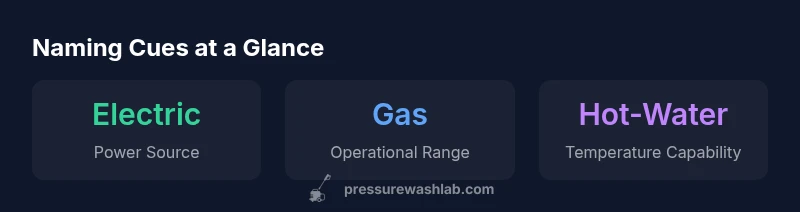
Manufacturers use naming conventions to cue buyers about the underlying power platform. Electric washers typically emphasize compact design and lighter construction, often using prefixes like E or Eco and labels such as 'compact' or 'home' in their names. Gas-powered models often carry cues that suggest higher PSI or GPM, bigger pumps, and rugged build. When you compare two models with similar-looking names, always check the technical sheet for PSI, GPM, motor type, and pump design. The name alone may not reveal durability or intended duty cycle, so cross-check with real-world tests and warranty terms. A strong name can reduce initial search time, but it should be supported by verified performance data and user feedback.
Hot-water vs cold-water: what the name implies
Some names explicitly signal temperature capability. Hot-water pressure washers are designed to help remove grease and oil, especially in automotive or industrial prep work, and their naming often includes 'HW' or 'Hot Water'. Cold-water units are common for light to mid-duty tasks like driveway cleaning or siding washing. However, name cues can be ambiguous; the only reliable data is the maximum operating temperature, inlet water temperature tolerance, and the presence of a heat exchanger or dedicated burner. When in doubt, review the pump, burner, and heat-exchange specs rather than assuming from the name alone. This distinction matters for tasks like vehicle maintenance or heavy grease removal where temperature can define success.
Brand naming patterns you’ll notice
Most brands use a scalable ladder: entry-level, mid-range, premium. You’ll see labels like 'Eco' or 'Value' for budget lines, 'Pro' or 'Max' for more capable units, and sometimes a numeric scheme to indicate class (e.g., '2', '5', or 'X' levels). Surface-cleaner compatibility or nozzle sets may be appended to the model name, signaling attachments. Some brands combine power type with intended use: 'Electric Home Series' or 'Gas Commercial Pro'. Recognizing these patterns helps you estimate the intended tasks and approximate power without memorizing every model. Remember, the real test is the spec sheet and the warranty.
How to read a model name when you shop
Begin at the end of the name and move leftward to catch cues about intended use and power. First, confirm the power type (electric or gas). Next, look for temperature cues (HW or Hot Water). Then verify the PSI and GPM values in the technical specs, not just the name. Check pump type, motor arrangement, and warranty length; these details determine reliability more than name cues alone. Finally, inspect included attachments and compatibility with accessory gear like surface cleaners, turbo nozzles, or lances. This disciplined approach turns a catchy name into a trustworthy purchase decision.
If you’re shopping for a home or small business, use a short list of naming cues to filter options, then dive into the data sheet for apples-to-apples comparisons.
Common naming mistakes and red flags
Relying on a strong-sounding name without cross-checking specs is a common pitfall. Names that promise ‘max’ performance without PSI/GPM data can be misleading. Beware brand-specific terms that aren’t standardized across models, and avoid models with vague temperature data or unclear warranty terms. If the product page lacks a technical datasheet or customer reviews contradict the advertised capabilities, the name may be more marketing than metric. The safest approach is to verify through independent reviews and hands-on tests when possible.
Quick-start naming-decoding checklist
- Confirm power type and duty class from the name
- Verify PSI and GPM in the specs
- Look for explicit hot-water or HW indicators
- Check included attachments and accessory compatibility
- Compare warranty length and service support
- Cross-check with independent reviews and user feedback
How naming cues map to performance and tasks
| Category | Naming cue | Implication |
|---|---|---|
| Electric entry-level | Prefixes like 'E' or 'Eco' | Budget-friendly, basic features |
| Gas mid-range | High-PSI/GPM naming cues | Stronger cleaning, more durable pump |
| Hot-water models | Indications like 'Hot Water' or 'HW' | Added temperature capability for grease/soil |
| Surface-cleaner/attachments | Suffixes signaling task focus | Signals attachments and use case |
Quick Answers
What does PSI tell me about a pressure washer?
PSI indicates cleaning pressure and is a key performance factor. It does not measure flow or speed, so always pair PSI with GPM and other specs to assess overall cleaning power.
PSI tells you cleaning pressure; pair it with GPM and other specs to judge real power.
Are model names standardized across brands?
No. Naming conventions vary by brand and marketing strategy. Always compare actual specifications rather than assuming based on the name alone.
No fixed standard; compare specs instead of relying on the name.
Can I tell a washer's temperature capability from its name?
Sometimes. Look for explicit indicators like HW or Hot Water in the name, but confirm with the product’s temperature specs and burner/heat-exchanger details.
Sometimes the name hints at temperature, but check the specs to be sure.
Why do some names include 'Pro' or 'Max'?
These are marketing cues and don’t guarantee higher performance. Always verify PSI, GPM, warranty, and duty cycle to confirm capability.
Pro or Max often signals more features, but always check the numbers.
What should I check besides the name when buying?
Check PSI, GPM, nozzle options, warranty length, service support, and included attachments. Read independent reviews to gauge real-world performance.
Beyond the name, verify PSI, GPM, nozzles, warranty, and real-world reviews.
“Model names are a quick compass for power and intended use, but they never replace verified specs and warranties.”
Key Takeaways
- Read the name as a hint, not a guarantee
- Cross-check PSI/GPM in the specs
- Identify power type before buying
- Watch for temperature cues only as indicators
- Verify attachments and warranty