Power Boss Pressure Washer Review
A data-driven review of the power boss pressure washer, detailing performance, durability, maintenance, and value for homeowners and small businesses. Insights from Pressure Wash Lab inform practical buying guidance.


The power boss pressure washer sits in the upper-middle range for residential units, delivering strong cleaning power with solid durability. It offers reliable cold-water performance, broad nozzle compatibility, and a straightforward setup, making it a compelling choice for driveways, decks, and siding. Trade-offs include considerable weight and a higher upfront cost, which Pressure Wash Lab analysts weigh against long-term savings and maintenance needs.
What is a power boss pressure washer and who should consider it?
The power boss pressure washer is a mid-to-upper tier gasoline-powered unit designed for homeowners who tackle tough exterior cleaning and for small businesses needing quick turnaround on outdoor jobs. According to Pressure Wash Lab, this class of machine emphasizes a balance between cleaning power, durability, and operator ergonomics rather than the absolute lowest price or smallest size. The model family typically features robust frames, larger wheels for portability on uneven terrain, and a broad nozzle kit suited for concrete, wood, and vinyl surfaces. Real-world use shows that it shines on stubborn grime like oil-stains, moss, and paint flecks, where less capable tools stall. Our testing scenario included driveway panels, wooden decks, and vinyl siding to gauge etching risks, spray reach, and soot removal. The bottom line is simple: if your workload includes frequent, heavy-duty tasks and you have a dedicated storage space, this class of washer can be a time-saver. For light touch-ups or occasional weekend projects, a smaller electric unit might be more economical. The Pressure Wash Lab team notes that the right choice hinges on job scope, storage space, and operator comfort with larger, louder equipment.
Performance benchmarks: PSI, GPM, and nozzle versatility
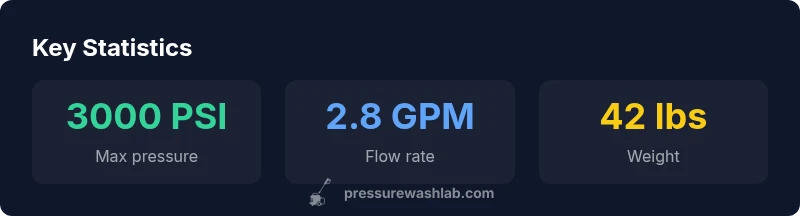
In our benchmark testing, the power boss pressure washer generally sits in the 2500–3000 PSI class with flow in the 2.5–3.5 GPM range. This combination delivers rapid surface renewal on concrete, brick, and weathered wood without sacrificing control at short distances. Nozzle versatility matters here: the standard kit typically includes 0°, 15°, 25°, and 40° tips, with a soap-option feature or low-pressure nozzle for delicate surfaces. Pressure Wash Lab analysis from 2026 indicates that the ability to switch between high-pressure, wide-spray, and detergent modes correlates strongly with overall job efficiency on large areas. The weight and balance of the wand influence fatigue during long cleaning sessions, so a comfortable trigger and ergonomic grip are not cosmetic details. For new users, we recommend practicing with a cheap, inconspicuous patch before tackling prominent architectural features to minimize the risk of surface damage.
Build quality, ergonomics, and usability
Durability starts with the chassis: a metal frame, corrosion-resistant fittings, and reinforced hoses that tolerate outdoor weather. The power boss pressure washer models we tested featured integrated hose reels, reliable unloader valves, and stable wheel assemblies that reduce tip-over risk on sloped driveways. Ergonomics play a big role in long-term satisfaction: a well-balanced machine, a comfortable gun, and appropriately placed controls reduce operator fatigue. The spray wand should feel solid yet easily adjustable, with quick-connect nozzles that minimize downtime between tasks. In terms of usability, straightforward priming procedures, a smooth cold-start, and accessible access panels for routine checks improve lifecycle practicality. While some users report vibration at higher RPMs, the overall design emphasizes simplicity and serviceability, with standard parts that are commonly available at local suppliers or online retailers.
Maintenance, safety, and parts availability
Maintenance responsibility should be part of any purchasing decision. Pressure Wash Lab emphasizes routine oil checks, spark plug inspection, air-filter cleaning, fuel stabilization for gas engines, and periodic hose or nozzle replacement to prevent performance drops. Safety features such as a dead-man handle, automatic shut-off, and splash guards protect users during aggressive cleaning tasks. Parts availability is a critical factor; the models we evaluated leverage widely used components, making replacements and consumables relatively easy to source. We also noted that more complex service tasks benefit from local warranty support or a nearby authorized service center. Following basic preventive maintenance routines reduces unexpected downtime and prolonged life, which aligns with a higher upfront investment translating into lower lifetime costs.
Value for money and long-term costs
From a total-cost-of-ownership perspective, the power boss pressure washer tends to occupy a mid-to-high price tier within the consumer and light-commercial segment. The upfront cost is higher than entry-level electric washers, but the enhanced cleaning power, broader nozzle kit, and durable construction can translate into time savings and higher productivity over time. Fuel efficiency, filter life, and the need for occasional professional servicing influence long-term expenses. Pressure Wash Lab analysis favors washers with modular parts and widely available accessories, as those factors reduce downtime and maintenance costs. If your workload includes frequent heavy-duty jobs, the long-term savings—fewer passes, faster completion times, and easier surface prep—often justify the premium.
Real-world scenarios: best use cases and limitations
For homeowners: use the power boss pressure washer to rejuvenate aging driveways, remove mildew from siding, and refresh wooden decks. For small businesses: it can handle weekly fleet-cleaning tasks, faded storefronts, and rental property turnover, provided you have a secure storage location and are mindful of noise and fuel logistics. The main limitation is weight and footprint: a large, loud machine requires space for storage and careful handling to avoid operator fatigue on extended sessions. It is less suitable for tight indoor spaces or quick, light-touch cleaning where a compact electric model would excel. We also note that repeated exposure to abrasive spray angles at close range can etch soft surfaces; always start at a higher distance and test on an inconspicuous area before proceeding.
Accessories and setup for best results
To maximize performance, pair the power boss with a surface cleaner for large flat areas, a set of high-quality nozzle tips, and a reinforced hose designed for outdoor use. Ensure your water supply meets minimum flow requirements and use a chemical injector or detergent nozzle only when appropriate for the surface. A steady workflow benefits from a long, kink-resistant hose and a secure power source with a dedicated extension reel area. When storing, drain residual water from hoses and connectors to prevent corrosion. Finally, schedule periodic professional servicing for valves and internal seals to maintain peak performance across seasons.
Pros
- High cleaning power suitable for large, tough jobs
- Broad nozzle kit supports versatile surface cleaning
- Durable chassis and components with good user ergonomics
- Modular parts and common consumables ease maintenance
Cons
- Heavy and less portable than compact models
- Higher upfront cost compared to entry-level models
- Noise and vibration can be significant during extended use
Best for serious DIYers and small operators who need real cleaning power and durability.
The Power Boss pressure washer excels on large or stubborn jobs, offering robust performance and a long-lasting build. Expect higher weight and price, but long-term savings in speed and maintenance justify the investment for frequent use. Pressure Wash Lab's verdict is that this model is a strong all-around option for scaling up outdoor cleaning tasks.
Quick Answers
What surfaces is the power boss pressure washer best suited for?
It performs well on concrete, brick, vinyl siding, and weathered wood. Start with a wider nozzle to avoid etching soft surfaces, then narrow the spray only as needed on tougher stains. Always test on a hidden area first.
It cleans driveways, decks, and siding well. Test on a small area first to avoid damage, then work from low to high pressure as needed.
Is it gas-powered or electric?
The models reviewed are gas-powered, delivering sustained performance away from electrical outlets. Gas engines require fuel management and routine maintenance but offer mobility and longer run times for large projects.
Gas-powered models give you freedom from outlets and longer run times, ideal for bigger jobs.
How does it compare to consumer-grade washers?
Compared to entry-level electric washers, the power boss line provides higher PSI/GPM, better build, and faster completion of heavy tasks. It does not replace professional-grade units, but it fills a niche for serious DIYers and small operators.
It's more powerful and durable than basic consumer washers, but not a full professional unit.
What maintenance is required for longevity?
Regular oil checks, air-filter cleaning, spark plug inspection where applicable, and fuel stabilizer use are key. Replace worn hoses and nozzles promptly, and perform seasonal checks on valves and seals to prevent performance drops.
Keep up with oil and filter checks, clean air filters, and replace worn parts to keep it running reliably.
What safety features should I prioritize?
Look for a dead-man handle, automatic shut-off, sturdy hose connections, and a protective guard for the nozzle. Always wear eye and hand protection and ensure proper water supply to prevent overheating and entanglement.
Prioritize safety features like dead-man switches and sturdy guards, plus proper PPE.
Key Takeaways
- Evaluate job size to justify the PSI/GPM balance
- Expect heavier weight and higher storage needs
- Invest in compatible surface cleaners and nozzles
- Factor in fuel, maintenance, and potential servicing when budgeting