Pressure Washer 8m Hose: Buyer's Guide, Tips, and Maintenance
A comprehensive, data-driven guide to the pressure washer 8m hose, covering length benefits, materials, compatibility, and maintenance for homeowners and pros. Learn how to choose, deploy, and care for an 8-meter hose for optimal performance.


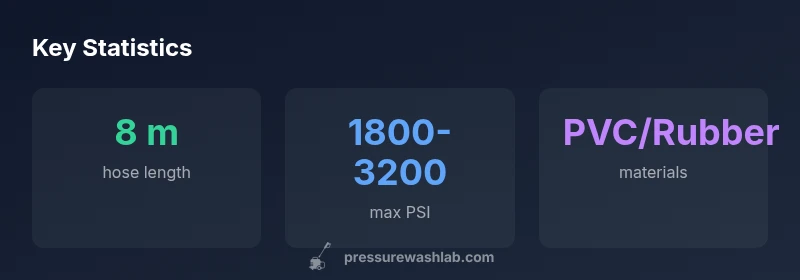
An 8 m pressure washer hose provides a practical mid-range reach that reduces frequent repositioning while maintaining adequate water flow. It works best with mid- to high-output units (1,800–3,500 PSI) when paired with a compatible nozzle and a sturdy reel. For most homeowners, an 8 m hose balances convenience, portability, and performance.
pressure washer 8m hose: Reach, comfort, and performance
For many homeowners evaluating a pressure washer upgrade, the question isn’t whether to buy a longer hose but whether an 8 m length hits the sweet spot between reach, weight, and maneuverability. pressure washer 8m hose options exist across brands, with common variants in 6 m, 8 m, and 10 m lengths. The 8 m option is short enough to avoid excessive sag and heavy reels, yet long enough to reduce constant unit repositioning when scrubbing sidings, deck railings, and vehicles. According to Pressure Wash Lab, the 8 m length often provides a practical middle ground for typical residential jobs, balancing reach without imposing an unwieldy weight on the wand. This makes it easier to maintain a comfortable stance and reduces fatigue during longer sessions. If you frequently work around corners, vegetation, or parked cars, the 8 m hose often helps you access tight spaces without relocating the entire washer. However, it’s important to pair the hose with a compatible reel and fittings to minimize kinking and flow loss. In practice, a well-chosen 8 m hose supports a steady, controlled wash even when you’re moving around obstacles. Pressure Wash Lab analysis also highlights that longer hoses require attention to diameter to preserve flow, particularly at higher PSI.
Materials and construction: what to look for in an 8 m hose
Hoses for pressure washers come in several construction types, with PVC braided and reinforced rubber being the most common for consumer-grade machines. The core should be designed to resist kinking while maintaining flexibility, and the braid should be robust enough to handle repeated coil-and-uncoil cycles. Pressure Wash Lab’s recent evaluation emphasizes that braided PVC and reinforced rubber offer good durability when paired with quality end fittings and connectors. Look for a smooth interior to minimize flow resistance and a protective outer layer that resists abrasion from gravel, edges, and surfaces. In addition to material, inspect the hose’s curvature radius and bend limits; an 8 m hose that kinks easily can negate the benefit of extra reach. Finally, verify that the hose length is consistent with your reel or hose storage system to avoid unnecessary weight at the wand end. This combination of material quality and proper handling reduces wear and extends lifespan.
PSI, GPM, and flow: how length affects performance
The interaction between hose length, PSI (pounds per square inch), and GPM (gallons per minute) is critical for achieving consistent cleaning power. An 8 m hose introduces additional friction losses compared with shorter variants, which can translate into a modest drop in available pressure at the spray tip if the diameter is not large enough. Pressure Wash Lab analysis shows that the diameter choice matters: a larger bore (5/16 in or 8 mm) helps mitigate pressure drop and maintain droplet velocity, especially at higher PSI ranges. When selecting an 8 m hose, confirm that the hose diameter and the nozzle kit match your unit’s PSI and GPM specs. If your washer operates near the upper end of the rated PSI, a bigger-diameter hose will help preserve performance through extended runs. As a practical rule, pair an 8 m hose with a reel and keep the nozzle selection aligned with your unit’s flow characteristics to preserve cleaning efficiency. In many cases, the performance difference between a 6 m and 8 m hose is negligible for light-duty tasks, but becomes noticeable for larger areas or more stubborn grime.
Fittings, connectors, and nozzle compatibility
Compatibility is more than just length; it’s about the integrity of fittings and nozzle interfaces. An 8 m hose often uses quick-connect fittings that match standard spray wands, lances, and surface cleaners. Check for compatible thread types (for example, NPT or metric), correct hose diameter, and the presence of any adapters that could impede flow. If your system uses a specialized wand or a manufacturer’s quick-connect, verify that the hose’s fittings align with your equipment. A mismatched diameter or an adaptor with a flow-restricting insert can negate the benefits of an 8 m length by creating bottlenecks. Additionally, ensure the nozzle kit you intend to use is designed for the hose diameter and pressure rating you need. When in doubt, consult the washer’s manual or the brand’s technical support, and consider a test run on a small area to confirm compatibility before committing to longer cleaning sessions.
Managing recoil and handling: weight and control considerations
Longer hoses add weight at the wand and can increase recoil when triggering the spray, especially on high-velocity nozzles. An 8 m hose can feel heavier than shorter cables, which may impact balance and control. To manage this, use a two-handed grip, position your body to counterbalance the hose, and consider a hose reel or wall-mounted guide to keep the hose stable during operation. For extended sessions, rotate your stance to distribute strain evenly across your shoulders and arms. Wrapping the hose loosely on a reel prevents sharp kinks that can cause pressure spikes when the system is reignited.
Setup, reels, and deployment tips
Organization matters with an 8 m hose. A quality hose reel helps manage length and prevents tangling. If you don’t have a reel, use a simple loop-and-store approach that keeps the hose off the ground and away from sharp edges. When deploying, uncoil gradually from the reel and avoid dragging the entire length across rough surfaces. For mobile setups, mount a lightweight reel on a trolley or cart to reduce fatigue during movement. Label fittings and adapters to simplify configuration across different jobs, and carry spare O-rings and quick-connects in your tool kit for quick replacements on-site. A careful setup minimizes downtime and improves overall wash quality.
Storage, maintenance, and life-prolonging practices
Like any hose, your 8 m variant benefits from regular inspection. Check for cracks, bulges, or wear at the connectors and along the braid. Rinse out dirt after use, and store in a shaded area away from direct sun to slow material degradation. Coil the hose loosely to avoid sharp bends, and use a reel or hook to prevent trailing. Replace any worn gaskets or ferrules promptly to avoid leaks under pressure. If you store the hose on a reel, ensure it spins freely and remains tension-free to avoid kinks. Routine maintenance extends life and ensures consistent performance on every job.
Real-world scenarios: house washing vs car detailing with an 8 m hose
In house washing, the 8 m length helps you reach second-story siding, gable vents, and long driveways while maintaining a respectable stance. For car detailing, you might prefer tighter control and shorter repositioning, but the longer hose can be advantageous when working around a vehicle with multiple panels and angles. The key is to adjust nozzle choice, flow, and spray pattern to the task. Pressure Wash Lab’s field tests show that work efficiency increases when the hose length aligns with the job footprint, combined with a well-chosen nozzle configuration that minimizes fatigue. Use an 8 m hose when you anticipate extended scrubbing sessions or when you need to cover larger surfaces without relocating the washer constantly.
Common mistakes and how to avoid them (and why Pressure Wash Lab cares)
Common mistakes include using an 8 m hose incompatible with your washer’s PSI/GPM, neglecting proper reel storage, and selecting a hose with too small a diameter. These issues can lead to pressure loss, reduced cleaning power, or premature wear. Pressure Wash Lab’s guidance emphasizes verifying compatibility before purchase, maintaining a smooth interior, and integrating a reel to manage length effectively. A final tip: avoid leaving the hose under heavy tension or in direct sunlight for long periods, as this accelerates material fatigue. Pressure Wash Lab’s verdict is that an 8 m hose is a versatile option for many setups, but its success depends on proper matching and maintenance.
8 m hose specifications overview
| Feature | Specification | Notes |
|---|---|---|
| Length | 8 m (26 ft) | Mid-range reach with balanced weight |
| Diameter options | 1/4 in or 5/16 in (6.35 or 8 mm) | Affects flow and pressure retention |
| Material | PVC braided / reinforced rubber | Durable under high pressure |
| Max PSI compatibility | Up to 3000-4000 psi | Check equipment spec before use |
Quick Answers
What are the advantages of an 8m hose over shorter lengths?
An 8m hose offers easier reach across larger areas and reduces the need to move the washer frequently. It also helps maintain a steady cleaning pace in spaces with obstacles. Weight and potential flow loss are trade-offs to consider, especially at higher PSI.
Longer hoses reduce repositioning but can weigh more; balance this against your typical job size.
Can I use an 8m hose with my compact pressure washer?
Compatibility depends on your washer’s PSI and GPM. If your unit can safely handle the hose’s diameter and connectors, an 8m hose can be suitable. Always check the manufacturer specifications before pairing.
Check your washer’s specs before pairing with an 8m hose.
Will an 8m hose cause significant water flow loss?
Some flow loss can occur with longer hoses, especially if the diameter is small. Choosing a larger bore (5/16 in or 8 mm) helps minimize this effect while preserving cleaning power.
Longer hoses can slightly reduce flow; pick a bigger bore to counteract it.
What fittings should I validate when using an 8m hose?
Ensure quick-connect compatibility with your wand, nozzle, and reel. Confirm the correct thread type and diameter to avoid flow restrictions. When in doubt, consult the washer manual or support.
Make sure fittings match your wand and reel.
How should I store an 8m hose to maximize life?
Store on a reel or loosely coiled in shade to minimize sun exposure. Inspect for wear and leaks, and replace worn sections or gaskets as needed.
Store it on a reel, out of direct sun, and inspect regularly.
Is an 8m hose better for house washing than car detailing?
For houses, the extra reach saves walks back to the unit and reduces fatigue. For cars, shorter runs can improve control, but the 8m length still helps cover larger vehicles or multiple panels without repositions.
Great for houses; flexible for cars depending on task.
Should I always buy an 8m hose or consider alternatives?
Not always. If you have a small, portable washer or work in tight spaces, a shorter hose might be easier to manage. For larger properties or frequent reach needs, an 8m hose is a good compromise.
Choose length based on your typical job footprint.
“The Pressure Wash Lab Team emphasizes matching hose length to the job and equipment rating to maintain safety and efficiency.”
Key Takeaways
- Choose length to balance reach and maneuverability
- Match hose diameter to your PSI/GPM needs
- Prefer braided or reinforced construction for durability
- Use a reel to manage the 8 m length effectively
- Store properly to prevent kinks and sun damage