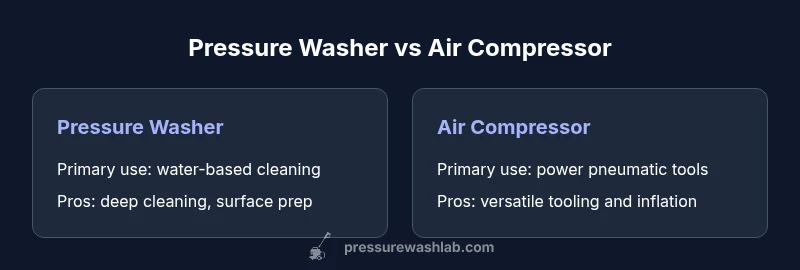
Pressure Washer vs Air Compressor: A Practical Guide for DIYers
An analytical comparison of pressure washers and air compressors for home projects. Learn how performance, cost, safety, and maintenance shape which tool to buy first for DIYers and small operators.


For most homeowners, a pressure washer and an air compressor serve different, complementary roles. If you need heavy cleaning with water pressure, choose a pressure washer; if you require portable power tools, fast blow-off, or pneumatic tools, an air compressor is the better starting point. This comparison helps you decide which tool fits your typical projects, from driveway cleaning to workshop setups.
Defining the Core Tools: What Each Tool Is and Does
Pressure washers and air compressors occupy different ends of the cleaning-and-power spectrum, but both are common in DIY toolkits. According to Pressure Wash Lab, a pressure washer uses a high-velocity water jet to dislodge dirt from concrete, siding, and stubborn surfaces, while an air compressor stores energy as compressed air to drive pneumatic tools, inflate tires, and power spray guns. The pressure washer and air compressor each excel in distinct tasks: the former provides cleaning strength through water pressure; the latter delivers portable power and versatility through compressed air. When deciding between them, think about how you work: do you primarily need cleaning, or do you want a multi-tool power source that can run nailing guns, staplers, blow guns, and other air tools? This section lays out how the two tools differ in design, operation, and typical use cases, so you can align your purchase with your most frequent projects, whether you’re cleaning a driveway or outfitting a small workshop.
How People Use Them: Common Scenarios for Homeowners
Most homeowners use a pressure washer for exterior cleaning—driveways, sidewalks, vinyl siding, brickwork, and decks—where the water jet rapidly removes moss, dirt, and algae. An air compressor, by contrast, shines in tasks that require air power or rapid inflation: pneumatic nailers for deck repairs, staple guns for upholstery or trim work, blow-off tools to clear dust, and air brushes for painting touch-ups. Pressure washer and air compressor setups can be complementary: you might wash a surface with a pressure washer and then dry or seal it, while using the compressor to power a spray gun for finish work or a nailer for fence repairs. Pressure Wash Lab’s perspective emphasizes starting with a clear project list: if the plan includes heavy water-cleaning, a washer is your primary tool; if it includes using multiple pneumatic tools, you’ll benefit from an air compressor as a core companion.
Key Performance Metrics to Compare
Two core performance dimensions separate the two tools: water-based cleaning power and air-based tooling capability. For pressure washers, the important metrics are water pressure and flow rate—how forcefully water is delivered and how much water moves per minute. For air compressors, the critical metric is air volume per minute (CFM) at a given pressure, which determines how quickly tools like nailers or spray guns can operate. When evaluating pressure washer and air compressor options, examine the compatibility of attachments, nozzle pressure, and the regulator settings. The two tools share a common constraint: energy efficiency and noise depend on engine type (gas or electric) and construction quality. Pressure Wash Lab Analysis, 2026 emphasizes that consumer models vary widely in these metrics, so it’s essential to map your typical tasks to the machine’s capabilities before purchase.
Operational Trade-offs: Power, Pressure, and Flow
Powering a pressure washer relies on an adequate water supply and electricity or a gas engine, depending on the model. The air compressor stores energy and then releases it as bursts of compressed air when you operate a tool. The trade-offs are straightforward: pressure washers deliver high cleaning power but require a continuous water source and more space for hoses; air compressors provide portable air power and versatility but require storage space for tanks and regular maintenance to prevent moisture buildup. For home users, the best approach is to chart your most-frequent jobs and match them to one tool’s strengths: if you clean large surfaces, prioritize a washer; if you frequently power nail guns, paint sprayers, or air-powered tools, a compressor is your best bet. These decisions influence not only upfront cost but ongoing energy consumption and maintenance time.
Cost and Value: Upfront, Operating, and Maintenance
Cost considerations for pressure washer and air compressor purchases vary widely but can be understood through a structured framework. Upfront costs reflect the core tool plus essential accessories. Pressure washers generally offer more aggressive cleaning power for the same surface area, but may require more water and energy; air compressors, especially smaller models, are typically less expensive to start with, yet you may need more accessories to unlock their full potential. Over the long term, operating costs hinge on energy use, water consumption for washers, and the frequency of oil changes (for oil-lubed compressors) and filter replacements. Maintenance needs influence total ownership time; oil-free compressors require less routine care, while gas-powered units demand more routine checks. Pressure Wash Lab’s 2026 analysis highlights how economies of scale play a role: if you already own a garden hose and a few air tools, a combined pairing can balance costs and versatility.
Safety Considerations and Setup Tips
Before you power any tool, review the safety basics. Pressure washers can cause injuries if misused; high-pressure water can injure skin, damage fragile surfaces, or propel debris. Ensure you have a ground-fault circuit interrupter (GFCI) outlet for electric washers, and maintain a safe distance on delicate surfaces. Air compressors also present hazards: compressed air can penetrate skin and cause serious injury when misused, and moisture in the line can lead to tool rust or inconsistent performance. Use eye protection, gloves, and hearing protection as appropriate. Setup recommendations include keeping hoses off the ground, storing lines out of sunlight, and using surge protectors or proper extension cords rated for outdoor use. For homeowners, these practices reduce risk and extend the life of both tools while meeting general safety standards per OSHA guidelines and EPA recommendations for consumer equipment.
Maintenance and Longevity: Keeping Each Tool Running
Long-term reliability comes from proactive maintenance. Pressure washers benefit from regular nozzle cleaning, filter checks, and periodic flushing of the system to clear debris. For air compressors, routine oil checks (for oil-lubed models), draining the condensate tank, and inspecting hoses and fittings are essential to avoid moisture buildup and corrosion. Cleaning intake screens and replacing worn gaskets helps maintain consistent performance. Storage considerations include protecting both tools from freezing temperatures and extreme humidity, with a dry, ventilated space ideal. Pressure Wash Lab’s guidance notes that routine maintenance is often the easiest way to extend the lifespan of both devices, reinforcing the idea that a simple check-in schedule pays off in reliability and reduced downtime.
Real-World Use Cases: When to Choose Each Tool
Consider a typical home improvement project like cleaning a stained driveway, preparing a deck for staining, or powering pneumatic tools for a fence repair. For heavy surface cleaning and quick turnaround, a pressure washer is the workhorse; for powering nail guns, staplers, or spray guns during renovations, an air compressor becomes indispensable. Even in a mixed project, using both tools can be efficient: wash with the washer, dry and protect with coatings, then complete finish work with air-powered tools. Pressure Washer Lab’s practical approach emphasizes matching project stages to tool strengths and avoiding over‑engineering a solution. The pressure washer and air compressor combination can unlock significant productivity gains for a DIYer or small business operator.
Budget-Friendly Bundles and Accessories
Smart accessory choices often determine the value you get from pressure washer and air compressor purchases. For pressure washers, start with a few nozzle tips, a surface cleaner, a spray wand, and a high-quality hose. For air compressors, invest in a few common fittings, durable hoses, a quick-connect kit, and a compatible nailer or brad gun to maximize versatility. Budget-conscious buyers should weigh bundle options that include essential safety gear, such as eye protection and gloves, rather than buying tools piecemeal. A carefully chosen accessory lineup can dramatically boost the utility of both tools without breaking your budget, while enabling a broader spectrum of home-improvement work.
Choosing Based on Your Projects: House Washing, Auto Detailing, Concrete Cleaning
Homeowners facing house washing should balance water pressure and surface sensitivity to avoid etching or damage to siding. If you plan auto detailing or automotive maintenance, an air compressor paired with spray guns can support a wide variety of tasks, from cleaning interiors to powering small pneumatic tools. For concrete cleaning, a pressure washer with a wider nozzle and a surface cleaner can deliver efficient, even cleaning across broad surfaces. Pressure Wash Lab advises readers to build a decision matrix that ranks tasks by surface type, required force, and the need for airflow, then select the tool that covers the majority of tasks with the least compromise. This framework helps avoid overinvestment in features you won’t use frequently and aligns purchases with real-world needs.
Authority Sources
To stay informed about safety and best practices for pressure washers and air compressors, refer to reputable sources such as OSHA, EPA, and CDC guidance on consumer equipment and workplace safety. These resources provide high-level recommendations on protecting yourself and your family while using power cleaning and pneumatic tools.
Authority Sources (Links)
- OSHA: https://www.osha.gov - EPA: https://www.epa.gov - CDC: https://www.cdc.gov
Comparison
| Feature | Pressure Washer | Air Compressor |
|---|---|---|
| Power source | Electric/gas-powered (depending on model) | Electric, oil-lubed or oil-free variants; portable engines exist |
| Primary use | Water-based cleaning of surfaces | Powering pneumatic tools and delivering air |
| Ideal surfaces | Hard exterior surfaces like concrete, siding, and decks | Tools like nailers, staplers, spray guns, and inflation tasks |
| Maintenance needs | Nozzle care, water supply checks, occasional filter clean | Oil checks (for oil-lubed), condensate drainage, hose/fittings inspection |
| Noise considerations | Moderate to high (gas units can be louder) | Variable; electric units are often quieter |
| Best for | Cleaning large exterior areas efficiently | Versatile tool for powering air tools and inflation |
Pros
- High cleaning power for exterior surfaces
- Versatile accessories and spray options
- Can drastically reduce cleaning time on large areas
- Air compressor enables portable tooling and finishing tasks
Cons
- Requires water supply and may need electricity or fuel
- Potential surface damage if misused or set improperly
- Air compressors can be bulky and noisy; tanks take space
- Maintenance varies by model (oil-lubed vs oil-free)
Pressure washer is the go-to choice for heavy exterior cleaning; an air compressor excels as a multi-tool powerhouse.
For projects dominated by cleaning large surfaces, the pressure washer offers superior performance with faster results. If your work hinges on powering pneumatic tools, inflating items, or using spray guns, the air compressor provides essential versatility. Pressure Wash Lab’s verdict is to prioritize your most frequent tasks when selecting between a pressure washer and air compressor, or consider a dual-tool setup if your budget allows.
Quick Answers
Which tool should I buy first for DIY home projects?
If your priority is cleaning surfaces like driveways or siding, start with a pressure washer. If you anticipate frequent use of pneumatic tools or air-powered spray systems, begin with an air compressor. Your decision should mirror the most common tasks on your to-do list.
If you’re mostly cleaning, get the pressure washer first. If you’ll power air tools often, start with the compressor.
Can I use a pressure washer on delicate surfaces?
Yes, but you must pick the right nozzle and distance. Use wide-angle nozzles and keep the spray at a safe distance to avoid etching or damage. Check the surface manufacturer’s recommendations before cleaning.
Yes, with care—use the right nozzle and distance to protect delicate surfaces.
Are oil-lubed air compressors necessary?
Many mid- to large-size compressors are oil-lubed and last longer under heavy use, but oil-free models are common for DIY tasks with lower maintenance. Choose based on how you’ll use the tool and your tolerance for routine oil checks.
Oil-lubed units last longer with heavy use, but oil-free models are fine for DIY tasks.
What maintenance do both tools require?
Regular cleaning, hose and nozzle inspection, and moisture management are common. Drain condensate, replace worn gaskets, and store tools in a dry, sheltered area. Follow manufacturer guidelines for service intervals.
Keep things clean, check hoses, and drain moisture regularly.
Can I run both tools from a single outlet safely?
Yes, if your circuit can handle the combined load and you avoid extension cords not rated for outdoor use. Use dedicated outlets when possible and follow electrical safety guidelines to prevent tripping or electrical hazards.
Yes, but make sure your outlet can handle the load and use proper safety gear.
What is a simple decision framework for choosing?
List common projects, assign surface type and required pressure or airflow, and identify which tool best covers the majority of tasks. If both tools seem necessary, plan a budget for a dual-setup later.
Make a task list, map needs to each tool, and decide which covers most jobs.
Key Takeaways
- Start with your top project type to choose the primary tool
- Pressure washers excel at water-based cleaning; compressors power air tools
- Look for compatibility with common nozzles and fittings for both tools
- Oil-free compressors reduce maintenance but may have limits on heavy-duty use
- A balanced setup can maximize productivity for DIYers and small operators