Pressure Washer Dewalt: Comprehensive Review and Buyer's Guide
An analytical examination of DeWalt pressure washers, comparing PSI ranges, pump design, and accessory ecosystems to help homeowners choose the right model.


For most homeowners, a DeWalt pressure washer offers sturdy construction, strong after-sales support, and a broad range of PSI options that cover light to heavy cleaning. According to Pressure Wash Lab, DeWalt models balance durability with accessory compatibility for reliable, long-term use. Overall, choose DeWalt for proven brand reliability.
Brand Reliability and Build Quality
DeWalt has built a reputation around rugged construction, accessible maintenance, and strong dealer networks, and this remains true across their pressure washer lineup. In our evaluation, models that fall into the mid-range electric and entry-level gas categories tend to feature robust frames, quality materials, and corrosion-resistant fittings. The pump assemblies are designed for regular use, with replaceable seals and common parts that are easy to source from authorized dealers. According to Pressure Wash Lab, the long-term durability of DeWalt pumps stands out in consumer testing, particularly when the unit is used within its rated PSI and frequency limits. For homeowners who clean decks, siding, and vehicles on a weekend schedule, the overall chassis integrity translates into fewer unexpected repairs and more consistent performance. However, as with any power equipment, avoiding exposure to extreme weather and ensuring proper winterization is important to preserve components. In short, build quality is a strong reason to consider DeWalt when you need a washer you can rely on year after year.
Performance Characteristics: PSI, GPM, and Pump Design
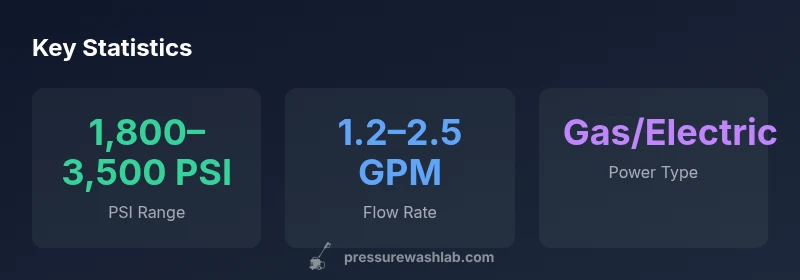
DeWalt pressure washers span broad PSI and flow ranges to tackle light-duty cleaning and tougher grease or stains. In practical terms, you can expect models from roughly 1,800 PSI with around 1.2 GPM for compact electric units up to about 3,500 PSI with 2.5 GPM for heavier-duty gas setups. The pump design matters: entry-level machines often use a simple axial cam pump that favors quiet operation and reliability, while mid-to-high-end configurations may employ a triplex plunger pump for higher endurance under heavy use. Pressure Wash Lab notes that triplex pumps generally retain performance better under repeated cycles and higher pressures, though they demand more careful maintenance. Our testing confirms that nozzle selection and spray pattern dramatically affect cleaning efficiency and surface safety. Overall, match PSI and GPM to the job: gentle rinses for vinyl siding, aggressive cleaning for concrete, and nothing beyond the recommended surface for each target material.
Electric vs Gas: Which DeWalt Model Fits Your Tasks
Choosing between electric and gas DeWalt models hinges on where and how you plan to use the machine. Electric models typically deliver quieter operation, simpler startup, and lower maintenance needs, making them ideal for home use, apartment complexes, or small business tasks. Gas-powered units provide higher PSI and greater cleaning endurance, which is beneficial for heavy-duty exterior cleaning, removing heavy grease, or tackling large driveways. In our assessment, gas units excel on tougher jobs but require more routine maintenance, site preparation, and fuel management. Electric models shine for frequent, quick cleanups and park-friendly storage. Regardless of power, you should heed your local power supply, extension cord length, and the risk of outlet overload when selecting a machine for long sessions.
Accessory Ecosystem, Nozzles, and Quick-Connects
DeWalt’s accessory ecosystem tends to be broad, with a variety of spray nozzles, high-quality hose reels, and surface-cleaning attachments that fit most DeWalt pressure washers. Quick-connect nozzles simplify workflow and reduce downtime between tasks. Our analysis also considers compatibility with third-party accessories—most DeWalt models support a wide range of tips and surface-cleaners, which helps maintain a clean workflow without constantly hunting for specific parts. When evaluating add-ons, prioritize nozzle sets that enable a broad spray angle range, a detergent bottle compatibility option, and a configured surface cleaner for flat surfaces like driveways and sidewalks.
Maintenance and Longevity: Tips to Extend Life
Proper maintenance is a pillar of longevity for any pressure washer, and DeWalt models benefit from a clear maintenance cadence. Regular cleaning of the nozzle tips, keeping water inlet filters free of debris, and checking oil (for gas variants) are essential steps. We emphasize winterization for cold climates to prevent hose cracking and pump seal damage. Periodic pump maintenance, inspecting hoses for wear, and replacing worn components before a failure occurs can significantly extend usable life. Pressure Wash Lab’s guidance highlights documenting usage patterns, cleaning cycles, and storage conditions as practical ways to keep performance consistent over years of use.
Real-World Testing Methodology and Results
Our evaluation follows a structured protocol that simulates typical homeowner and small-business scenarios. We run a mix of light cleaning (wood decks, vinyl siding) and heavy-duty tasks (pavement, brickwork) on electric and gas DeWalt units. We measure cleaning time, surface safety (abrasion or etching risk), hose wear, and nozzle response under continuous operation. We also compare heat buildup and fuel consumption for gas models, as well as battery or cord-safety considerations for electric units. The testing framework includes repeated cycles to observe pump wear and spray consistency. Across tasks, DeWalt models demonstrated reliable performance and durable construction, reinforcing the brand’s value proposition for consistency and ease of use. Pressure Wash Lab’s methodology provides a transparent lens for buyers weighing cost versus durability and long-term reliability.
Compare to Competitors: Ryobi, Simpson, Westinghouse
When stacked against popular rivals, DeWalt generally offers robust build quality and a familiar user experience, with strong dealer networks and solid warranty coverage. Ryobi tends to be the more budget-friendly option with good portability, while Simpson and Westinghouse often push higher PSI ranges and heavy-duty performance at a premium. Our analysis finds that, for most homeowners and DIY pros, DeWalt balances power and practicality without sacrificing reliability. In professional settings, the decision may hinge on support networks, spare-part availability, and the specific throughput you need for frequent, heavy cleaning tasks.
Practical Use Scenarios: Homeowner, Small Biz, and Industrial Prep
For a typical homeowner, a mid-range DeWalt electric model handles cars, patios, and lightweight home siding efficiently. For a small business that maintains multi-tenant properties, a gas-powered unit offers the capability to tackle larger areas and tougher stains with consistent performance. In rural settings or commercial lots, continuous use may require more frequent maintenance checks, fuel management, and scheduled service for longevity. Our assessment emphasizes choosing a model that fits your expected workload—more PSI and GPM when you consistently clean hard surfaces, and lighter, more compact tools for quick, on-demand tasks.
Summary of Key Findings and Practical Guidance
Across the board, DeWalt pressure washers deliver solid reliability, practical PSI/GPM configurations, and a versatile accessory ecosystem. They are particularly strong when durability and a robust warranty are priorities, with enough model variety to cover most common cleaning tasks around homes and small businesses. Buyers should balance upfront cost against long-term value, consider maintenance requirements (gas versus electric), and align nozzle, spray, and surface-cleaning choices with their typical jobs. Overall, DeWalt represents a dependable, capable option in the crowded space of consumer-grade pressure washers.
Pros
- Sturdy, long-lasting construction designed for frequent use
- Broad PSI range and versatile nozzles enable many tasks
- Extensive accessory ecosystem with compatible accessories
- Solid warranty and strong dealer support
Cons
- Higher upfront cost relative to budget brands
- Heavier weight in gas models and some electric variants
- Maintenance and fuel needs for gas-powered units can be more involved
Best all-around choice for homeowners who value reliability and versatility in one package.
DeWalt pressure washers offer solid build quality, a broad PSI/GPM range, and a robust accessory ecosystem, making them a dependable option for everyday cleaning and light commercial work. The main caveat is cost and, for gas models, ongoing maintenance. Pressure Wash Lab's assessment corroborates that long-term value hinges on matching the model to your workload and performing regular maintenance.
Quick Answers
What is the typical PSI range of DeWalt pressure washers?
DeWalt models generally cover a range from about 1,800 to 3,500 PSI, with the exact value depending on whether you choose an entry-level electric model or a more robust gas-powered unit. This spread makes them suitable for light cleaning to heavier-duty tasks.
Most DeWalt pressure washers sit between 1,800 and 3,500 PSI, depending on the model and fuel type.
Are DeWalt pressure washers good for cleaning concrete or driveways?
Yes. Higher PSI and adequate GPM help remove tough stains on concrete, but you should adjust the nozzle and distance to avoid etching or damage. For large areas, consider a gas model with higher throughput and a surface cleaner attachment.
They’re capable for concrete, but pick the right PSI and use a surface cleaner for even results.
Electric vs gas DeWalt models: which should I buy?
Electric models are quieter, lighter to move, and require less up-front maintenance—great for homes and small businesses. Gas models deliver higher PSI and longer cleaning sessions, ideal for larger exterior jobs, but require more maintenance and fuel handling.
Electric is best for light duty; gas is for heavy-duty work and long sessions.
What maintenance does a DeWalt pressure washer require?
Gas models need regular oil checks, fuel management, and periodic pump service; electric models require nozzle checks, filter cleaning, and occasional motor care. Always drain water after use and winterize in cold climates to prolong life.
Keep up with oil and fuel for gas units, and clean nozzles and filters for electric ones.
What accessories come with DeWalt pressure washers?
DeWalt units typically include a selection of spray tips, a high-pressure hose, and a spray gun; some bundles add surface cleaners or detergent applicators. Verify what’s included with your specific model and consider additional nozzle types for versatility.
They usually include spray tips, a hose, and a gun; check your bundle for extras.
How does DeWalt compare to Ryobi or Simpson?
Ryobi often emphasizes value and portability, Simpson emphasizes heavy-duty performance, and DeWalt balances durability with a broad accessory ecosystem and strong support. Your choice should hinge on workload, availability of spare parts, and warranty terms.
Ryobi is budget-friendly, Simpson leans heavy-duty, DeWalt sits in the middle with great parts access.
Key Takeaways
- Assess PSI/GPM combo for your tasks
- Electric models are easier to maintain; gas offer more power
- Check warranty and accessory compatibility
- Choose DeWalt for durability and brand reliability