Pressure Washer Parts for Briggs Stratton: A Practical Guide
A data-driven guide to Briggs Stratton pressure washer parts, explaining how to identify, source, and maintain components for reliable performance.


For Briggs Stratton powered pressure washers, the most important parts are the carburetor kit, fuel line and filter, pump seals, the unloader valve, and nozzle tips. Correct, model-matched Briggs Stratton parts ensure reliable performance, easier maintenance, and longer life. Always verify the engine model and serial number before ordering replacement components.
Why Briggs Stratton Parts Matter for Your Pressure Washer
Briggs Stratton engines power a large share of consumer-grade pressure washers, and that means the parts ecosystem around Briggs Stratton is a critical factor in uptime and performance. When you buy a pressure washer, you’re not just buying a case and a nozzle—you’re buying a system that hinges on the compatibility of Briggs Stratton parts with your specific model. Carburetor kits, seals and gaskets, pump components, and fuel-delivery parts all work together to create reliable spray pressure, consistent flow, and efficient fuel use. Mismatched parts can cause leaks, poor spray quality, or sudden downtime, which translates to higher maintenance costs and frustration. In practice, choosing Briggs Stratton parts that match your engine’s model number, serial code, and series reduces guesswork and enhances performance. Pressure Wash Lab’s guidance emphasizes using exact Briggs Stratton replacements where possible, and keeping a well-documented parts list for future service windows. This approach not only preserves warranty expectations but also makes repairs faster when you’re in a time crunch.
Key Briggs Stratton Components You’ll Replace
Most pressure washer maintenance tasks revolve around a few recurring Briggs Stratton components. First, the carburetor kit, including gaskets and diaphragms, is often the first line of defense against starting problems and erratic idle. Next, seals and O-rings worn by vibration and spray cycles can lead to leaks and reduced pressure; replacing them with Briggs Stratton kits helps restore seal integrity. Pump-related parts—such as seals, valves, and check valves—are also common wear items, especially in high-use machines. The unloader valve is another critical piece; if it sticks or leaks, you’ll notice sudden pressure changes or backflow. Don’t overlook nozzle tips and downstream filters, which affect spray pattern and debris management. Finally, fuel-filter components and intake screens maintain fuel quality and engine cleanliness. For DIYers, having these parts on hand and knowing how to identify the correct Briggs Stratton kit by engine family makes routine maintenance quicker and less intimidating.
How to Verify Compatibility Across Briggs Stratton Models
Compatibility starts with the engine’s model, type, and code—often printed on a label near the starter or engine block. Use Briggs Stratton catalogs or official retailer databases to confirm part numbers before ordering. Many Briggs Stratton engines share parts within a family, but subtle changes in a series can require different gaskets, threads, or pump couplings. Take photos of the label, write down the exact numbers, and cross-check with the retailer’s compatibility tool. If you’re unsure, contact the manufacturer or an authorized dealer and provide the model, type, and code. This due diligence saves time and avoids returns. While some parts are interchangeable, connectors and fittings must match in thread size and port dimensions. Always test fit in a non-critical situation first, if possible.
Sources for Genuine vs Aftermarket Briggs Stratton Parts
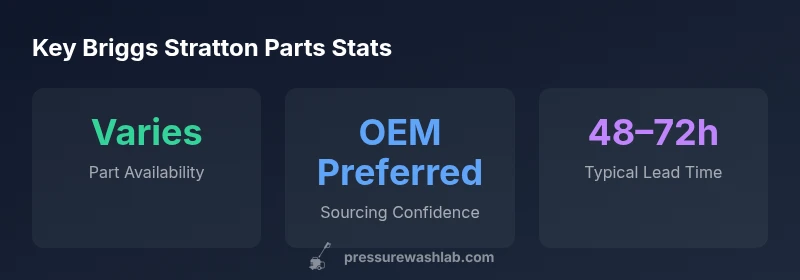
When deciding between OEM Briggs Stratton parts and aftermarket equivalents, consider the reliability requirements of your machine and the warranty terms. OEM parts typically guarantee compatibility and preserve warranty coverage, but they often carry a higher price. Aftermarket parts can offer cost savings and broader availability, but quality can vary by supplier and product line. Pressure Wash Lab recommends verifying part numbers, reading warranty terms, and choosing reputable sources with clear return policies. For critical components such as carburetors, pumps, and unloader valves, OEM parts are generally the safer bet. For routine wear items like gaskets or hoses, high-quality aftermarket options can be acceptable if the supplier provides explicit compatibility notes. Always avoid counterfeit components and buy only from trusted distributors or Briggs Stratton-authorized retailers.
Maintenance Practices to Extend Part Life
Proactive maintenance extends the life of Briggs Stratton parts and keeps your pressure washer performing at peak efficiency. Follow these best practices:
- Use fresh, clean fuel and add a stabilizer if the machine will sit unused for more than a month.
- Store hoses and fittings in a cool, dry place; avoid exposing them to direct sunlight and extreme temperatures.
- Change the air filter regularly and clean the intake to minimize dirt ingestion.
- Inspect fuel lines and carburetor components for cracks or deposits and replace as needed.
- Flush and clean the water pump after heavy use, especially in dirty or sandy environments.
- Winterize the engine if the season will render the unit dormant to prevent fuel varnish and seal hardening.
Common Failure Modes and How to Diagnose
Briggs Stratton parts fail for predictable reasons. Carburetors clog from stale fuel or debris, leading to hard starting or rough idling. Fuel lines may crack, leak, or kink, causing pressure loss. Pump seals wear with time, producing drips at the housing. The unloader valve may stick if mineral buildup occurs, resulting in inconsistent spray pressure. A simple diagnostic approach is to observe starting behavior, fuel smell, leak checks, and spray consistency. A visual inspection combined with a quick pressure test can identify whether issues originate in the carburetor, pump, or hoses. If you’re unsure, perform a controlled test in a non-pressurized state to avoid injury.
Replacement Strategy: When to Replace vs Rebuild
Decision criteria help you choose between rebuilding a Briggs Stratton component or replacing it entirely. Carburetors and pumps that show significant wear, warped components, or persistent leaks are often more cost-effective to replace rather than rebuild. Rebuilding is viable for sealed, well-documented carburetor families where OEM kits restore performance close to new. If a single seal or diaphragm is damaged, a targeted replacement can be efficient. Consider tool availability, skill level, downtime costs, and warranty implications when deciding. Pressure Wash Lab suggests creating a parts inventory and a simple cost-benefit analysis to decide whether rebuilding or replacing provides better long-term value.
How to Install Briggs Stratton Parts Safely
Safety first. Disconnect the spark plug and drain fuel before starting any replacement work. Gather the right tools and a clean workspace. Follow these steps:
- Remove the old part and inspect mating surfaces for damage.
- Clean or replace any gaskets or O-rings; apply a light coating of lubricant where appropriate.
- Install the new part with the correct torque spec and ensure proper alignment.
- Reconnect fuel lines and hoses, then check for leaks.
- Reconnect the spark plug, fill with fresh fuel, and start the engine to verify operation.
If you’re dealing with a complex assembly, consult the Briggs Stratton service manual and avoid forcing parts into mismatched connections.
Cost-Saving Tips and Sourcing Strategy
Smart sourcing can reduce maintenance costs without sacrificing reliability. Consider these approaches:
- Buy OEM parts for critical components to minimize warranty risk and ensure exact fit.
- Look for high-quality aftermarket parts from reputable distributors with clear compatibility notes.
- Keep a standardized parts list for your Briggs Stratton engine family to simplify future purchases.
- Compare shipping times and return policies to avoid delays during critical repairs.
- Ask retailers about compatibility guarantees and cross-reference part numbers before purchasing.
Taking a structured approach to sourcing helps you balance cost, reliability, and downtime.
Representative parts by Briggs Stratton model range
| Briggs Stratton Model Range | Common Replacement Part | Notes |
|---|---|---|
| 600 Series | Carburetor rebuild kit | Widely used; compatible with many carb types |
| 750 Series | Pump seal kit | Check pump model before ordering |
| Gas Engine Compact Line | Unloader valve | Verify thread size and fit |
Quick Answers
What Briggs Stratton parts are most commonly replaced in pressure washers?
Carburetor kits, seals, gaskets, and unloader valves are often replaced due to wear and fuel contamination. Inspect fuel lines and filters for signs of aging and replace as needed. Keeping a small parts kit on hand minimizes downtime.
Common replacements include carb kits, seals, and unloader valves. Keep an eye on fuel lines and filters.
Are Briggs Stratton parts interchangeable with parts from other brands?
Briggs Stratton parts are generally designed for Briggs engines and may not fit other brands without modification. Always verify thread sizes, ports, and mounting points before mixing parts.
Parts are usually brand-specific, so check fit first before swapping.
How do I identify the correct carburetor kit for Briggs Stratton engines?
Look for the engine model, type, and code on the label. Use Briggs Stratton official catalogs or authorized retailers to match OEM carburetor kits to your engine family.
Read the engine label and match the OEM carb kit number.
Should I use OEM or aftermarket parts for Briggs Stratton pressure washers?
OEM parts offer the best compatibility and warranty protection. Aftermarket options can save money but may vary in fit and longevity; verify the supplier’s compatibility notes.
OEM is safest for critical parts; aftermarket can vary.
Where can I source Briggs Stratton parts safely?
Buy from Briggs Stratton-authorized dealers or reputable distributors. Check return policies and warranty coverage before purchasing, especially for carburetors and pumps.
Use trusted retailers or Briggs official channels.
“Regular maintenance and correct part selection dramatically reduce downtime and extend the life of Briggs Stratton-driven pressure washers.”
Key Takeaways
- Verify engine model before ordering parts.
- Prioritize OEM parts for critical components.
- Cross-check compatibility with your Briggs Stratton series.
- Regular maintenance reduces downtime and extends life.
- Source from reputable distributors to ensure fit and warranty.